

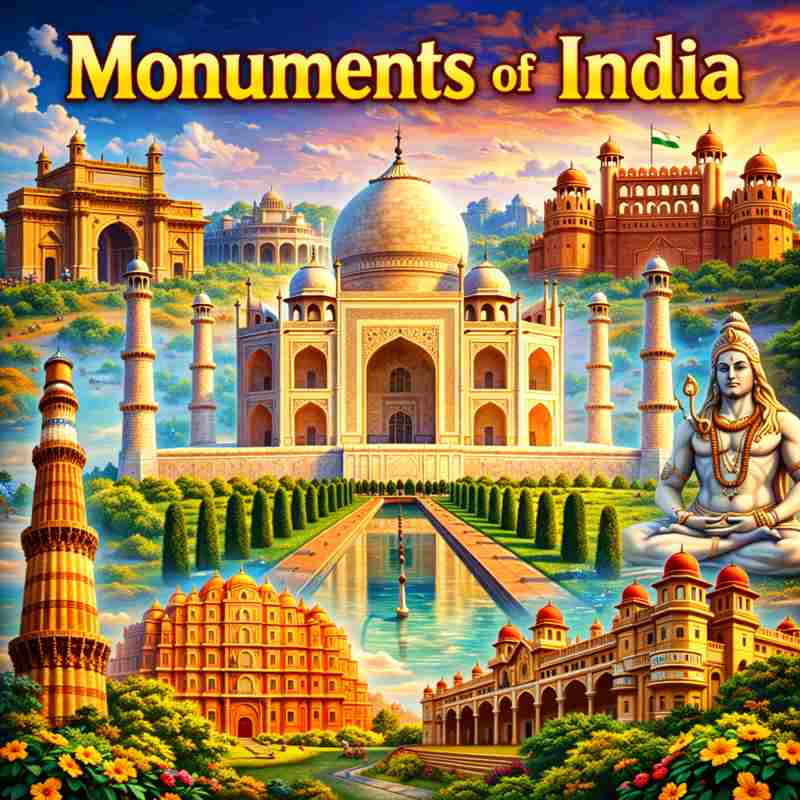
List of Monuments of India
There is a wealth of structures in India, which are indicative of its long and complex history. Stone-cut temples and grand citadels, fine mausoleums, they narrate about the various kings, cultures, and styles of art. Looking at the monuments of India list, one not only reads the names but also walks into centuries of history, labor, and tradition.
This guide includes some of India’s most popular monuments, helping you understand their significance, design, and cultural meaning.
Table of Contents
The Importance of Monuments in India.
The preserved Indian historical monuments India are not merely tourist sites. They are documents about how people lived, ruled, worshipped, and built. All buildings reflect a combination of local traditions and external influences that have defined the highlights of Indian architecture landmarks throughout history.
The identity is also supported by the list of heritage monuments of India list which is preserved. They remind the people of their origin and allow the current generation to relate to the past.
Mughal Era Monuments
The Mughal era also left a strong impression on Indian architecture landmarks. Symmetry, domes, gardens, and carvings characterize the buildings constructed in this era.
The Taj Mahal is one of the most historic buildings. Emperor Shah Jahan commissioned the construction of the building as a token of love in memory of his wife Mumtaz Mahal. It is one of India’s most appreciated heritage monuments India, owing to its white marble, inlay work, and balanced structure.
The Red Fort is another significant place. Mughal emperors spent many years in this fort, which was the central residence of the time. The power and refined elegance of Mughal architecture are evident in its massive red sandstone walls and highly detailed interiors. The Tomb of Humayun is also worth mentioning. It influenced subsequent Mughal buildings such as the Taj Mahal. Its garden pattern and dome form are the early Mughal design concept.
Ancient Monuments of India
The ancient monuments of India transport one back a thousand years. Such buildings tend to identify religious beliefs and primitive art and engineering.
The Ajanta Caves are a good example of rock-cut architecture. The features of these caves include paintings and sculptures depicting Buddhist teachings. The artwork’s details demonstrate the artisans’ skill of that period.
Nearby are the Ellora Caves, a unique place that houses Hindu, Buddhist, and Jain temples. This is indicative of a time when various religions lived together amicably. Sanchi Stupa is another large site. It is among the oldest stone buildings in India, and it is associated with the spread of Buddhism.
The architecture of South Indian temples.
Temples are also a hallmark of Southern India and among the most elaborate examples of Indian architecture. Meenakshi Temple is notable for its colorful towers adorned with sculptures. Both towers narrate mythological and religious works.
Another brilliant architectural masterpiece is the Brihadeeswarar Temple. It was constructed during the Chola dynasty and features a huge monolithic stone dome. Hampi was once a great kingdom, but it is now a place full of temples, markets, and palace ruins. It depicts how ancient cities were laid out and how large they were.
Forts and Palaces of India
The forts and palaces of India reveal the way of life of kings and rulers. They were not merely designed to defend, but also to be comfortable and to show power. Amber Fort boasts artistic interior features, including mirror work and carved pillars. It shows a combination of Rajput and Mughal.
City Palace, situated along a lake, offers a glimpse into the life of kings through its courtyards, balconies, and halls. Another famous monument India boasts of is the Mysore Palace. It is illuminated to great effect at night and displays an Indian-European blend of design.
Colonial Era Monuments
The colonial era also introduced new buildings to the list of Indian monuments. Such constructions combine European and native fashions. Victoria Memorial is a huge marble structure built in honor of Queen Victoria.
The Gateway of India was built to welcome British rulers, and it became a symbol of India’s struggle for independence. India Gate is a war memorial dedicated to soldiers who perished during World War I. It is a monument of remembrance and respect.
Religious Monuments Across India
The Indian religious monuments reflect the diversity there. The buildings are of different religions and highly diverse in design.
The Golden Temple is the most important site for the Sikhs. It features a golden architectural structure and a peaceful ambience that attracts tourists from around the world. Konark Sun Temple is shaped like a chariot of the sun god. These stone carvings are descriptive and symbolic. Somnath Temple is a seat of belief and power that has been reconstructed several times.
Unique Architectural Landmarks
Indian architecture also includes certain monuments that stand out for their design or concept. The Lotus Temple resembles a lotus and is open to people of all religions. It is characterized by a unique, unconventional design and a peaceful site, unlike conventional temples.
Charminar is the most prominent structure with four minarets. The old city is concentrated within it and is closely associated with Hyderabad’s identity.
Qutub Minar is the highest brick minar in the world. It follows early Islamic Indian architecture.
UNESCO World Heritage Sites in India
Many of heritage monuments India are UNESCO World Heritage Sites. This recognition shows their importance worldwide.
Other conservation sites, due to their cultural and historical significance, are the Taj Mahal, Ajanta and Ellora Caves, and Hampi. The places are maintained to ensure they remain visible and recognizable to future generations.
How These Monuments Shape Tourism
India boasts some of the most well-known monuments, visited by millions of people every year. They help sustain businesses in the region, create employment, and raise awareness of India’s history.
Tourists normally visit these places. As much as a person visits a fort in Rajasthan or a temple in Tamil Nadu, every trip adds to their knowledge of the country.
Preservation and miseries.
India has many historical monuments India, but they are not readily preserved. Such constructions could be harmed by pollution, weather, and man.
These monuments have been attempted to be preserved and rebuilt by government organizations and bodies. Visitors also contribute by adhering to regulations and avoiding damage.
Conclusion
Monuments abound in India, and the list is long and full of stories from various periods. Each building, whether a temple, a fort, or a memorial, adds to the country’s identity.
When you look at the heritage monuments India takes care of, you are not simply looking at the buildings. You are seeing history chiseled in stone, art chiseled by hand, and traditions passed down from generation to generation. These architectural monuments in India continue to be inspirational, reminding people of the richness and profundity of Indian history.
City |
State |
Built By |
|
| Adhai Din Ka Jhopra | Ajmer | Rajasthan | Qutubddin Aibak |
| Ajanta-Ellora Caves | Aurangabad | Maharashtra | Gupta Rules |
| Aram Bagh | Agra | UP | Babur |
| Agra Fort | Agra | UP | Akbar |
| Akbar’s Mausoleum | Sikandra | UP | Akbar |
| Itmad-ud-daula Fort | Agra | UP | Noorjhan |
| Anand Bhawan | Allahabad | UP | Motilal Nehru |
| Bada Imambara | Lucknow | UP | Asaf-ud-daula |
| Bharatpur Fort | Bharatpur | Rajasthan | Raja Surajmal Singh |
| Bibi ka Maqbara | Aurangabad | Maharashtra | Aurangzeb |
| Char Minar | Hyderabad | Andhra Pradesh | Quli Qutub Shah |
| Chara-e-Shar | Jammu & Kashmir | Jammu & Kashmir | Zainul Abedin |
| Chhota Imambara | Lucknow | UP | Muhammad Ali Shah |
| Dargarh Ajmer Sharif | Ajmer | Rajasthan | Sultan Shyasuddin |
| Dilwara’s Jain Temple | Mount Abu | Rajasthan | Siddharaja |
| Elephanta Cave | Mumbai | Maharashtra | Rashtrakuta Rulers |
| Fatehpur Sikri | Agra | UP | Akbar |
| Feroshah Kotla | Delhi | Delhi | Feroshah Tuqhlaq |
| Golghar | Patna | Bihar | British Govt. |
| Gateway of India | Mumbai | Maharashtra | British Govt. |
| Hauz Khas | Delhi | Delhi | Alauddin Khilji |
| Hawa Mahal | Jaipur | Rajasthan | Maharaja Pratap Singh |
| Humayun’s Tomb | Delhi | Delhi | Humayun’s Wife |
| Jama Masjid | Agra | UP | Shahjahan |
| Jama Masjid | Delhi | Delhi | Shahjahan |
| Jagannath Temple | Puri | Odisha | Anatvarman Ganga |
| Jantar-Mantar | Delhi | Delhi | Sawai Jai Singh |
| Jaigarh Fort | Jaipur | Rajasthan | Sawai Jai Singh |
| Jim Corbett Park | Nainital | Uttarakhand | Sir Malcom Hailley |
| Jodhpur Fort | Jodhpur | Rajasthan | Rao Jodhji |
| Kanheri Caves | Mumbai | Maharashtra | Buddhists |
| Khirki Masjid | Delhi | Delhi | Ghyasuddin Tuqhlaq |
| Lal Bagh | Bangaluru | Karnataka | Hyder Ali |
| Lakshmi Narayan Temple | Delhi | Delhi | Birla Family |
| Makka Masjid | Hyderabad | Andhra Pradesh | Quli Qutub Shah |
| Moti Masjid | Agar Fort | UP | Shahjahan |
| Moti Masjid | Delhi Fort | Delhi | Aurangzeb |
| Nahargarh Fort | Jaipur | Rajasthan | Sawai Jai Singh |
| Nishant Garden | Srinagar | Jammu & Kashmir | Asaf Ali |
| Purana Qila | Delhi | Delhi | Shershan Suri |
| Pathar Ki Masjid | Patna | Bihar | Pervez Shah |
| President House | Delhi | Delhi | British Govt. |
| Qutub Minar | Delhi | Delhi | Qutubddin Aibak |
| Red Fort | Delhi | Delhi | Shahjahan |
| Safdar Jung Tomb | Delhi | Delhi | Shuja-ud-daula |
| Sabarmati Ashram | Ahmadabad | Gujarat | Mahatma Gandhi |
| Shantiniketan | West Bengal | West Bengal | Rabindra Nath Tagore |
| Shish Mahal | Agra | UP | Shahjahan |
| Shalimar Garden | Srinagar | Jammu & Kashmir | Jahangir |
| Shershah’s Tomb | Sasaram | Bihar | Shershah’s son |
| Saint George Fort | Chennai | Tamil Naidu | East India Company |
| Sati Buri | Mathura | UP | Raja Bhagwan Das |
FAQs
Which monuments are the most popular in India?
Some of the most famous monuments India are the Taj Mahal, the Red Fort, the Qutub Minar, the Mysore Palace, and the India Gate. These monuments are famous, and they represent different periods in history.
What is the value of historical monuments?
Monuments in India help people to discover the historical, cultural, and traditional events. They are also pro-education and pro-tourism.
What is the ancient Indian monument?
The Sanchi Stupa is considered to be one of the ancient stone structures in India. It is based on the Mauryan period and is affixed to Buddhism.
How many UNESCO World Heritage sites are there in India?
India also has many UNESCO World Heritage Sites, both cultural and natural. These monuments are the Taj Mahal and Ajanta Caves.
How would tourists help conserve monuments?
The tourists are responsible for not littering, not touching sensitive surfaces, and following the government’s rules. If these places are honored, they will be secure for future generations.