

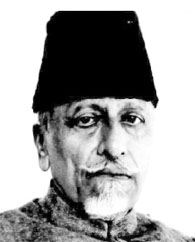
Abul Kalam Azad – Bharat Ratna Adward Winner
Table of Contents
About Abul Kalam Azad
In case you consider the freedom struggle in India and the base of its education system, there is a name that towers high, Abul Kalam Azad. He was a respected Freedom fighter and also the First Education Minister of independent India.
In 1992, he was honored with Bharat Ratna for his service to the country over a lifetime. His education, togetherness, and development philosophies are applicable to date.
This paper outlines the life of Abul Kalam Azad, his importance, and the impact he had on modern India through his work.
Early Life of Abul Kalam Azad
Abul Kalam Azad was born in Mecca on 11 th November 1888. His real name was Abul Kalam Ghulam Muhiyuddin Ahmed. His family later relocated to Calcutta (now Kolkata).
He was a bright child. He had no enrolment in a normal school. Instead, his father home-schooled him. He had mastered by the time he was 16 years old, the Arabic language, Persian, Islamic history, and philosophy.
Neither did he learn English. This assisted him in reading Western political thought and comprehending global ideas.
He had also demonstrated good leadership abilities and an interest in the independence of India when he was very young.
Abul Kalam Azad was a Freedom fighter.
Abul Kalam Azad was significant in the freedom movement in India. He was intensely against British rule and desired unity between Indians of any religion.
In 1912, he began a journal known as Al-Hilal. His ideas of nationalism were disseminated through this newspaper, and people were encouraged to struggle to achieve freedom. It was banned by the British government due to the fact that it inspired people against them.
He subsequently joined the Indian National Congress and became one of the youngest presidents of the Indian National Congress at the age of 35.
He collaborated closely with such leaders as:
- Mahatma Gandhi
- Jawaharlal Nehru
- Sardar Vallabhbhai Patel
He was in favor of the Non-Cooperation Movement and the Quit India Movement. Due to this, the British jailed him on numerous occasions.
Being a Freedom fighter, he felt that India should not be divided. He was very against the partition of India according to religion.
Minister of First Education in India.
Abul Kalam Azad was the First Education Minister of India after India became an independent country in 1947. He served in this role from 1947 to 1958.
This was a crucial time. India was an emerging country and required a powerful educational system.
In his view, education was the solution to the development of the country. To him, without education, freedom was nonexistent.
His contributions to the field of education were major.
He made efforts on numerous things to make education in India stronger. He concentrated on gratuitous and mandatory primary education for all children to the age of 14. He promoted education among girls, which was very low due to the low levels of female literacy.
He encouraged learning institutions and technical education.
With him in charge, institutions such as:
- Institutions of Technology in India.
- University Grants Commission
- All India Council on Technical Education.
- were founded or reinforced.
These schools continue to influence the education system in India.
He also assisted cultural organizations such as:
- Sahitya Akademi
- Sangeet Natak Akademi
- Lalit Kala Akademi
In these attempts, he ensured that India cherished science and culture.
The Reason behind the Celebration of National Education Day.
Every 11 November, the birthday of Abul Kalam Azad, India celebrates National Education Day. The Government of India announced this day in 2008 in honor of his contribution to education.
Schools and colleges hold seminars, competitions of essays, and discussions on this day. It is a reminder to the students and the teachers of the significance of learning.
It is not only the remembering of a person on National Education Day. It is to recall his faith that education forms a powerful nation.
Abul Kalam Azad getting the Bharat Ratna.
Trying to avoid the disgrace of being born in the village, Abul Kalam Azad did not receive the Bharat Ratna in 1992; however, many years after his death in 1958.
Bharat Ratna is the greatest civil award in India. It is awarded for extraordinary service in areas such as public service, art, science, and literature.
The award of the Bharat Ratna indicated the reverence that the country had for him.
The service that was done to him was earned by his service as a Freedom fighter and the First Education Minister.
His Vision for India
Abul Kalam Azad was hoping for a united India where all the religions co-existed in peace.
He supported secularism. In his opinion, religion is not a thing that should separate the country.
This demonstrates the extent to which he believed in unity.
He also felt that education was not to be applied to the rich. All children, be they village children or urban children, need a good education.
His ideas are still relevant even nowadays when you speak about equal opportunities in education.
His Works and his Intellectual Work.
Another scholar and writer was Abul Kalam Azad. His popular work, India Wins Freedom, provides information about the freedom movement and political choices that were made during this period. He authored in Urdu and was famed for his strong speeches. People were encouraged to go through tough moments with his words. He was a close scholar of religion and politics.
Historians and experts in the education sector are of the opinion that his moderate thinking served India in its tender years when it was a country.
The Reason why Abul Kalam Azad still matters today.
In India, the problems of education, such as quality, access, and equality, are still relevant today. Abul Kalam Azad was of the opinion that education would eliminate poverty and ignorance. His vision was also that education had to develop character and not only offer jobs. His message seems to be relevant today when skills and knowledge are more important than ever in the world. He had a desire to see India develop in knowledge and unity. Policymakers, teachers, and students are still inspired by that vision.
Frequently asked questions (FAQs).
Who was Abul Kalam Azad?
Abul Kalam Azad was a Freedom fighter, a scholar, and the First Education Minister in India. He played a great role in the independence movement in India and also in the formation of the education system in India.
What is the date of Abul Kalam Azad receiving the Bharat Ratna?
In 1992, he was also awarded Bharat Ratna after his death.
What is the aim of the National Education Day?
The National Education Day is celebrated on 11 November, the day of his birth, in order to honor the contribution he made to the education of the Indian people.
What was his contribution to education?
He was the Minister of First Education, and tried to widen primary school education, advance technical education, and create colleges such as IITs and the UGC.
What was his view on unity?
He was of the strong opinion that India had to be united despite religion. He was against the division of India and was in favor of the values of secularism.
Conclusion
Abul Kalam Azad was not a simple political leader. He was a philosopher, an intellectual, and a nationalist.
Being a Freedom fighter, he struggled to fight for independence. He had been the First Education Minister, and he made efforts to establish a good education system. With the Bharat Ratna, he was acknowledged for his lifetime service.
You are seeing the results of his vision when you study the history of India, or when you enter a classroom.
The only lesson that his life can teach is that education and unity are the two supporting pillars of a powerful nation.