

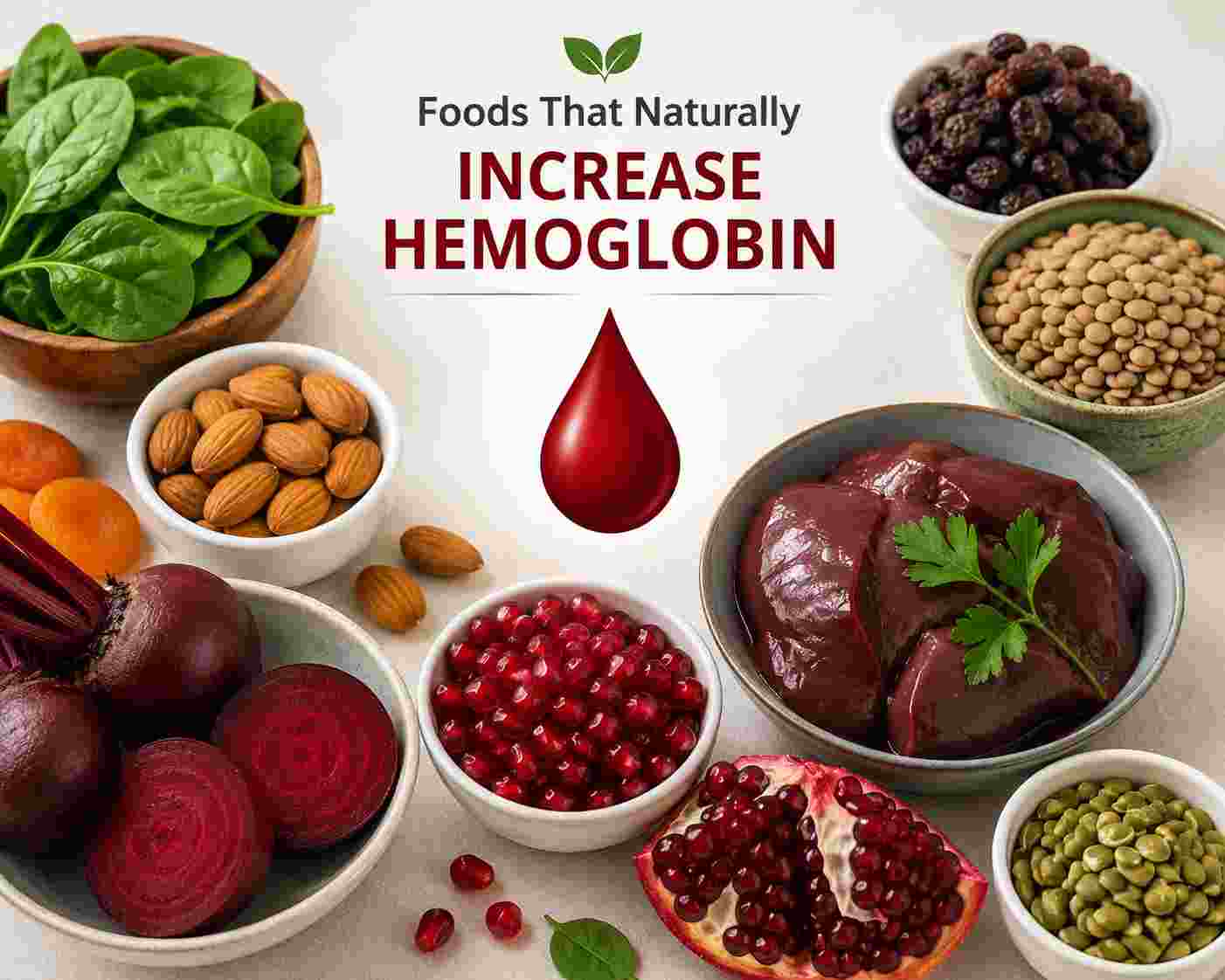
Foods That Naturally Increase Hemoglobin
Tiredness that won’t go away. Dizziness when you stand up too fast. Skin that’s lost its colour. Breathlessness after climbing one flight of stairs. These are signs most people blame on stress or bad sleep — when the real reason is often low hemoglobin.
Hemoglobin is the protein in red blood cells that carries oxygen around the body. When levels drop, every organ and muscle gets less oxygen than it needs. That’s when everything starts to feel harder than it should.
For many people, diet plays a significant role in bringing hemoglobin levels back up. Knowing which foods to increase hemoglobin actually work — and how to eat them in a way that fits real Indian meals — makes a genuine difference. That’s what this piece covers.
Table of Contents
Why Hemoglobin Drops in the First Place
The most common reason, especially among women, children, and vegetarians in India, is iron deficiency. The body needs iron to produce hemoglobin — without enough of it, red blood cell production falls short.
Folic acid and Vitamin B12 deficiencies are two other common causes. Both are needed for healthy red blood cell formation. A diet low in these nutrients can lead to anemia even when iron levels look acceptable.
Chronic blood loss and underlying illnesses can also cause drops. When low hemoglobin is severe or persistent, a doctor’s assessment is essential. But for mild to moderate cases, a proper anemia diet built around the right foods can do more than most people expect.
Iron Rich Foods That Make the Biggest Difference
Iron is the foundation. Without enough of it, the body simply can’t produce the hemoglobin it needs. Iron from food comes in two forms — heme iron from animal sources, which absorbs efficiently, and non-heme iron from plant sources, which absorbs at a lower rate but improves significantly when paired with Vitamin C.
Meat, Poultry, and Seafood
Red meat — mutton and beef are among the richest heme iron sources available. Even standard cuts carry meaningful amounts per serving.
Chicken liver — extremely effective. High in both iron and Vitamin B12, making it one of the most complete hemoglobin foods available in a single ingredient.
Fish and shellfish — tuna, mackerel, and especially oysters and clams are excellent iron rich foods. Shellfish in particular are dense with iron and B12.
Plant-Based Iron Sources
Spinach — a staple in any list of hemoglobin foods. It carries non-heme iron alongside folate and Vitamin C, which helps the body absorb what it contains.
Lentils and legumes — dal in all its forms is one of the most iron-dense staples in the Indian diet. Masoor dal, chana dal, rajma, and black-eyed peas all contribute meaningfully. Most Indians already eat these — it’s about eating enough consistently.
Beetroot — widely recommended in India as a food to increase hemoglobin. It contains iron, folate, and compounds that support red blood cell production. Raw juice or cooked beetroot both work.
Pumpkin seeds and sesame seeds — a handful of pumpkin seeds carries around 2.5mg of iron. They work well as snacks or sprinkled into meals.
Dark chocolate — a 28g serving of dark chocolate at 70% cocoa or higher carries around 3mg of iron. A practical and pleasant addition to daily healthy foods.
Folate and Vitamin B12 — The Other Half of the Picture
Iron gets most of the attention, but folate and B12 are equally important for hemoglobin production. Deficiencies in either can cause anemia even when iron is fine.
Folate-rich foods include spinach, asparagus, broccoli, avocado, lentils, and fortified grains. Most of these are already part of a reasonable healthy foods diet — the key is eating enough of them regularly rather than occasionally.
Vitamin B12 is found almost exclusively in animal products — meat, fish, eggs, and dairy. For vegetarians, dairy and eggs are the main sources. Strict vegans almost always need a B12 supplement because plant foods simply don’t carry meaningful amounts. If you’re eating a plant-based diet and experiencing persistent fatigue, B12 deficiency is worth testing for.
Vitamin C — The Absorption Multiplier
Here’s something that makes a real practical difference in a vegetarian anemia diet: eating non-heme iron alongside Vitamin C significantly increases how much iron the body actually absorbs.
Squeezing lemon juice over dal. Eating amla with meals. Adding tomatoes to iron-rich curries. Having orange juice with your morning poha. These small combinations are nutritional strategies, not just flavour choices.
Amla deserves special mention. It’s one of the richest natural sources of Vitamin C available in India and pairs naturally with traditional foods. Including it regularly — fresh, as juice, or dried — makes a measurable difference to iron absorption from plant sources.
What to Avoid When Trying to Raise Hemoglobin
This part matters just as much as the foods you add.
Certain foods and drinks actively interfere with iron absorption when consumed at the same time as iron-rich meals:
- Tea and coffee — the tannins in tea and the polyphenols in coffee bind to iron and significantly reduce absorption; having tea within an hour of an iron-rich meal can cut absorption by as much as 60%
- Calcium-rich foods at the same sitting — calcium competes with iron for absorption; a large glass of milk with your spinach dal isn’t as iron-friendly as it might seem
- High-phytate foods eaten alone — whole grains and legumes contain phytates that reduce iron absorption; soaking or sprouting them before cooking reduces the phytate content meaningfully
- Excess processed foods — they displace the healthy foods that carry iron, folate, and B12 from the diet without offering anything nutritionally useful in return
The practical takeaway: save your chai for an hour after meals rather than with them. It’s a small change that has a real effect over time.
Building a Daily Anemia Diet That Actually Works
Knowing individual foods is one thing. Putting together a daily anemia diet that fits Indian eating habits is another.
Here’s a simple structure that covers the nutritional bases without overhauling how you already eat:
- Breakfast — poha with lemon, or eggs with vegetables and whole grain bread; add amla juice or an orange alongside
- Mid-morning — pumpkin seeds or a piece of dark chocolate with fruit
- Lunch — dal with rice or roti, spinach or methi sabzi, and a small salad with tomatoes; squeeze lemon over the dal
- Evening snack — beetroot salad, sprouted moong, or boiled chickpeas with lime
- Dinner — chicken, fish, or paneer with vegetables; or a mixed dal preparation if vegetarian; avoid tea or coffee for an hour after
This isn’t a drastic change to Indian eating. It’s about deliberate choices within meals people already eat — adding lemon here, timing tea differently there.
When Food Alone Isn’t Enough
Diet makes a real difference for mild to moderate iron deficiency and the anemia it causes. But there are situations where food adjustments won’t be enough on their own.
If hemoglobin levels are very low, if symptoms are severe, or if the underlying cause is something other than diet, medical treatment is necessary. Iron supplements, B12 injections, or treatment of an underlying condition may be needed alongside dietary changes. A blood test and a doctor’s assessment are the right starting points when symptoms are significant.
Think of the dietary approach as the foundation — essential, but not a substitute for medical care when the situation calls for it.
Frequently Asked Questions
-
Which foods increase hemoglobin fastest?
Animal sources like chicken liver, red meat, and shellfish tend to raise iron levels fastest because heme iron absorbs more efficiently. For vegetarians, combining iron rich foods like lentils and spinach with Vitamin C sources at every meal speeds up the process meaningfully.
-
Can vegetarians raise hemoglobin through diet alone?
Yes, in many cases — but it takes deliberate planning. A vegetarian anemia diet should include lentils, spinach, tofu, seeds, and folate-rich vegetables daily, always paired with Vitamin C. B12 supplementation is usually needed for strict vegetarians to fully address all causes of low hemoglobin.
-
How long does it take for diet changes to raise hemoglobin?
For mild deficiency, dietary changes typically show measurable improvement in hemoglobin levels within six to eight weeks of consistent eating. Severe deficiency takes longer and may need supplementation alongside dietary adjustments.
-
Is beetroot really effective for increasing hemoglobin?
Yes. Beetroot is one of the more reliable hemoglobin foods for supporting red blood cell production. It contains iron, folate, and natural nitrates that support blood health. Daily beetroot juice or cooked beetroot shows consistent results over several weeks.
-
Should I stop drinking tea if I have low hemoglobin?
You don’t need to stop, but timing matters. Tea significantly reduces iron absorption when consumed with or shortly after iron-rich meals. Waiting at least one hour after meals before having tea, and switching to herbal teas where possible, helps protect the iron you’re getting from your foods to increase hemoglobin.