

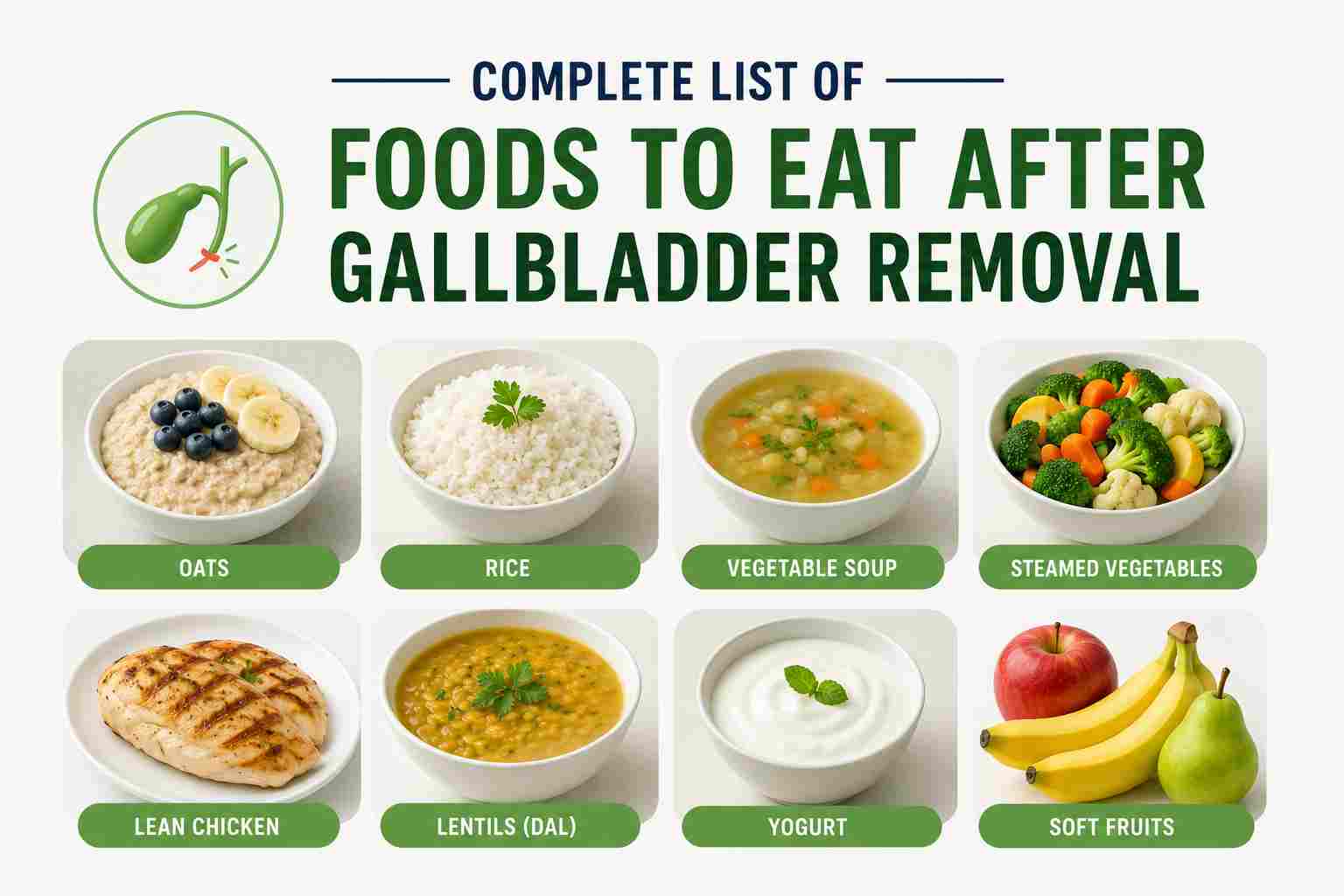
Complete List of Foods to Eat After Gallbladder Removal
Getting your gallbladder removed feels like a relief — especially if gallstones were making your life miserable. But then you get home, and suddenly every meal feels like a guessing game. What can you actually eat? What is going to set off that uncomfortable bloating or send you rushing to the bathroom?
The gallbladder’s job was to store bile — a digestive fluid made by the liver — and release it in the right amounts when you ate fatty foods. Without it, bile drips continuously into the small intestine instead of being released in controlled bursts. That changes how your body handles fat. It also affects how well you absorb fat-soluble vitamins like A, D, E, and K. So yes, what you eat after a cholecystectomy genuinely matters — not just for a few days, but for weeks and sometimes months.
Table of Contents
The First Few Days: Start Slow and Simple
Right after gallbladder removal surgery, your digestive system needs a break. The goal at this stage is not nutrition — it is just keeping things calm while your body adjusts.
Start with clear liquids. Water, herbal teas, diluted fruit juices, and plain broths are your best friends in the first 24 to 48 hours. They are easy to process, keep you hydrated, and do not stress your gut.
After that, move gradually to soft, low-fat foods. Think plain white rice, mashed potatoes without butter, bananas, and plain toast. These are gentle on the stomach and easy to digest. The post-gallbladder surgery diet at this stage is not about variety — it is about giving your digestive system a smooth, slow start.
Complete List of Foods to Eat After Gallbladder Removal
Once the first week passes and you are tolerating soft foods well, it is time to build a proper gallbladder removal diet. Here is what works well and why.
Lean Proteins
Protein helps your body heal. After surgery, you need it — but the source matters. High-fat meats are hard to process without concentrated bile, so lean options are the way to go.
Good choices include skinless chicken breast, turkey, white fish like cod or tilapia, eggs (especially egg whites), tofu, and lentils. These are all easy on the digestive system and give your body what it needs to repair tissue and maintain energy.
High-Fiber Foods
Fiber — especially soluble fiber — is one of the most important parts of a post-gallbladder surgery diet. It helps regulate digestion, slow down the movement of bile through the gut, and reduce the risk of loose stools.
The best high-fiber foods to work into your meals include:
- Oats and barley — gentle on the stomach and great for breakfast
- Apples, pears, and bananas — easy to digest and naturally sweet
- Carrots, zucchini, and sweet potatoes — soft vegetables that are easy to cook and eat
- Lentils and chickpeas — introduced gradually, as legumes can cause gas at first
- Brown rice and whole-grain bread — better than refined carbs for keeping digestion steady
Fresh Vegetables and Fruits
Most fresh vegetables and fruits are good for you after a cholecystectomy, but some need to be introduced carefully. Leafy greens, cucumbers, cooked carrots, beetroot, and sweet peppers are all well tolerated by most people.
Cruciferous vegetables like broccoli, cauliflower, and cabbage are fine long-term but can produce a lot of gas early in recovery. It is better to wait a few weeks before eating them in large amounts.
Fruits like bananas, apples, pears, and melons work well. Citrus fruits are generally fine but may irritate some people if they have a sensitive stomach in the weeks after surgery.
Low-Fat Dairy
Your body still needs calcium and protein from dairy, but full-fat dairy products are difficult to digest without adequate bile. The gallbladder removal diet calls for switching to lower-fat options.
Skim milk, low-fat yogurt, and reduced-fat cottage cheese all work well. Probiotic yogurt is a particularly good choice because it supports gut bacteria, which can take a hit after surgery and anaesthesia.
Healthy Fats in Small Amounts
Fat is not the enemy. Your body still needs it. The key is choosing the right kind and keeping portions small.
Avocado, olive oil, flaxseeds, chia seeds, and walnuts all contain healthy unsaturated fats that are easier to process than saturated fats. Use olive oil in cooking rather than butter or ghee, and keep portions moderate.
Fat-soluble vitamins — A, D, E, and K — rely on dietary fat to be absorbed. So cutting fat out completely is not the answer either. A small amount of healthy fat at each meal actually helps your body absorb nutrients properly.
Foods to Avoid After Gallbladder Removal
Knowing what not to eat is just as important as knowing what to eat. Some foods consistently cause problems for people on a post-gallbladder surgery diet.
Fried and high-fat foods are the biggest issue. Without concentrated bile, your small intestine struggles to handle large amounts of fat at once. Fried chicken, chips, samosas, pakoras, butter-heavy curries, and full-fat cream sauces are the kinds of foods that lead to cramping, bloating, and diarrhea.
Spicy foods can irritate the gut lining. This does not mean you can never eat spice again — but in the weeks right after surgery, it is worth holding back and reintroducing slowly.
Processed and packaged foods tend to be high in saturated fat, salt, and additives that make digestion harder. Biscuits, instant noodles, packaged snacks, and fast food are all worth skipping during recovery.
Caffeinated and carbonated drinks stimulate the gut and can trigger loose stools. Tea and coffee in large amounts can be a problem early on. Sodas and fizzy drinks add gas to an already unsettled digestive system.
A Practical Meal Plan
A sample day on a gallbladder removal diet might look something like this:
- Breakfast: Oatmeal with sliced banana and a sprinkle of flaxseeds, or scrambled egg whites with whole-grain toast.
- Mid-morning snack: A small apple or a bowl of low-fat yogurt.
- Lunch: Grilled chicken with steamed carrots, brown rice, and a small drizzle of olive oil, or lentil soup with whole-grain bread.
- Afternoon snack: A pear or a few plain crackers with a thin spread of avocado.
- Dinner: Baked fish with mashed sweet potato and steamed zucchini, or tofu stir-fry with vegetables and brown rice made with minimal oil.
The principle behind this kind of plan is simple — small, frequent meals spread across the day are far easier on your digestive system than two or three large ones. Eating five to six smaller meals daily reduces the amount of bile needed at any one time, which means less chance of cramping or diarrhea.
Long-Term Eating Habits That Actually Help
Most people find that their digestive system settles down significantly within a few months of surgery. But building good habits early makes that adjustment period much smoother.
Eat slowly
Chewing food properly gives your digestive system more time to handle it without bile surges.
Watch portion sizes.
Large meals — even low-fat ones — can still overwhelm the gut when bile flow is unregulated.
Keep a food diary
Everyone’s tolerance is slightly different. Some people can reintroduce most foods without issue within two months. Others find that certain foods — even healthy ones — continue to cause trouble.
When to Speak to a Doctor
Some digestive discomfort after a cholecystectomy is completely normal. But some symptoms need medical attention.
If you are experiencing persistent diarrhea weeks after surgery, significant bloating that does not ease, unexplained weight loss, or signs of nutritional deficiency — fatigue, brittle nails, hair thinning — it is worth speaking to a doctor or registered dietitian. These could point to postcholecystectomy syndrome or poor absorption of fat-soluble vitamins, both of which are manageable with the right support.
FAQs
What is the best food to eat after gallbladder removal?
Lean proteins like chicken and fish, high-fiber foods like oats and lentils, and fresh vegetables are among the best choices. The idea is to keep fat low, fiber moderate, and meals small and frequent while your body adjusts.
How long do I need to follow a special diet after gallbladder removal?
Most people need to be careful for at least four to six weeks post-surgery. Some take up to three months to fully adjust. The timeline varies depending on how your digestive system responds.
Can I eat rice and roti after gallbladder removal?
Yes. Plain rice and plain roti — without heavy ghee or butter — are both easy to digest and are fine to eat after gallbladder surgery. They are actually good staples for the early recovery phase.
Why do I get diarrhea after eating since my surgery?
This is common and happens because bile is now dripping continuously into the intestine rather than being released in controlled bursts. High-fat or spicy meals make it worse. Soluble fiber and smaller meals usually help.
Are Indian foods okay to eat after gallbladder removal?
Many Indian foods work well — dal, khichdi, steamed idli, plain curd, and vegetable soups are all gentle and nutritious. The ones to avoid are heavy curries made with cream or large amounts of oil, fried snacks, and anything very spicy in the early weeks.
Do I need to take vitamin supplements after gallbladder removal?
Not necessarily, but it depends on how well your body is absorbing fat-soluble vitamins A, D, E, and K. If your diet is balanced and recovery is going well, supplements may not be needed.