

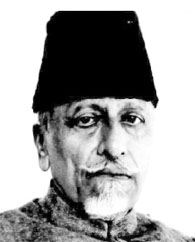
Maulana Abul Kalam Azad – Freedom Fighter of India
Maulana Abul Kalam Azad stands among India’s most intellectually accomplished freedom fighters—a brilliant scholar, passionate journalist, eloquent orator, and visionary statesman whose contributions shaped both India’s independence struggle and its post-independence trajectory. Unlike many leaders known primarily for political activism, Azad brought extraordinary intellectual depth to the nationalist movement, using scholarship and journalism as weapons against colonial rule.
His life embodied the composite culture of India. A devout Muslim deeply rooted in Islamic scholarship, he championed Hindu-Muslim unity and opposed partition with unwavering conviction. As India’s first Education Minister, he laid foundations for the nation’s educational infrastructure that endure today.
Table of Contents
Early Life and Education
Maulana Abul Kalam Azad was born as Abul Kalam Ghulam Muhiyuddin on November 11, 1888, in Mecca, Saudi Arabia, where his family had taken refuge during turbulent times in India.
Family Background
Azad came from a distinguished family of Islamic scholars. His father, Maulana Khairuddin, was a respected scholar who had left India and settled in Mecca. His mother descended from a family of prominent scholars from Medina.
This scholarly lineage profoundly influenced Azad’s intellectual development. He grew up in an environment saturated with Islamic learning, classical languages, and theological discourse.
Return to India
The family returned to Calcutta (now Kolkata) when Azad was still young. Calcutta at that time buzzed with intellectual and political ferment, exposing young Azad to both traditional Islamic scholarship and modern political thought.
Education
Azad’s education combined traditional Islamic learning with exposure to modern ideas. He studied under his father and other distinguished scholars, mastering Arabic, Persian, Urdu, and eventually learning English as well.
His curriculum included:
- Quranic studies and Islamic jurisprudence
- Arabic literature and grammar
- Persian poetry and prose
- Islamic philosophy and theology
- Logic and rhetoric
By his teens, Azad demonstrated extraordinary intellectual abilities, engaging with complex theological and philosophical texts typically studied by much older scholars.
The Title “Maulana”
The public bestowed upon him the title “Maulana,” meaning “our master” or “learned one,” recognizing his exceptional scholarship at a remarkably young age. “Azad,” meaning “free,” became his pen name, symbolizing his independent thinking and eventual political stance.
Intellectual and Journalistic Career
Before becoming deeply involved in politics, Azad established himself as a formidable intellectual and journalist.
Early Writings
Azad began writing poetry and prose in Urdu while still in his teens. His mastery of the language, combined with profound knowledge of Islamic theology and history, made his writings influential among educated Muslims.
Al-Hilal: The Crescent
In 1912, Azad founded “Al-Hilal,” a weekly Urdu newspaper that would become one of the most influential publications in India. Al-Hilal wasn’t merely a newspaper—it was an intellectual and political force.
Revolutionary journalism: Azad used Al-Hilal to critique British colonial rule from an Islamic perspective, arguing that British governance contradicted Islamic principles of justice.
Modern interpretation: He advocated for modern, rational interpretations of Islam, opposing blind adherence to outdated customs while maintaining fidelity to core Islamic values.
Hindu-Muslim unity: Even this early, Azad emphasized that Hindus and Muslims shared common interests in opposing colonialism.
Literary excellence: The newspaper’s Urdu prose set new standards for clarity, elegance, and persuasive power.
Al-Hilal’s influence grew so much that the British colonial government banned it under the Press Act. Azad promptly started a new publication, “Al-Balagh,” which authorities also eventually banned.
Literary Contributions
Beyond journalism, Azad authored significant works:
Tarjuman al-Quran: His most famous work, a monumental Urdu translation and interpretation of the Quran. Unlike mere translation, this work offers deep theological and philosophical commentary, demonstrating Azad’s command of Islamic scholarship.
Ghubar-e-Khatir: A collection of letters written during imprisonment, these reflections reveal Azad’s philosophical depth and literary artistry.
India Wins Freedom: His autobiography, offering invaluable insights into independence struggle and post-independence politics. (A controversial section was withheld for decades)
Intellectual Approach
Azad represented a particular intellectual tradition:
Rational Islam: He advocated for reason-based understanding of Islamic texts rather than blind traditionalism.
Progressive interpretation: While deeply rooted in Islamic scholarship, he supported modern education and scientific thinking.
Cultural synthesis: He saw Indian culture as a composite creation to which Muslims had contributed substantially.
Entry into Politics and the Freedom Struggle
Azad’s intellectual work naturally led him toward political activism.
Early Political Awakening
The partition of Bengal and growing anti-colonial sentiment influenced Azad’s political consciousness. His journalism already had political dimensions, but he increasingly engaged directly with nationalist politics.
Alliance with Gandhi
Azad met Mahatma Gandhi and was deeply impressed by his philosophy of non-violent resistance. Despite coming from different religious and intellectual backgrounds, they formed a strong alliance based on shared commitment to independence and Hindu-Muslim unity.
Non-Cooperation Movement
Azad threw himself into Gandhi’s Non-Cooperation Movement. He traveled extensively, delivering speeches that combined Islamic principles with nationalist arguments. His oratory, blending theological depth with political passion, moved audiences powerfully.
The British arrested Azad multiple times during this period, imprisoning him for long stretches. He used these imprisonments for study and writing.
Youngest Congress President
In 1923, at thirty-five, Azad was elected President of the Indian National Congress, making him the youngest person ever to hold that position at the time. This reflected the Congress’s recognition of his intellectual stature and political leadership.
Civil Disobedience Movement
When Gandhi launched the Civil Disobedience Movement, Azad participated vigorously. He faced arrest and imprisonment again, spending significant time in jail throughout the 1930s.
World War II Period
During World War II, Azad supported the Quit India Movement, demanding immediate British withdrawal from India. He spent the war years in prison, from 1942 to 1945.
Champion of Hindu-Muslim Unity
Throughout his political career, Azad remained unwavering in his commitment to Hindu-Muslim unity and opposition to partition.
Ideological Foundation
Azad’s position on Hindu-Muslim unity stemmed from both practical politics and deep conviction:
Historical argument: He argued that Hindu-Muslim coexistence had created India’s composite culture over centuries.
Islamic principles: He contended that Islam’s emphasis on justice and human dignity aligned with nationalism’s goals.
Practical necessity: He believed Muslims’ future prosperity lay in united India, not separate nation.
Opposition to Muslim League
Azad opposed the Muslim League and its demand for Pakistan. He argued that partition would:
- Divide Muslims, leaving many in India anyway
- Weaken both communities
- Betray the freedom struggle’s inclusive vision
- Create ongoing communal tensions
Debates with Jinnah
Azad engaged in extensive debates with Muhammad Ali Jinnah, the Muslim League leader. Where Jinnah emphasized Muslim separateness and need for Pakistan, Azad stressed shared interests and composite Indian identity.
This disagreement represented more than political strategy—it reflected fundamentally different visions of Muslim identity and community.
Partition: A Personal Tragedy
When partition occurred despite his opposition, Azad experienced it as personal tragedy. His autobiography reflects deep anguish over what he saw as a catastrophic mistake.
He believed partition would create lasting problems for the subcontinent—a prediction arguably borne out by subsequent history.
Staying in India
Despite partition, Azad never considered leaving India for Pakistan. He committed himself to serving independent India and protecting its Muslim minority.
First Education Minister of Independent India
Perhaps Azad’s greatest legacy lies in his work as India’s first Minister of Education.
Vision for Education
Azad brought comprehensive vision to India’s educational development:
Universal access: He believed education should reach every child, regardless of caste, class, or gender.
Scientific temperament: While respecting India’s cultural heritage, he emphasized scientific education and rational thinking.
Cultural synthesis: Education should promote understanding of India’s diverse traditions.
Excellence in higher education: He established institutions that would become centers of excellence.
Institutional Foundations
During his tenure as Education Minister, Azad established or strengthened institutions that define Indian education:
Indian Institutes of Technology (IITs): He championed the creation of these premier technical institutions, modeling them on MIT.
University Grants Commission (UGC): He established this body to coordinate and maintain standards in university education.
Indian Council for Cultural Relations (ICCR): This organization promotes cultural diplomacy and international understanding.
Sahitya Akademi, Sangeet Natak Akademi, Lalit Kala Akademi: These academies nurture excellence in literature, performing arts, and visual arts respectively.
Indian Institute of Science: While established earlier, Azad significantly strengthened this institution.
Primary Education
Azad didn’t focus solely on elite institutions. He worked to expand primary education, recognizing that mass literacy was crucial for democracy and development.
Language Policy
Navigating India’s linguistic diversity, Azad advocated for:
- Instruction in mother tongue at primary level
- Hindi as link language while respecting regional languages
- English for accessing global knowledge
- Study of classical languages like Sanskrit and Arabic
This balanced approach recognized both practical needs and cultural sensitivities.
Legacy in Education
The educational infrastructure Azad built continues shaping India today. IITs produce globally competitive engineers. UGC maintains university standards. The cultural academies preserve and promote artistic traditions.
National Education Day is celebrated on his birthday (November 11) to honor his contributions.
Literary and Intellectual Legacy
Beyond politics and administration, Azad left substantial literary legacy.
Urdu Prose Master
Azad’s Urdu prose is considered among the finest in the language. His style combined:
- Classical eloquence with modern clarity
- Theological depth with accessible expression
- Rhetorical power with logical argument
Students of Urdu literature study his works for stylistic excellence.
Quranic Commentary
“Tarjuman al-Quran” remains influential in Islamic scholarship. Azad’s interpretation:
- Applied rational analysis to Quranic verses
- Connected Quranic principles to contemporary issues
- Demonstrated deep knowledge of classical commentaries
- Offered original insights while respecting tradition
Philosophical Writings
His prison letters and essays engage with philosophical questions about:
- Human freedom and destiny
- Religion’s role in modern society
- Cultural identity and nationalism
- Ethics and politics
These writings reveal a thinker grappling seriously with modernity while rooted in traditional scholarship.
Personal Character and Qualities
Those who knew Azad remembered distinct qualities:
Intellectual Brilliance
His mastery of multiple languages, command of Islamic scholarship, and ability to engage with modern thought were extraordinary. He could quote classical Arabic poetry, debate constitutional provisions, and discuss contemporary philosophy with equal facility.
Oratory
Azad’s speeches combined theatrical delivery with substantive content. His Urdu oratory, rich with literary allusions and rhetorical flourishes, mesmerized audiences.
Integrity
Despite opportunities for personal gain, Azad maintained simple lifestyle and financial honesty. He devoted himself to public service rather than personal enrichment.
Scholarly Temperament
Even in political activism, Azad retained a scholar’s approach—reading, writing, and thinking deeply about issues rather than relying solely on instinct or emotion.
Personal Relationships
While politically allied with Gandhi and Nehru, Azad maintained his independence of thought. He could disagree with colleagues while remaining personally respectful.
Challenges and Criticisms
Azad’s legacy isn’t without complexity or criticism.
Partition and Muslim League
Critics argue Azad misjudged Muslim sentiment and couldn’t prevent partition despite opposition. Whether more flexible approach might have altered outcomes remains historically debatable.
Relationship with Nehru
While allies, tensions existed between Azad and Nehru. Azad’s autobiography contains criticism of some Nehru decisions, though these passages were withheld from initial publication.
Kashmir Policy
Azad’s role in Kashmir policy decisions has been debated, particularly regarding how early decisions shaped the ongoing dispute.
Muslim Representation
Some argue Azad, however brilliant, represented elite Muslim scholarship more than masses. Whether he truly spoke for ordinary Muslims is questioned.
These criticisms don’t diminish his contributions but add nuance to understanding his historical role.
Death and Remembrance
Maulana Abul Kalam Azad died on February 22, 1958, while still serving as Education Minister. The nation mourned losing one of its greatest minds and most dedicated public servants.
Posthumous Honors
Bharat Ratna: India’s highest civilian honor was awarded posthumously in 1992.
National Education Day: His birthday, November 11, is celebrated as National Education Day.
Memorials: Various institutions, roads, and monuments bear his name.
Scholarship: His writings continue being studied and debated.
Enduring Relevance
Azad’s life and thought remain relevant to contemporary India:
Communal harmony: His vision of Hindu-Muslim unity speaks to ongoing communal tensions.
Educational philosophy: His emphasis on combining excellence with access, science with culture, informs education debates.
Intellectual approach: His model of engaged scholarship—using intellectual work for social transformation—inspires thinkers.
Composite culture: His celebration of India’s cultural synthesis counters narrow nationalism.
Final Thoughts
Maulana Abul Kalam Azad embodied a particular moment in Indian history when scholarship, spirituality, and politics could converge in one extraordinary individual. He was simultaneously a traditional Islamic scholar and modern political leader, a literary artist and practical administrator, a man of faith and champion of secular nationalism.
His opposition to partition, though it failed, reminds us that history’s path isn’t inevitable—people make choices that create futures. His educational vision, which succeeded, demonstrates how thoughtful institution-building shapes nations across generations.
Perhaps most importantly, Azad showed that deep rootedness in one tradition needn’t prevent appreciation of others. His Islamic scholarship strengthened rather than weakened his commitment to inclusive Indian nationalism. This lesson seems particularly relevant in eras of identity politics and religious polarization.
India honors Maulana Azad not just as historical figure but as continuing inspiration—a reminder that intellectual brilliance, moral conviction, and dedicated service can together create lasting change.
Frequently Asked Questions
Why is Maulana Abul Kalam Azad celebrated on National Education Day?
National Education Day is celebrated on Azad’s birthday, November 11, to honor his contributions as India’s first Education Minister. During his tenure, he established premier institutions like IITs, created the University Grants Commission, and laid foundations for India’s educational infrastructure. His vision of combining educational excellence with accessibility continues shaping Indian education today.
What does “Maulana” mean and why was Azad called this?
“Maulana” is an Arabic-origin title meaning “our master” or “learned one,” traditionally given to Islamic scholars of distinction. Azad earned this title through his exceptional scholarship in Islamic theology, Quranic interpretation, and classical languages at a remarkably young age. “Azad,” meaning “free,” was his chosen pen name, reflecting his independent thinking and later his political stance.
What was Maulana Azad’s stance on partition?
Azad strongly opposed the partition of India. He argued that Muslims’ future prosperity lay in united India, that partition would divide Muslim communities (leaving millions in India anyway), and that it betrayed the inclusive vision of the freedom struggle. He engaged in extensive debates with Jinnah over this issue. When partition occurred despite his opposition, he experienced it as personal tragedy but committed himself to serving independent India.
What was Al-Hilal and why was it significant?
Al-Hilal was a weekly Urdu newspaper Azad founded in 1912. It became one of the most influential publications in India, critiquing British colonial rule from an Islamic perspective and advocating for Hindu-Muslim unity. The newspaper’s prose set new standards for Urdu journalism. The British banned it under the Press Act due to its revolutionary content, leading Azad to start another publication, Al-Balagh, which was also eventually banned.
What is Tarjuman al-Quran?
Tarjuman al-Quran is Maulana Azad’s magnum opus—a comprehensive Urdu translation and interpretation of the Quran. Unlike simple translation, this work offers deep theological and philosophical commentary, demonstrating Azad’s extraordinary command of Islamic scholarship. It applies rational analysis to Quranic verses while respecting traditional commentaries, and remains influential in Islamic scholarship today.
How did Maulana Azad become the youngest Congress President?
In 1923, at age thirty-five, Azad was elected President of the Indian National Congress. This reflected the party’s recognition of his intellectual stature, political leadership, and growing influence in the independence movement. His election demonstrated that the Congress valued scholarly depth alongside political activism.
What was Maulana Azad’s relationship with Mahatma Gandhi?
Despite coming from very different backgrounds—Gandhi a Hindu from Gujarat, Azad a Muslim scholar from a traditional Islamic family—they formed a strong alliance based on shared commitment to independence and Hindu-Muslim unity. Azad was deeply impressed by Gandhi’s philosophy of non-violent resistance and participated vigorously in movements Gandhi led, including Non-Cooperation and Civil Disobedience.
What major educational institutions did Maulana Azad establish?
As Education Minister, Azad established or significantly strengthened several premier institutions: the Indian Institutes of Technology (IITs), University Grants Commission (UGC), Indian Council for Cultural Relations (ICCR), Sahitya Akademi (for literature), Sangeet Natak Akademi (for performing arts), Lalit Kala Akademi (for visual arts), and significantly strengthened the Indian Institute of Science. These institutions continue defining Indian education and culture.
What is the significance of Azad’s book “India Wins Freedom”?
“India Wins Freedom” is Azad’s autobiography, offering invaluable insider perspective on the independence struggle and early post-independence politics. The book is notable not only for its historical insights but also for its controversial aspects—Azad withheld certain sections for publication only after his death, creating debates about Nehru’s decisions and independence-era politics.
Why is Maulana Azad’s legacy important for contemporary India?
Azad’s legacy remains relevant for several reasons: his vision of Hindu-Muslim unity speaks to ongoing communal tensions; his educational philosophy of combining excellence with accessibility informs current debates; his model of engaged scholarship inspires intellectuals; and his celebration of India’s composite culture counters narrow nationalism. He demonstrated that deep religious conviction can coexist with inclusive nationalism and rational thinking.
Related Freedom Fighter Profiles:
This article provides historical information about Maulana Abul Kalam Azad. Historical interpretations vary, and readers seeking deeper understanding should explore multiple sources and perspectives on his life and contributions.