

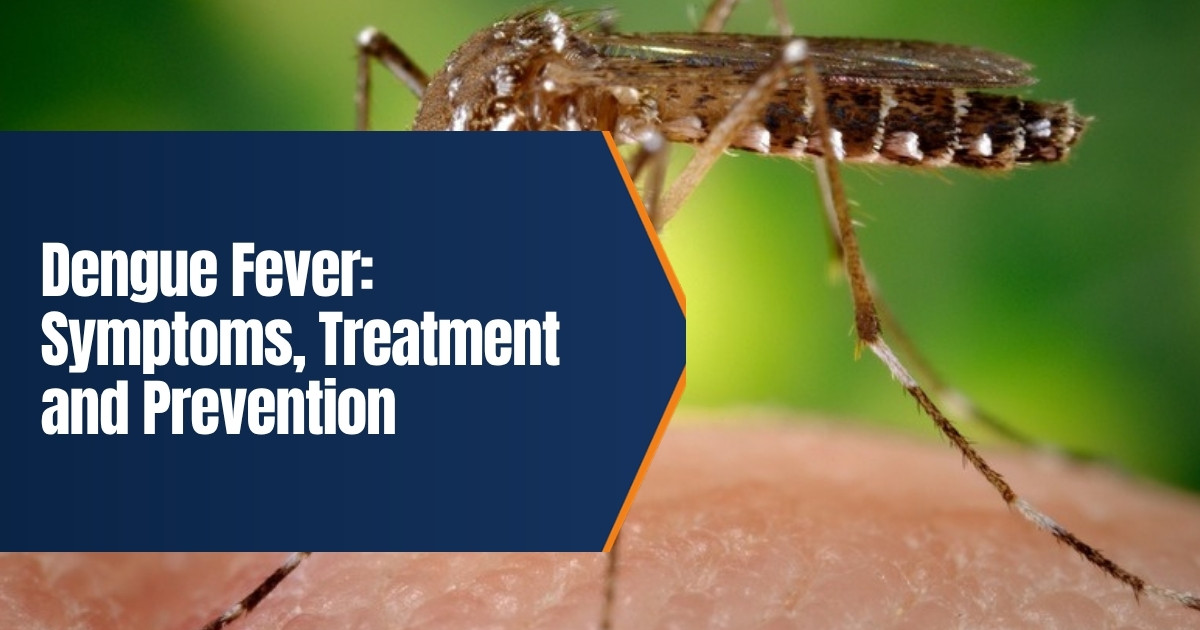
Dengue Fever: Symptoms, Treatment and Prevention
Dengue fever is a viral infection spread by mosquitoes, and it returns to India every monsoon. Most people recover within a week or two, but a small share develop severe dengue, which can be life threatening without timely care. Knowing the symptoms, the warning signs and what to avoid can make a real difference. This guide explains dengue fever symptoms, how it is diagnosed and treated, and how to prevent it, based on World Health Organization (WHO) guidance.
This article is for general information only. It is not a substitute for advice from a doctor.
Table of Contents
Dengue at a Glance
| Item | Detail |
|---|---|
| Cause | Dengue virus, four types (DENV 1 to 4) |
| Spread by | Bites of infected Aedes aegypti and Aedes albopictus mosquitoes |
| Global burden | Estimated 100 to 400 million infections a year; half the world at risk |
| Incubation | Symptoms start 4 to 10 days after the bite |
| Specific cure | None; care focuses on fluids, rest and fever control |
| Safe fever medicine | Paracetamol; avoid ibuprofen and aspirin |
How Dengue Spreads
Dengue is spread when an Aedes mosquito bites an infected person and then bites someone else. It does not spread directly from person to person through touch or the air, although rare cases pass from a pregnant mother to her baby or through blood products. Aedes mosquitoes have black and white markings on their legs and body, bite mainly during the day, especially early morning and late afternoon, and breed in small amounts of clean, still water. Coolers, flower pots, buckets, old tyres, water tanks and even bottle caps can all become breeding sites.
Cases rise during and after the monsoon, usually from July to November in most of India, when rain leaves water standing in and around homes. Rapid urban growth, crowded housing and travel have helped dengue spread to new areas worldwide. WHO reports that more than 14.6 million cases were recorded globally in 2024, the highest on record.
Dengue Fever Symptoms
Many people infected with dengue have no symptoms at all, or only a mild illness. When symptoms do appear, they usually begin four to ten days after the mosquito bite and last two to seven days. According to WHO, common symptoms include:
- High fever, often around 40°C (104°F)
- Severe headache
- Pain behind the eyes
- Muscle and joint pain, which is why dengue was once called “breakbone fever”
- Nausea and vomiting
- Swollen glands
- A skin rash
Children may have milder or less typical symptoms, and older people and those with diabetes, heart disease or kidney disease may become sicker. Anyone with a high fever during dengue season should see a doctor rather than guess the cause, because malaria, typhoid, chikungunya and influenza can look similar at first.
Warning Signs of Severe Dengue
Severe dengue is a medical emergency. The warning signs often appear after the fever goes down, usually between the third and seventh day, which is why families sometimes relax too early. WHO lists these warning signs:
- Severe abdominal pain
- Persistent vomiting
- Rapid breathing
- Bleeding gums or nose
- Fatigue or restlessness
- Blood in vomit or stool
- Being very thirsty
- Pale and cold skin
- Feeling weak
If any of these appear, go to a hospital straight away. Severe dengue can cause plasma leakage, shock, serious bleeding and organ damage, but with early hospital care the risk of death falls sharply. People who have had dengue before face a higher risk of severe illness if they are infected again with a different virus type.
Dengue, Malaria and Chikungunya Compared
| Feature | Dengue | Malaria | Chikungunya |
|---|---|---|---|
| Cause | Virus | Plasmodium parasite | Virus |
| Mosquito | Aedes, bites by day | Anopheles, bites at night | Aedes, bites by day |
| Typical sign | Pain behind the eyes, body ache | Fever with chills that may come and go | Severe joint pain that can last for weeks |
| Test | NS1, PCR or antibody test | Blood smear or rapid test | PCR or antibody test |
How Dengue Is Diagnosed
Doctors suspect dengue from the symptoms, the season and a physical check. Blood tests confirm it. In the first few days, an NS1 antigen test or a PCR test can detect the virus. Later, antibody tests (IgM and IgG) show whether the body is responding to infection. A complete blood count is also used to track the platelet count and the haematocrit, which shows whether blood is becoming concentrated because of fluid loss. Your doctor may repeat these tests daily during the critical phase.
Treatment: What Helps and What to Avoid
There is no specific antiviral cure for dengue. Treatment aims to manage symptoms and catch complications early. Most people with mild dengue can recover at home under a doctor’s guidance.
- Rest. Stay in bed or rest as much as possible.
- Fluids. Drink plenty of water, oral rehydration solution, coconut water, soups and juices to prevent dehydration.
- Paracetamol for fever and pain, at the dose advised by a doctor.
- Avoid ibuprofen, aspirin and other NSAIDs, which can increase the risk of bleeding.
- Watch closely for warning signs, especially after the fever drops.
Severe dengue needs hospital care, where doctors give intravenous fluids and monitor blood pressure, urine output and blood counts. Platelet transfusion is used only in specific situations decided by doctors; a low platelet count on its own does not always need it.
What About Home Remedies?
Papaya leaf extract, giloy, goat milk and similar remedies are widely shared on social media. Some small studies have looked at papaya leaf and platelet counts, but the evidence is limited and none of these replace medical care. Do not delay seeing a doctor or skip tests because of a home remedy, and tell your doctor about anything you are taking.
Dengue in India
India reports dengue in almost every state, with outbreaks in big cities as well as rural areas. According to Union Health Ministry figures reported in December 2025, the country recorded about 1,13,440 cases and 94 deaths in 2025 up to November. Real numbers are likely higher, since many mild cases are never tested or reported. The National Centre for Vector Borne Diseases Control runs surveillance, awareness drives and source reduction campaigns with states and city bodies.
Is There a Dengue Vaccine?
WHO says the vaccine Dengvaxia should be given only to people who have had a confirmed dengue infection before, because it can raise the risk of severe disease in those who have never been infected. Another vaccine, Qdenga (TAK 003), is approved in several countries. In India, the indigenous vaccine DengiAll, developed by Panacea Biotec with the Indian Council of Medical Research, has completed enrolment of more than 10,000 adults in a phase 3 trial, and results are awaited. For now, preventing mosquito bites remains the main protection.
How to Prevent Dengue
Prevention depends on stopping mosquitoes from breeding and avoiding bites:
- Empty, clean and cover water containers at least once a week, including coolers, buckets and tanks.
- Remove waste that can hold rainwater, such as tyres, cans and plastic.
- Change water in flower vases and pet bowls often.
- Use window and door screens and sleep under a mosquito net, even in the daytime for babies and the sick.
- Wear long sleeves and long trousers, especially in the morning and late afternoon.
- Use a mosquito repellent approved for skin, following the label.
- Support local fogging and cleanliness drives, and report breeding spots to your city body.
A person with dengue should also be protected from mosquito bites during the fever, so the virus does not spread to others in the home.
Dengue is often confused with other fevers. Read our guides to malaria causes, symptoms and treatments and key facts about influenza, and learn why World Malaria Day matters for mosquito borne disease.
Keep a simple record of temperature, fluid intake and urine output to share with your doctor.
Do not self medicate with antibiotics, which have no effect on the dengue virus.
Pregnant women, infants and older adults with fever in dengue season should see a doctor promptly.
Housing societies can cut cases by checking terraces, basements and construction sites for stagnant water each week.
Recovery can leave people tired for several weeks, so return to full activity gradually.
Light coloured clothing makes it easier to spot mosquitoes and may attract fewer bites.
What We Changed From the Old Post
The old post was short, used the word “cure” although dengue has no specific cure, and did not list the warning signs of severe dengue. We rewrote it using WHO guidance, added the full symptom list, warning signs, diagnosis, safe treatment and medicines to avoid, a careful note on home remedies, India figures for 2025, vaccine updates and detailed prevention steps.
Frequently Asked Questions
What are the first symptoms of dengue?
High fever with severe headache, pain behind the eyes, and muscle and joint pain, usually four to ten days after the bite.
Which medicine is safe for dengue fever?
Paracetamol, as advised by a doctor. Avoid ibuprofen, aspirin and other NSAIDs.
When is dengue most dangerous?
Often just after the fever falls, between about the third and seventh day, when warning signs of severe dengue can appear.
Can dengue happen twice?
Yes. There are four virus types, and a second infection with a different type carries a higher risk of severe dengue.