

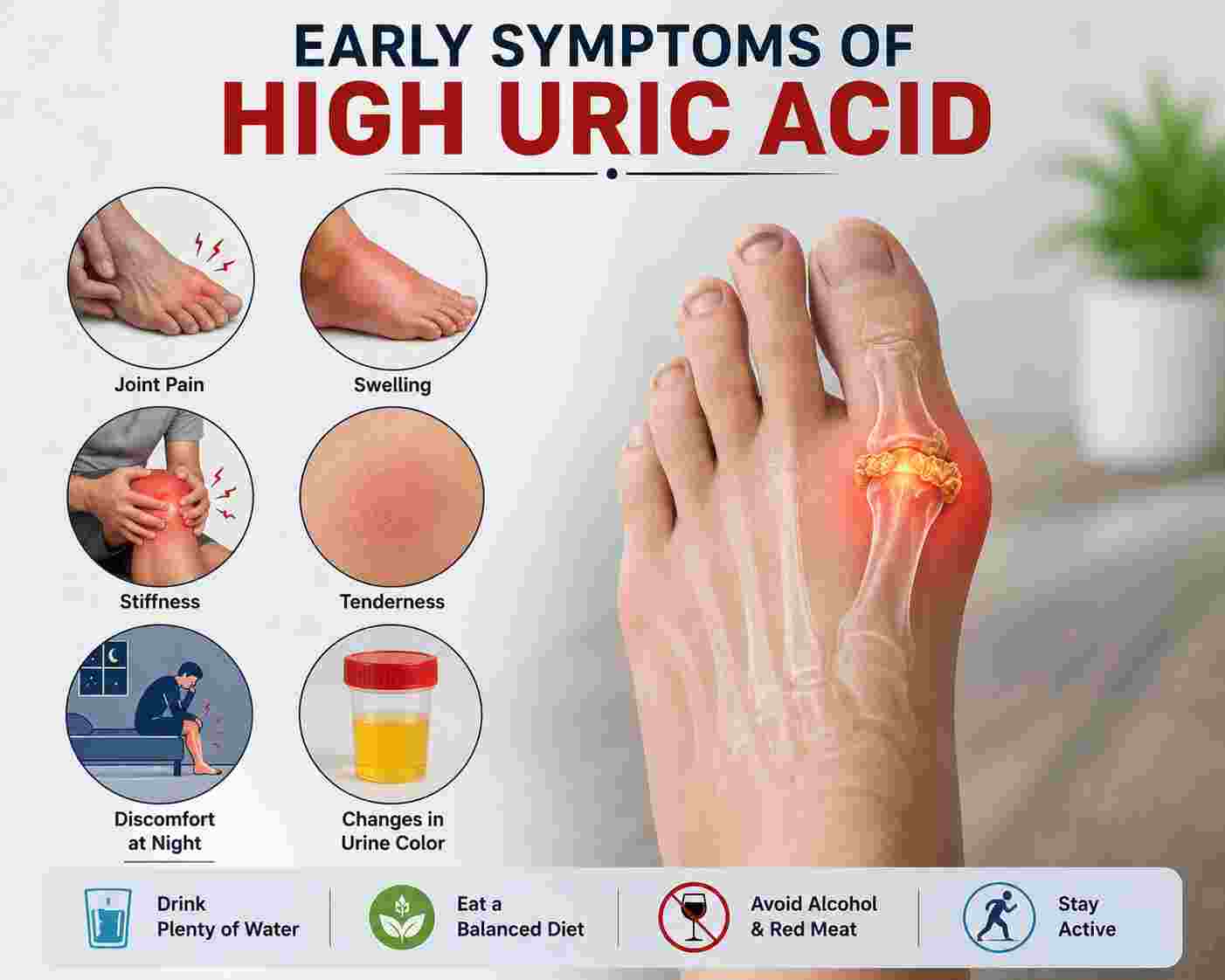
Early Symptoms of High Uric Acid
Most people find out they have high uric acid from a routine blood test — or when a gout attack wakes them up in the middle of the night. The problem is that uric acid builds up gradually. By the time it causes real trouble, it has often been elevated for months without a single clear warning sign.
Spotting the early high uric acid symptoms gives you a real chance to act before the situation becomes harder to manage. This article explains what those early signs look like, why they happen, and what you can do about them.
Table of Contents
What Is Uric Acid and Why Does It Rise?
Uric acid is a natural waste product. The body makes it when it breaks down purines — substances found in certain foods and also produced naturally inside the body. Healthy kidneys filter uric acid from the blood and remove it through urine.
When the body produces too much, or the kidneys cannot clear it efficiently, blood uric acid levels begin to rise. At a certain point, the excess forms sharp, needle-like crystals that settle in joints and the surrounding tissue. That is where the damage starts.
Early Warning Signs That Are Easy to Overlook
High uric acid does not always announce itself clearly at the start. Many of the early high uric acid symptoms look like minor aches, tiredness, or something that can wait.
Joint soreness that comes and goes
Brief stiffness or discomfort in the big toe, ankle, or knee — appearing without obvious reason and disappearing within a day or two — is easy to dismiss. These short episodes can be the first signal that uric acid crystals are beginning to irritate joint tissue. Most people chalk it up to a minor sprain or standing too long.
Mild swelling near a joint
Puffiness around a joint, even without significant pain, is worth paying attention to. Uric acid crystals trigger an inflammatory response in the surrounding tissue, and the swelling is the body’s early reaction — often before any real pain develops.
Warmth or redness over a joint
The skin over an affected area often feels warm and looks slightly red as inflammation builds. This is the body responding to irritation from crystals, sometimes well before the pain becomes severe enough to notice.
Persistent, unexplained fatigue
Chronically elevated uric acid places a quiet strain on the body. Some people report ongoing tiredness without a clear reason. Fatigue on its own can mean many things, but alongside joint-related signs it is worth bringing up with a doctor.
Changes in urination
High uric acid can affect the kidneys before any joint symptoms appear. Passing urine more often than usual, or noticing mild discomfort when doing so, may suggest the kidneys are working harder than normal to clear the excess uric acid load.
When High Uric Acid Turns into Gout
If uric acid stays elevated and goes untreated, mild occasional discomfort eventually turns into a full gout attack. Gout symptoms are intense and unmistakable — severe pain, significant swelling, and extreme tenderness in a joint, most often starting in the big toe.
During a gout attack, the joint becomes so sensitive that even a bedsheet touching it causes sharp pain. Gout symptoms typically peak within 12 to 24 hours and can last for days or even weeks without proper treatment.
Repeated gout attacks are a sign that crystal deposits have built up enough to cause lasting harm. Over time those deposits can form lumps called tophi that permanently damage joint structure and reduce movement.
Who Is More at Risk?
Some people are significantly more likely to develop high uric acid than others. Knowing your risk helps you act before symptoms appear.
Men are more commonly affected than women, particularly before age 50. Women’s risk rises after menopause. A family history of gout raises your personal risk considerably. People with obesity, diabetes, high blood pressure, or kidney disease are more vulnerable.
A diet heavy in red meat, organ meats, shellfish, or regular alcohol — particularly beer — pushes uric acid levels higher. Certain medications, including some diuretics, can also raise uric acid as a side effect. If several of these apply to you, a simple blood test is worth discussing at your next doctor’s appointment.
How Is It Diagnosed?
A blood test measures uric acid levels directly. Normal values sit below 6 mg/dL for women and below 7 mg/dL for men, though labs may use slightly different reference ranges.
If your result comes back elevated, a doctor will look at your full picture — symptoms, medical history, diet, and kidney function — before recommending next steps. Do not try to interpret results on your own. Numbers alone do not tell the whole story, and context matters enormously in how a doctor responds to the findings.
Uric Acid Treatment: What It Involves
Managing high uric acid generally means combining medication with lifestyle changes. Doctors commonly prescribe drugs such as allopurinol, which lowers how much uric acid the body produces. For acute gout attacks, anti-inflammatory medications bring pain and swelling under control relatively quickly.
Uric acid treatment is not a short course you complete and then forget. It is an ongoing commitment. Many people feel better after a few weeks, stop their medication, and find themselves facing another attack a few months later. Staying consistent is what keeps uric acid levels stable over time.
A Uric Acid Diet That Actually Helps
What you eat has a direct and measurable effect on uric acid levels. A well-planned uric acid diet works alongside medical treatment and gives you genuine day-to-day control over how the condition behaves.
Here is what to focus on:
- Cut back on high-purine foods — red meat, organ meats like liver, anchovies, sardines, and shellfish raise uric acid levels the most
- Limit alcohol — beer raises uric acid more than most people expect and can trigger a gout attack even in moderate amounts
- Avoid fructose-sweetened drinks — packaged juices and sodas raise uric acid in ways that regularly catch people off guard
- Drink more water — staying well hydrated helps the kidneys flush out uric acid more efficiently each day
- Include safe foods — vegetables, fruits, whole grains, low-fat dairy, and eggs are all well-suited to a uric acid diet
- Try cherries — some research suggests that cherries and cherry extract may help reduce uric acid levels and lower the frequency of gout attacks
These changes do not produce instant results. But kept up consistently over several weeks, a thoughtful uric acid diet makes a real difference in how the body manages uric acid day to day.
Frequently Asked Questions
-
What are the most common early high uric acid symptoms?
The most common early high uric acid symptoms include brief episodes of joint soreness or stiffness — particularly in the big toe, ankle, or knee — mild swelling near a joint, warmth or redness over the affected area, and unexplained fatigue. These signs tend to come and go at first and are very easy to dismiss.
-
What is the difference between high uric acid and gout?
High uric acid — or hyperuricemia — means blood uric acid levels are above normal. Gout happens when that elevated level has been present long enough to form crystal deposits in a joint, triggering intense pain and inflammation.
-
Which foods should you avoid with high uric acid?
You should reduce or avoid red meat, organ meats, shellfish, beer, and drinks sweetened with fructose. These foods either increase the purine load in your body or interfere with how the kidneys clear uric acid.
-
What does uric acid treatment involve?
Uric acid treatment typically combines medication with long-term lifestyle changes. Doctors prescribe drugs like allopurinol for ongoing management and anti-inflammatory medications for acute gout attacks. Dietary changes, consistent hydration, and weight management all support the medical approach.
-
Can you have high uric acid with no symptoms?x
Yes. Many people carry elevated uric acid for months or even years without any noticeable symptoms at all. This is exactly why routine blood testing matters. Left undetected and untreated, high uric acid raises the risk of gout attacks, kidney stones, and in some cases gradual kidney damage over time.