

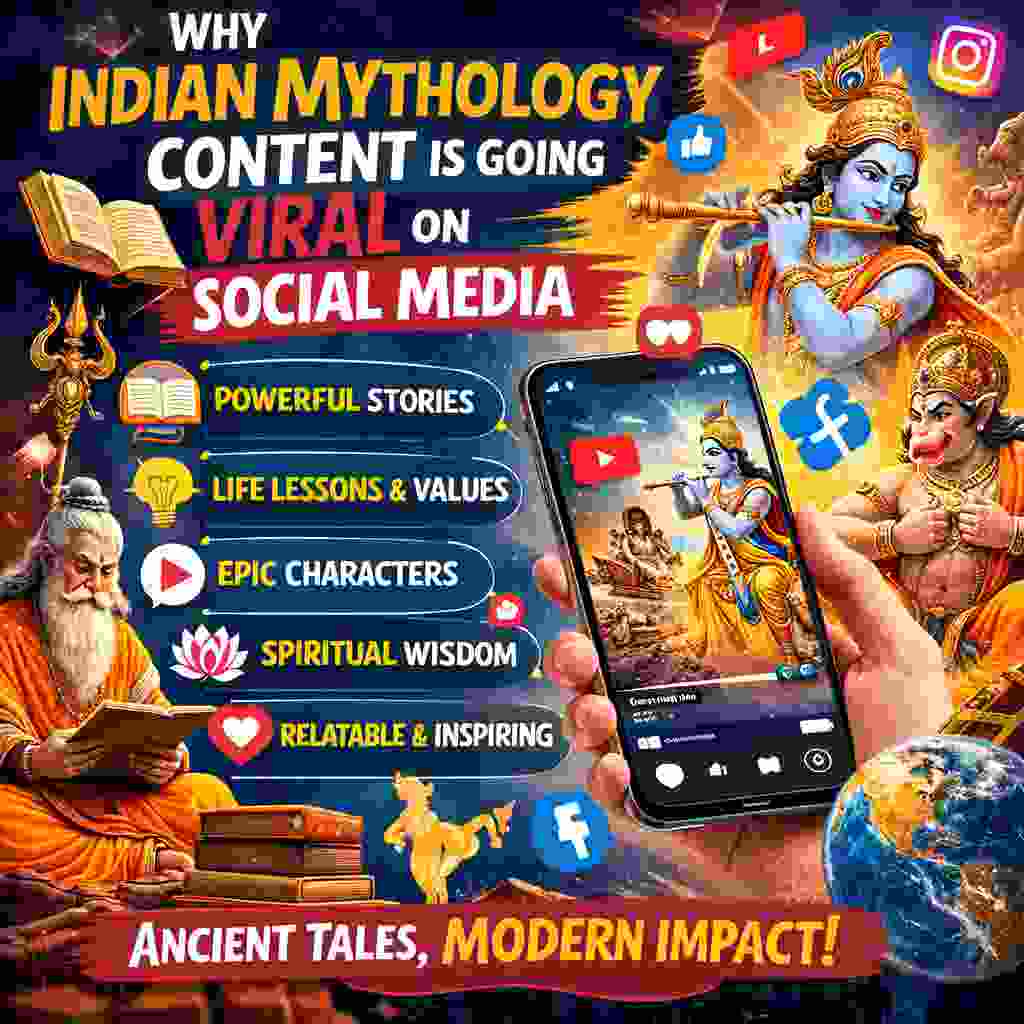

Mythology is captured in the short videos, reels, and posts on social media. Indian mythology stories are also attracting considerable attention online, among numerous other subjects. Filmmakers are posting videos of gods, romances, festivals, and old customs, and millions of viewers are publicizing, liking, and commenting on these videos every day.
This increase in interest is not in vain. India has a rich culture and religion that dates back thousands of years. The ancient Indian history, temples, and epic stories, as reflected in their scriptural teachings, continue to enter the lives of ordinary people. The heritage will also attract attention as soon as it is shared on social media, in a graphic, straightforward way.
The creators of mythology about the Ramayana, Mahabharata, and Puranas are now flooding Instagram, YouTube, and Facebook with mythology reels. The contents of these videos are not overly long, so the old stories are easy for modern viewers to grasp.
Simultaneously, such posts are not the only forms of entertainment. They are also useful for exposing people to the Hindu festival significance, their rituals, and the cultural values of these practices. Consequently, mythology-based material is becoming one of the most widely distributed themes on the internet.
Table of Contents
Indian Mythology and Its Perennial Fascination
Indian mythology is an ancient tradition that has endured for centuries through oral presentation, script, and narration. Narratives of deities, wise men, heroes, and moral teachings are ingrained in the country’s culture.
People have been brought up hearing these stories either by their parents or grandparents. Social media is merely showing the same stories in a different form. The popularity of Indian mythology stories on social media suggests that viewers remain attached to them.
Powerful stories also include such themes as:
- Good versus evil
- Devotion and faith
- Duty and righteousness
- Ethical decision-making and outcomes.
Due to these themes, spiritual stories from India remain popular among viewers of all ages. Even the younger generation, who hardly read scriptures, are finding such stories through brief videos and illustrated posts.
Popular Social Media Sites that are Feeding the Trend
Mythology has been prominently spread through the emergence of short-form video platforms. Historical and religious tales are told by their creators in less than a minute and are easily viewed and forwarded.
The bridal price is gaining serious ground in some of the platforms where mythology rules India, including:
- Reel on Instagram: There are numerous narrators of Hindu stories in short form, using illustrations and voiceovers.
- YouTube Shorts – Channels You can find tasty lessons in the life of ancient Indian history and mythology.
- Facebook and Threads- Clips and posts of information are massively spreading on Facebook and Threads.
In the short movies, individuals can learn fast. Viewers can access a brief explanation of a mythological figure or festival tradition, rather than reading long articles.
Such a format has enabled Indian mythology tales to reach millions of users who scroll through their phones.
The Viral Mythology Content Role of Festivals
The association with Indian festivals is another reason why mythology spreads rapidly across the Internet. The majority of creators publish tales and descriptions during festivals.
The Hindu festival significance also enables the viewer to relate the rituals to the narration about them. For example:
- During Diwali, storytellers tell the story of how Lord Rama returned to Ayodhya.
- The movies released during Navratri usually depict the triumph of goddess Durga over the Mahishasura.
- The experience of Lord Krishna’s childhood appears in posts about Janmashtami.
The posts in these seasons are usually high in entertainment value, as individuals seek cultural details during festivals. Consequently, spiritual stories in India become more visible at such periods.
For many viewers, such content serves as a quick way to decipher the hidden messages in celebrations.
Why Young Audiences are viewing Mythology Content
Additional users have also been identified as younger, trendier, and more geared toward entertainment. Nevertheless, a large number of them are also consuming the mythology content.
There are several reasons this occurred.
Short and Simple Format
Short reels are simple videos that tell stories (in 30-60 seconds) and are thus easy to watch.
Visual Storytelling
Indian mythology stories are more engaging because illustrations, animations, and background music accompany them.
Cultural Curiosity
Young audiences would like to find out more about their culture and heritage.
Educational Value
The ancient history of India and its religious symbolism are described in a comprehensible manner by many creators.
Due to these influences, mythology reels in India are fast emerging as one of the popular tags on social media platforms.
Artists That Make Mythology an Interesting Read
Content makers hold significant roles in creating mythology that is engaging for online audiences. They do not deliver the stories in a traditional lecture style, but rather through creative approaches.
Some of the common storytelling styles are:
- Minimal animation storytelling videos.
- Historical images and voice-over narration.
- Timelines with illustrations of mythological eventualities.
- Temple customs and customs explained.
Most creators also study scriptures and historical texts before creating their videos. This helps keep it accurate and present spiritual stories from India in a modern form.
There is a reason responsible storytelling is significant: mythology is directly related to faith and culture.
Educational Value of Mythology Content
The educational nature is another factor in the popularity of mythology-based posts. These are not only religious stories but also mirrors of philosophy, ethics, and cultural heritage.
The audiences may be informed about:
- In ancient Indian history, significant events have occurred.
- History of pilgrimage places and temples.
- Episodes of moral teachings in epics such as the Ramayana and the Mahabharata.
- Rituals and traditions have another meaning.
This information can make the viewers admire the Indian culture. In most cases, individuals begin selecting scriptures or books that provide historical accounts after reading about Indian mythology online.
This demonstrates that cultural learning can also be promoted using digital platforms.
The Emotional Connection With Spiritual Stories
Many Indians consider faith and spirituality essential aspects of life. Myths of the gods and saints tend to evoke emotional responses in audiences.
Spiritual tales in India often focus on themes of devotion, modesty, and religion. The themes are popular with people in both good and hard moments.
Take the tales of Lord Hanuman’s devotion to Lord Rama, or the sagacity of Lord Krishna, which many viewers would be inspired by. These tales are popular because they provide both cultural and emotional gratification.
When producers publish such tales through mythology reels in India, the message reaches more people within minutes.
The Impact of Indian History in Ancient India
Numerous mythology videos also display the historical elements of Indian culture. Mythological tales tend to go hand in hand with temples, ancient cities, and even archaeological finds.
Viewpoints are informed by ancient Indian history; they learn how mythology and history overlap at times. This generates the interest of:
- There were old temples and pilgrimage paths.
- Historic kingdoms referred to in the scriptures.
- Old cultural traditions that are centuries old.
A consequence of this is that social media content is leading to the rediscovery of Indian heritage among people.
Difficulties in Mythology Content Creation
Mythology material is popular, but creators have to handle it cautiously. Such misinformation or misstated claims may confuse viewers.
Several practices are usually important to responsible creators:
- Quoting original bible or historical examples.
- Eschewing sensationalism on mythology.
- Culturally, religious feelings.
- The ability to explain things in a balanced manner.
By doing this, it is possible to preserve integrity with the audience. It also helps propagate stories about Indian mythology responsibly on the internet.
The Future of Mythology Content on Social Media
The success of content built on mythology will continue to increase. Social media feeds will continue to post spiritual stories from India and historical narratives as more creators continue to pay attention to culture and history.
There is also the possibility that technology will affect how these stories are presented. Storytelling, educational reels, and documentary-style running clips are already being noticed.
More significant is the audience’s real interest in information about the significance of Hindu celebrations, traditional practices, and legends.
This means that electronic media, in turn, could play a significant role in preserving and promoting Indian culture.
Frequently Asked Questions (FAQs)
Why do Indian mythology stories go viral on social media?
The popularity of Indian mythology stories can be explained by the fact that they combine culture, history, and spiritual teachings. Such stories are easy to follow and read, especially for young people, because they have been divided into short videos.
So what are the reels of mythology in India?
Mythology reels India are short social media videos that narrate mythological events, figures, or traditions. These reels tend to follow the stories of Ramayana, Mahabharata, and other scriptures.
What is the explanation of Hindu festivals through mythology posts?
There are numerous makers on the networks who post about Hindu festivals, their historical background, and mythological basis, such as Diwali, Navratri, and Janmashtami.
Is it possible that mythological material can make people study Indian history?
Several videos and posts, indeed, tie mythological tales to Indian history. This helps the consumer understand temples, traditions, and historical events related to India’s cultural heritage.