

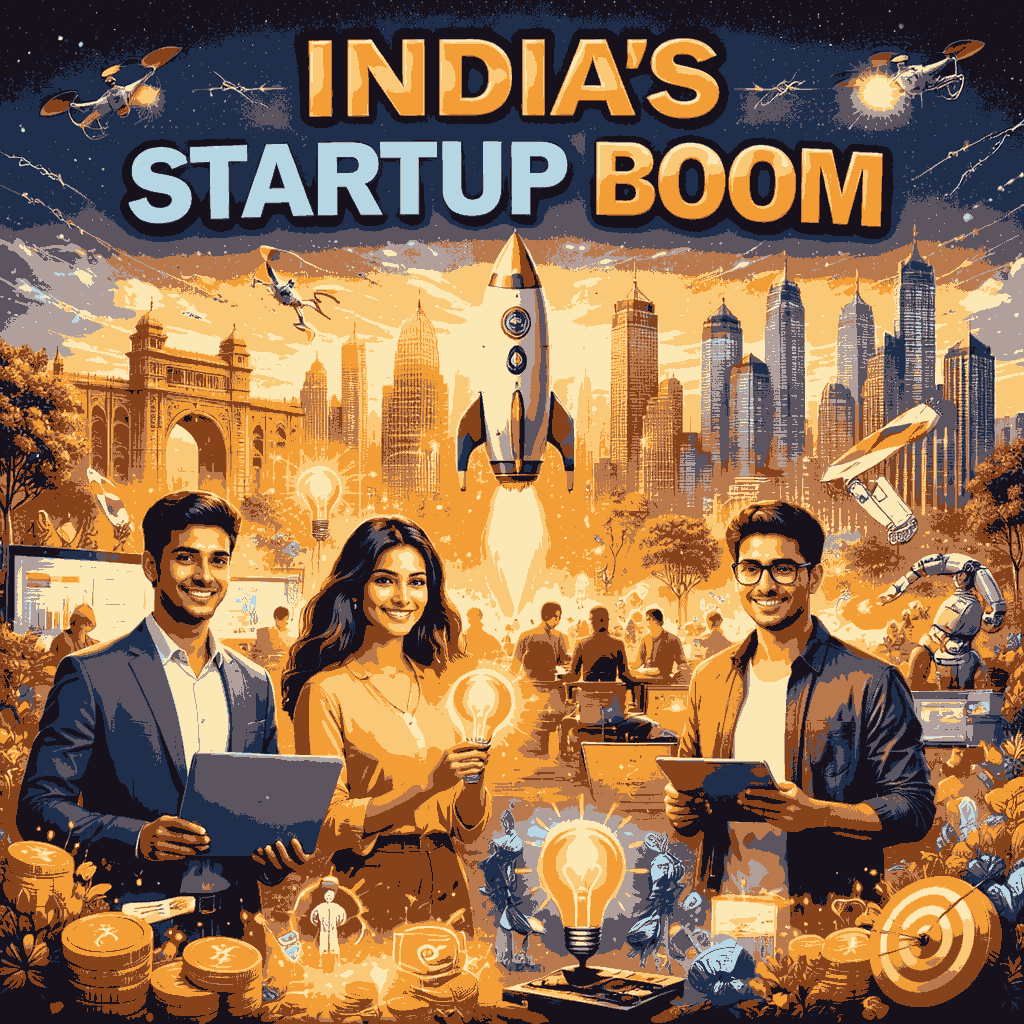
Top Startup Success Stories in India
India has seen a strong rise in new businesses over the last decade. From small ideas in college dorms to companies valued at billions, startup stories in India have become a source of learning and inspiration. These journeys show how an entrepreneur India can turn simple ideas into real business success India with focus, patience, and smart decisions.
This article presents some of the most successful startups in India, along with lessons and practical advice readers can relate to and learn from.
Table of Contents
Why Are Startup Stories Important in India
Life with startups involves more than money or expansion. They are based on real-life challenges, risks, and choices. Given that anyone can be thinking of starting a business, such stories help determine what has worked and what has not.
India has one of the largest markets, a growing number of digital users, and is opening its doors to new enterprises. As a result, many startups in India have been successful and have quickly scaled into international markets.
To an entrepreneur in India, these stories are more practical than mere theory. They also demonstrate that failure is often the way and that it is vital to learn from mistakes. Reading other people’s experiences may help you avoid the most common errors, make more effective decisions early in the process, and gain confidence and clarity along the way.
Flipkart: Online Bookstore to E-commerce Giant
Flipkart was founded in 2007 by Sachin Bansal and Binny Bansal as an online bookstore. During this period, online shopping was not popular in India. Individuals were hesitant to make online payments.
The founders were concerned with at least addressing real problems:
- There is an option of cash on delivery
- Easy returns
- Reliable delivery
These were straightforward measures that created confidence among consumers. Gradually, Flipkart diversified into electronics, fashion, and so on. It eventually became one of the largest startup stories in India.
Central lesson learned: Find solutions to customers’ problems. Growth will follow.
Paytm: Digital Payments for Everyday Use
PayTM started as a mobile payment service in 2010. It has since branched into online payments and banking. It was in 2016, with the need to make payments digitally (due to demonetization), that the real turning point occurred.
Paytm focused on:
- Easy mobile payments
- QR code system of small shops
- Mobile wallets are used for small transactions
This saw it become one of the most popular apps ever used in India and a successful business story to emulate.
Most important lesson: Timing and market need are key factors in startup development.
Zomato: Reshaping The Way India Eats
Zomato began as a mere site for posting restaurant menus. Over time, it grew into a comprehensive food delivery and restaurant discovery service.
The company specializes in:
- User-friendly app
- Fair rating and comments
- Fast delivery services
The histoscribe’s history traces its origins to the idea, but evolvthat has since evolved into the most successful in India.companies
Lesson learned: Start with a small one, then keep reviewing based on feedback.
Byju’s: Technology-Based Education
Byju started as an offline coaching business and has since transitioned to online coaching. It used videos and interactive media to make learning simple for students.
The company became popular due to being able to:
- Simplified complex topics
- Target oriented at school students
- Access easy-to-use mobile apps
It grew into one of the largest edtech firms to date and a resounding success in Indian startup stories.
The most important lesson learned: the combination of education and technology can establish great business prospects.
Ola: Local Solution for Transport Needs
Ola began as a cab-hailing service in India. It offered an alternative to traditional taxi services.
Key features included:
- App-based booking
- Affordable pricing
- availability in other cities of smaller cities
Ola was competing with international players and has even established a strong position. It is a portrayal of the robustness of an Indian entrepreneur who is knowledgeable about what is needed locally.
Main lesson: Domestic market insights can be highly beneficial.
Characteristics That Successful Startups Share in India
There are several common characteristics of most successful startups in India. These trends can help new entrants understand what will be successful in the Indian market.
Strong Problem-Solving Approach
They are focused on issues such as employment, transportation, and education.
Customer Trust
They build trust through basic elements such as easy returns, clear pricing, and reliable serviceability.
Adaptability
Depending on market requirements, they adjust their approach.
Use of Technology
They use applications, web pages, and information to expand more quickly.
Long-Term Vision
They are not planning for short-term profits but for future growth. This will help them, rather than increasing the time. It also enables them to manage better market conditions through planning patience, which can determine long-term success and stable growth over time.
Startup Ideas Inspired by Indian Success Stories
Numerous individuals visit Startup Stories India and are curious about what they can initiate. These are all practical startup ideas depending on the prevailing trends:
Digital Services
- Online learning platforms
- Freelance service marketplaces
- Digital marketing agencies
Local Business Solutions
- Small town delivery services
- Hyperlocal grocery apps
- Home services/repair
Agriculture-Based Startups
- Farm-to-home supply chains
- Organic farming products
- Agri-tech platforms
Health and Fitness
- Online fitness coaching
- Healthy meal delivery
- Mental wellness apps
These start-up concepts indicate that it does not require a huge budget. It can take only a mere thought, with proper implementation, to make the business a success in India. The type of founder who starts at home and responds to demand and customer feedback is another hallmark of many founders, making the startup less risky in the initial stages and building trust.
Indian Startups are Ideally Faced With Challenges
Nothing comes easy to every entrepreneur in India. Gaining insights into these can be beneficial for planning.
Funding Issues
New founders normally have a hard time getting initial investment.
Competition
Numerous startups are in the same zone, making it difficult to stand out.
Customer Retention
It is not difficult to attract users, but retaining them is problematic.
Regulatory Issues
The various rules and policies may put a retard on the growth.
Team Building
It may be tricky to find the right individuals who share the vision, particularly at the initial levels.
Nevertheless, despite such difficulties, numerous successful startups in India have grown, remained focused, and remained flexible. They focus on long-term objectives rather than short-term pressure and continuously enhance their services based on user needs and feedback.
Indian Tips for Aspiring Entrepreneurs
As a general guide, the following tips can be used by anyone wishing to embark on any business:
Keep it Simple and Experiment
Wait, not till you are perfect. Begin with a simple version and try out your idea.
Concentrate on a Single Issue
As a result, there is a risk of confusion when attempting to address the multitude of problems.
Listen to Customers
Feedback serves to enhance products and services.
Manage Finances Carefully
Early planning of the expenses is important.
Stay Consistent
Nor is success to be at a single stroke of a pen. This is time-consuming and hard work.
Keep Learning
Market trends vary rapidly. The learning process is continuous; this is an entrepreneur in Indiative. Can be informative and impart practical, real-life case studies, and follow startup stories in India.
Future of Startups in India
The startup industry in India is ever-expanding. As more individuals access the internet and an increasing number of them use smartphones, the number of businesses to venture into is growing.
Industries such as fintech, edtech, health tech, and clean energy will continue to grow. Governmental assistance and start-up investments are also improving, helping attract more individuals to innovation and new start-up projects.
Small towns are on the rise as well. Tier-2 and tier-3 city founders are beginning businesses to address issues facing their cities. This makes startup stories in India even more diverse and opens new opportunities for business success in India. It also demonstrates that success and opportunities are not limited to big cities and are being distributed throughout the country at an ever-increasing rate.
Conclusion
The emergence of successful startups in India demonstrates that a good idea, low-tech implementation, and a focus on customers can yield significant outcomes. It can be Flipkart, Paytm, Zomato, Byju’s, or Ol, but no matter which way you choose, both experiences are well-learned.
As anyone who intends to start a business must realize, these stories show that big businesses can have small beginnings but still be effectively successful. Every businessperson has the opportunity to create something when they have the right psychology and focus. Timely action and appropriate location during difficult times can significantly improve the process and lead to gradual improvement.
FAQs
What are some well-known startup stories in India?
Flipkart, Paytm, Zomato, Ola, and Byju are among the most popular startup stories in India. These firms began small and grew into big businesses.
What works in India to make a startup a success?
A startup is successful when it solves real problems, understands its customers, and adapts to markets. Numerous successful startups in India follow this strategy.
What do you think are the simplest and easiest startup ideas?
Some good startup ideas for starting an online service, a local delivery business, an education business, and a health-related service.
What is needed to be a successful entrepreneur in India?
The key concepts an entrepreneur in India can use to succeed are starting small, focusing on one idea, making mistakes, and being consistent over time.