

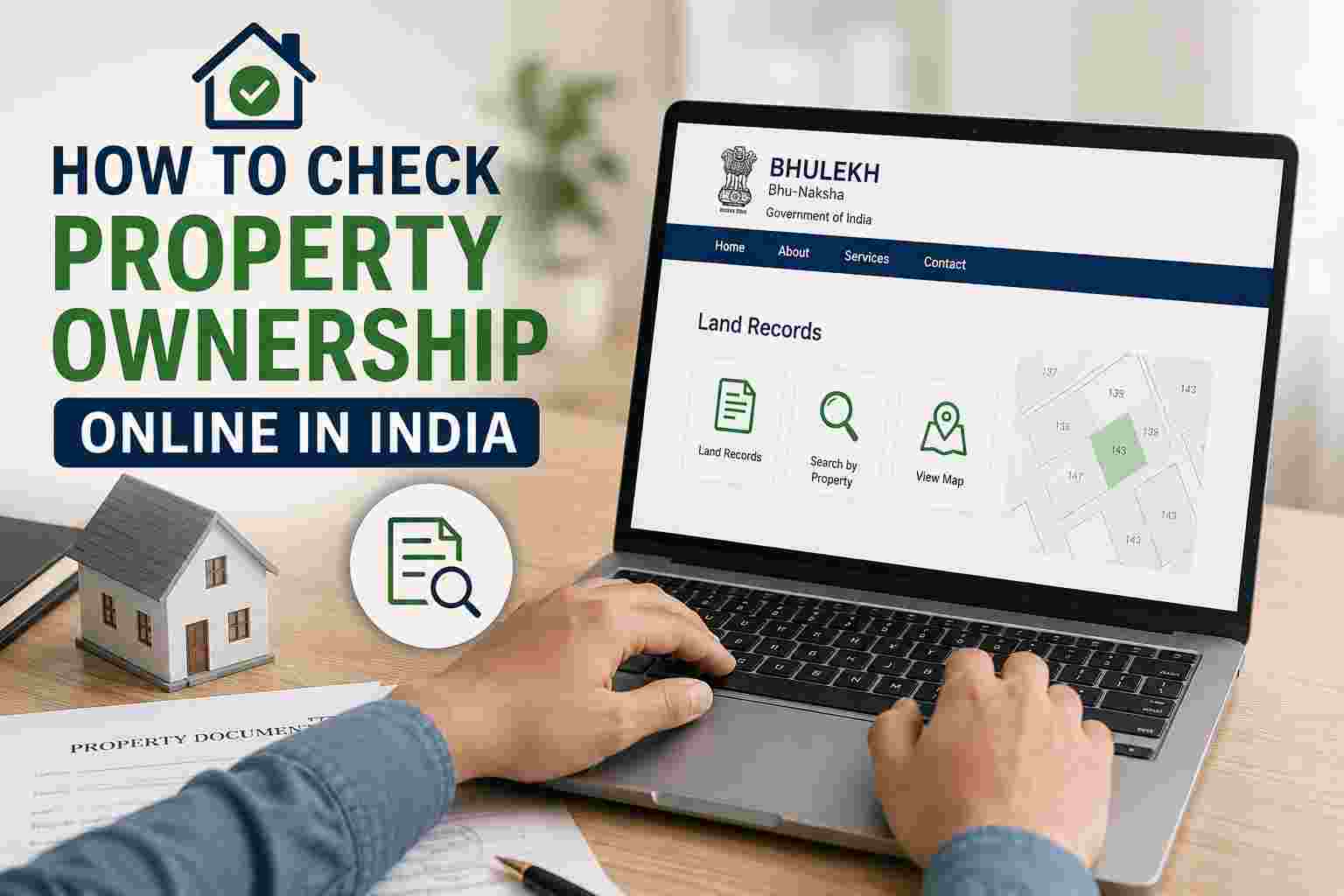
How to Check Property Ownership Online in India?
Most people who get cheated in a property deal will tell you the same thing — they trusted the seller without checking. That one step they skipped cost them lakhs, sometimes crores, and years fighting it in court.
Here’s the thing. Checking who actually owns a piece of land in India has never been easier. You don’t need to stand in a government queue. You don’t need to pay an agent. You can sit at home, open your laptop, and run a proper property verification in under an hour — for free.
This piece tells you exactly how to do that.
Table of Contents
Why So Many Buyers Skip Property Verification — And Why That’s a Mistake
People skip this step for a few reasons. Some think it’s complicated. Some trust the seller blindly. Others figure the registration process will catch any problems. None of these are good enough reasons.
Property fraud in India is real. One seller sells the same plot to three different buyers. Another hides the fact that the land is stuck in a family dispute running for fifteen years. Some properties have bank loans against them that the buyer finds out about only after paying the full amount.
A simple land record check before you commit catches most of this. It shows who the legal owner is right now, whether anyone else has a claim on the land, and whether what the seller is saying matches what government records actually say. It takes less than an hour. There’s no good reason to skip it.
What Is Bhulekh — And Why You’ll Keep Seeing That Word
If you’ve searched for land records online in India, the word bhulekh keeps coming up. It simply means “land record” in Hindi. Many state governments use it as the official name for their digital land record systems.
Before these portals existed, all land records sat in registers at the tehsil or patwari office. You had to physically go there and hope someone was in a helpful mood. Bhulekh changed that by putting those records online.
A bhulekh portal shows you the owner’s name, the size of the plot, what the land is classified as, the survey number, and in many cases whether a loan or legal dispute is attached to it. States like Uttar Pradesh, Bihar, Madhya Pradesh, Odisha, and Uttarakhand all have their own bhulekh portals. They look different from each other but carry the same core information about property ownership.
Which Portal to Use Depends on Which State the Land Is In
India doesn’t have one central portal for property ownership records. Every state runs its own system. Here’s where to go for the major ones:
Uttar Pradesh
Go to upbhulekh.gov.in. Pick your district, tehsil, and village. Enter the Khasra number or the owner’s name. It pulls up the Khatauni record — who owns that plot according to government records.
Maharashtra
Head to mahabhulekh.maharashtra.gov.in. Search by survey number or owner name. The 7/12 extract it gives you confirms property ownership and land classification in Maharashtra.
Rajasthan
Use apnakhata.raj.nic.in. Search by district, tehsil, and village. The Jamabandi record lists the owner, any co-owners, and the full details of the plot.
Karnataka
Visit landrecords.karnataka.gov.in. Search by survey number or owner details. You get the RTC — Record of Rights, Tenancy and Crops — which is the standard land record in Karnataka.
Delhi
Try dlrc.delhi.gov.in. Search by owner name, property ID, or colony name for property ownership details in Delhi.
For any other state, search “[state name] land record portal” on Google. The official government site comes up first.
What to Keep Ready Before You Start Searching
Don’t open the portal empty-handed. If you don’t have the basic details ready, you’ll hit dead ends fast. Before you sit down to do a land record check, keep these things at hand:
- District and tehsil name — every portal starts here; without it you can’t go further
- Village name — especially important for agricultural or rural plots
- Khasra or survey number — the unique number assigned to that specific plot in government records
- Owner’s name — if you don’t have the Khasra number, this is your next best option
- Khata or account number — some portals group multiple plots under one account
The seller should give you all of this without hesitation. If they’re vague about any of it, that itself tells you something.
The Documents That Actually Prove Property Ownership
Checking the portal gives you a quick snapshot. But before any money changes hands, you need to look at the paper trail too. Here are the documents that matter:
- Sale deed — the registered document that formally transfers property ownership; if it’s not registered at the Sub-Registrar’s office, it has no legal weight
- Encumbrance certificate — tells you whether the property has any active loans, mortgages, or court orders tied to it
- Mutation records (Dakhil Kharij) — show whether government records were officially updated after the last sale; many disputes happen because this step was skipped
- 7/12 extract or Khatauni — depending on the state, this lists the current legal possessor of the land
- Property tax receipts — someone paying tax consistently is usually the real and active owner
Run through all of these and make sure they tell the same story. If any two documents contradict each other, stop and get clarity before going any further.
Cross-Check Using the State’s Registration Portal Too
Most states have a separate portal for checking registered property documents — actual sale deeds filed with the Sub-Registrar’s office, not just land records.
In Uttar Pradesh, igrsup.gov.in lets you search past transactions by property location or buyer and seller names. In Maharashtra, igrmaharashtra.gov.in does the same. These portals tell you who officially bought or sold the property and on what date.
Combining this with your bhulekh search gives you a much fuller picture. If the bhulekh record shows one owner but the registration portal shows a sale that was never updated in land records — that’s a red flag worth investigating before you do anything else.
Signals That Something Might Be Off
Even after running all these checks on land records online, certain warning signs deserve extra attention. The seller’s name doesn’t match the records. Could be a mutation that wasn’t updated — but get it sorted before moving forward.
Land is classified as agricultural. If the plan is to build on it, agricultural land usually needs official conversion first. That’s a separate process and not always guaranteed. Multiple co-owners listed. You need written consent from every single one of them, not just the person in front of you.
Active loan on the encumbrance certificate. That loan must be cleared and a release deed issued before property ownership can legally transfer to you. Don’t try to push through these issues. Either get them fully resolved or walk away from the deal.
Do You Need a Lawyer?
For the initial property verification check — no, you don’t. These portals are public and free to use.
But when you’re ready to actually buy, especially if it’s a high-value property or one with any kind of complicated history, hire a property lawyer to do a proper title search. A good one goes through thirty years of records, checks every document, and tells you clearly whether the title is clean.
The online check is the beginning of due diligence, not the end of it.
Frequently Asked Questions
-
Is checking land records online free in India?
Yes. Most state bhulekh portals are completely free to search and view. Downloading certified copies might cost a small fee, but browsing records costs nothing.
-
What is a Khasra number and how do I find mine?
It’s the unique number assigned to a specific plot in government records. You can find it on old property documents, the existing sale deed, or by asking the seller. The local patwari can tell you too.
-
Is there one portal to check property ownership across all states?
No. Each state has its own portal. The central government’s DILRMP programme is working toward greater national integration, but right now you go state by state.
-
What if the land records online don’t match what the seller is telling me?
Ask for written explanations and don’t hand over any money until every mismatch is resolved. Bring in a property lawyer if things feel unclear.
-
Can I check land records for someone else’s property, or only my own?
These portals are public. Anyone can search any plot — no special permission needed. That’s the whole point of making them accessible online.