

History of Hawa Mahal Jaipur
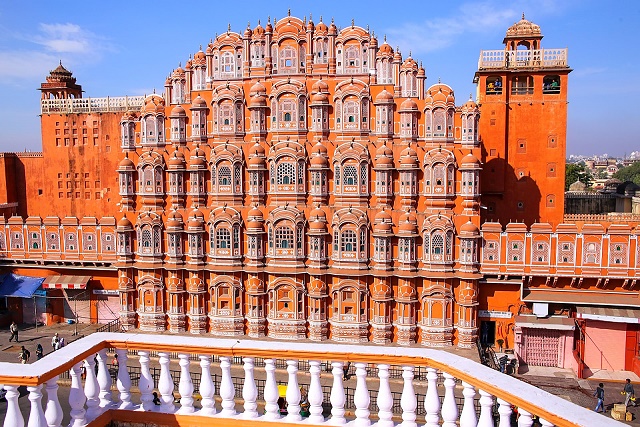
Jaipur, Hawa Mahal is one of the most attractive monuments in Rajasthan and a very catalytic heritage of Jaipur city. The old palace is added to the old city area, and this is what makes the grandeur of the old Rajput designs and the local cultural heritage. The building was constructed using pink and red sandstones; it is not that specific and hence prone to blending with other constructions in the area, and that is why Jaipur is popularly referred to as the pink city.
This explanation as to why the Palace of Winds continues to cause them to call it the most prominent monument is the fact that there are numerous tiny windows through which air passes through the building. The structure is useful in cooling the interiors during the summer season in Rajasthan, which is quite hot. It is the historical peculiarities as well as the architectural peculiarities that resulted in the inclusion of the palace into the Pink City and the first and foremost tourist locations within the state of Rajasthan.
Jaipur has now become one of the sightseeing destinations where tourists come to see the history and architectural marvels of Jaipur, as a member of the royal family.
Table of Contents
History of Hawa Mahal Jaipur
History of lifestyle Hawa Mahal Jaipur may be traced to the time when the camp of Maharaja Sawai Pratap Singh was the ruler of this camp in 1799. He was a grandson of Maharaja Sawai Jai Singh II, who established the city of Jaipur. The palace was made a part of the royal complex that was situated by the City Palace.
The designer and architect of the building was a gifted individual, Lal Chand Ustad. The design of the Palace of Winds has led to a range of assumptions that it is the crown of Lord Krishna, since it is the representation of the obedience of the ruler. This metaphorical idea also depicts the ingeniousness of the Rajput architecture in the sense that a structure may have a cultural meaning.
The palace had a particular meaning that was related to the royal traditions of those times. The royal ladies adhered to the purdah and could not come out to visit social places. The palace enabled them to view life on the streets and the festivals without necessarily being discovered by people.
Because of this fact, Hawa Mahal Jaipur was consumed more like a viewing gallery rather than as a residence. Slowly it emerged as one of the Pink City landmark as well as one of the attractions in the tourism of Rajasthan.
Decision-Making: Architecture of the Palace of Winds
The front facade of the Palace of Winds is very detailed, and that is the most remarkable. The building seems to look like a honeycomb consisting of hundreds of small windows called jharokhas. These windows have carved stone screens, and they are able to pass both light and air.
The building consists of five storeys in a pyramid manner, similar to the palace. The bottom levels are broader, and as one ascends the levels, they are narrowed.
The major architectural features are:
- Small Windows Ventilation There are approximately 950 small jharokhas (ventilation windows).
- Both latticework cut out of sandstone on a decorative basis.
- Minimal balconies to watch some activities in the street.
- Rajput windows in the form of arches.
- A stair-like organization that escalates up.
These attributes allow a free circulation of the air in the building, resulting in the creation of a cool climate in the palace.
History of the Palace of Winds
The Palace of Winds was named so because of the system used to ventilate the palace. Having hundreds of small windows, the air can circulate inside the building all the time.
As wind gets in through the openings and travels over the interior spaces, it has a cooling effect. This contributed to making the palace comfortable to experience the hot climate in Rajasthan.
This design demonstrates the practicality of thinking of Rajput architecture, wherein buildings were designed according to weather conditions. This enables the visitors who stand near Hawa Mahal in Jaipur, up to nowadays, to experience the wind blowing through the windows.
As a consequence of this characteristic, the palace has become one of the most fascinating monuments as far as Rajasthan tourism is concerned.
Importance of culture in the Pink City
The city of Jaipur has also become a popularly known heritage site as the Pink City because the majority of the buildings in the old town are painted in Pink colors. Among purported tourist monuments, the Hawa Mahal in Jaipur is also one of the most photographed monuments.
The traditional markets are also located near the palace, and they are Johari Bazaar and Badi Chaupar. The markets have centuries of trading history behind their backs and are busy places of shopping and local culture.
The Palace of Winds is a symbol of the cultural identity of Jaipur for visitors to Rajasthan tourism. The unusual architecture and historical significance have seen it become a renowned Pink City landmark.
What Visitors Can See Inside
Though the exterior design of the Hawa Mahal Jaipur is the most well-known fact, there is always some interesting experience inside. There are narrow aisles, stairs, and small rooms, and tourists have an opportunity to walk in them according to the royal family members.
The tall levels will have both the city views.
On the palace premises, one can observe:
- It was made up of small rooms that were used by royal women.
- Courtyards with sunlight and air.
- Sympathetic arches and stone carving.
- An exhibition of historical items.
- Seeing places overlooking the streets of Jaipur.
Attraction Places Along the Hawa Mahal
The Palace of Winds, being centrally located, is one of its advantages. A number of significant attractions are located nearby, and therefore, travelers can easily see more than one place at a time.
There are a few surrounding attractions, like:
- Jantar Mantar, an observatory which was constructed by Maharaja Sawai Jai Singh II.
- The historical home of the royal family of Jaipur is the City Palace Jaipur.
- Johari Bazaar is a historical market known for its jewelry and handicrafts.
- Govind Dev Ji Temple is one of the significant temples of Lord Krishna.
Travel Tips for Visiting Hawa Mahal, Jaipur
The points to remember for travelers intending to visit Hawa Mahal, Jaipur, are the following:
- Go at a young hour of the day to have fewer people.
- Linear shoes are advisable because the palace consists of steps.
- Bring about water in the summertime.
- Tourist Destinations: City Palace or Jantar Mantar.
- Explore the local markets around.
Conclusion
Hawa Mahal, Jaipur, is among those monuments that are highly admired in Rajasthan. The structure is called the Palace of Winds and refers to the innovativeness and skills of the Rajput architecture. Construction of the palace was completed in 1799 by Maharaka Sawai Pratap Singh, who enabled royal women to view city life without any intrusion.
It is unlike other historical buildings in India in its honeycomb-style facade and the number of its hundreds of windows.
Frequently Asked Questions (FAQs)
What is the reason why Hawa Mahal is referred to as the Palace of Winds?
The Palace of Winds is so named due to the presence of hundreds of small windows that serve to ensure that air moves in the building.
Who built Hawa Mahal Jaipur?
The Maharaja Sawai Pratap Singh constructed Hawa Mahal in Jaipur in 1799.
There are Hawa Mahal windows; how many can there be?
The palace has approximately 950 small windows referred to as jharokhas.
What is the significance of Hawa Mahal to tourism in Rajasthan?
This is a renowned Pink City sightseeing and is a place that caters to the historical and Rajput architecture interests of a traveler.