

Kanger Ghati National Park: Kotumsar Cave and Tirathgarh
Kanger Ghati National Park, also called Kanger Valley National Park, is one of the most scenic protected areas in central India. Hidden in the forests of Bastar in Chhattisgarh, it is known for limestone caves such as Kotumsar, the Tirathgarh waterfall, the talking Bastar hill myna and dense sal and teak forests. In 2025 it was added to UNESCO’s tentative list of World Heritage Sites. This guide covers where it is, what to see, its wildlife and how to plan a visit.
Table of Contents
Where is Kanger Ghati National Park located?
Kanger Ghati National Park is in Bastar district of Chhattisgarh, about 30 km south east of Jagdalpur.
The park runs along the valley of the Kanger River, from the Tirathgarh waterfall in the west to the Kolab River on the Odisha border in the east. It is about 33 km long and around 6 km wide, and it covers about 200 sq km. The land is hilly, with deep gorges, small plateaus and seasonal streams, at heights of roughly 340 m to 780 m above sea level.
| Fact | Detail |
|---|---|
| Other name | Kanger Valley National Park |
| State and district | Chhattisgarh, Bastar district |
| Nearest city | Jagdalpur, about 30 km |
| Declared a national park | 1982 |
| Area | About 200 sq km |
| Famous for | Limestone caves, Tirathgarh falls, Bastar hill myna |
| UNESCO status | Tentative list, February 2025 |
When was Kanger Ghati declared a national park?
Kanger Valley was declared a national park in 1982 under the Wild Life (Protection) Act, 1972.
The park takes its name from the Kanger River, which flows from north west to south east through its centre. It is divided into two ranges, Kotamsar in the west and Koleng in the east. Only one forest village, Kotamsar, lies inside the park, while about 48 villages sit within 5 km of its boundary, according to the Kanger Valley National Park page. Older descriptions sometimes call it a biosphere reserve, but it is protected as a national park.
Is Kanger Valley a UNESCO World Heritage Site?
Not yet. India submitted Kanger Valley National Park to UNESCO’s tentative list on 11 February 2025 as a natural site.
The UNESCO tentative list entry names three natural criteria: exceptional natural beauty, important geological features and value for the conservation of biodiversity. Being on the tentative list is the first step. India must still prepare a full nomination before the World Heritage Committee can consider it. The addition was reported along with five other Indian sites by India Today.
What are the famous caves in Kanger Ghati?
The best known caves are Kotumsar, Kailash and Dandak, all limestone caves with stalactites and stalagmites.
What is special about Kotumsar Cave?
Kotumsar is the most visited cave in the park, with a main tunnel about 200 m long and a rare community of cave adapted animals.
The cave formed in the Kanger limestone belt near the Kanger River. It was once called Gopansar, meaning hidden cave, and later took the name of the nearby village. A concrete path and lighting help visitors walk inside. Researchers have recorded fish, insects and other creatures adapted to darkness here, which makes the cave important for science. The Kotumsar Cave page notes that the cave floods during the monsoon, so it is closed to tourists from about mid June to mid October.
What about Kailash and Dandak caves?
Kailash Cave, found in 1993 near Mikulwada, is about 250 m long, while Dandak Cave is known for its stalagmite formations.
Both caves are smaller and less developed than Kotumsar, so access depends on local arrangements and the season. Some passages are narrow and slippery, so wear good shoes and follow the guide. Never touch or break the formations, which take thousands of years to grow.
What is Tirathgarh waterfall?
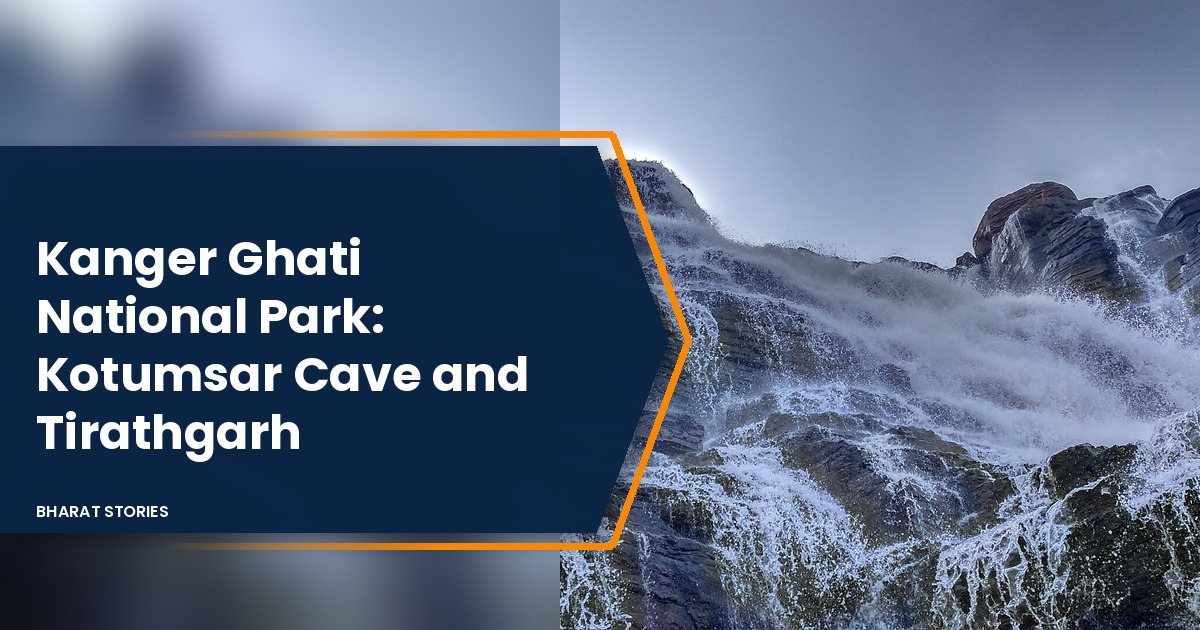
Tirathgarh is a broad, stepped waterfall on the Mugabahar stream at the western edge of the park, dropping more than 100 feet over rock terraces.
It is about 38 km from Jagdalpur and is one of the most visited waterfalls in Chhattisgarh. The falls are at their fullest just after the monsoon, while the dry months show the layered rock shelves more clearly. A small temple stands near the base. Read about other striking falls in our list of the best waterfalls in India.
Which animals live in Kanger Ghati National Park?
The park has leopards, sloth bears, chital, sambar, barking deer, mouse deer, wild boar and many birds, including the Bastar hill myna, the state bird of Chhattisgarh.
Surveys have recorded about 49 species of mammals, 144 birds, 37 reptiles, 16 amphibians, 56 fish and 91 butterflies. Tigers have been reported in the past, but sightings are rare, and visitors should not expect to see one. The hill myna is famous for copying human speech and other sounds. Other birds include the red junglefowl, spotted owlet, racket tailed drongo, peafowl, parakeets, treepies and herons. Crocodiles and turtles live in the Bhainsa Darha lake area.
What kind of forest grows in the park?
The park is covered mainly by moist mixed deciduous forest dominated by sal, teak and bamboo.
Studies by the Botanical Survey of India and other researchers have recorded about 553 plant species in the park, including 43 considered rare. It is often described as one of the last large stretches of relatively undisturbed forest in peninsular India. Wild relatives of crops, ferns, climbers and medicinal plants add to its value as a natural gene bank.
What is the best time to visit Kanger Ghati?
November to May is the main season, as the caves usually open only after the monsoon and close again around mid June.
Winter, from November to February, is the most comfortable time to explore. March to May is hot, but the caves stay cooler inside. Tirathgarh looks most dramatic from August to October, though some parts of the park may be closed then. Check timings and fees with the forest department office in Jagdalpur before you go.
Who lives around Kanger Ghati?
The park lies in the heart of Bastar, home to Adivasi communities such as the Dhurwa, Gond, Muria and Halba, whose villages surround the forest.
Many families depend on the forest for minor produce such as mahua flowers, tamarind and sal seeds, and some work as guides and drivers in the park. Weekly village haats near Jagdalpur sell local food and crafts, including Bastar’s famous dhokra metal work. Visitors who hire local guides and buy directly from artisans help keep these benefits in the area.
What should visitors keep in mind?
Carry water and a torch, wear shoes with good grip for the caves, and follow forest staff instructions at all times.
- Do not light fires or leave plastic anywhere in the park.
- Avoid touching cave walls and formations, and keep your voice low inside caves where bats roost.
- Do not swim near the waterfalls, as the rocks are slippery and currents can be strong.
- Check the latest travel advisories for Bastar before planning remote routes.
How do you reach Kanger Ghati National Park?
Travel to Jagdalpur by air, rail or road, then take a taxi or a forest department vehicle into the park.
- By air: Jagdalpur has a small airport. Raipur, about 300 km away, is the nearest major airport.
- By rail: Jagdalpur is on the rail line that runs between the Visakhapatnam region and Kirandul.
- By road: buses connect Jagdalpur with Raipur and other cities. From Jagdalpur, the park entrance is under an hour’s drive.
Combine Kanger Ghati with Indravati National Park and the Chitrakote waterfall for a longer Bastar trip. For background on the region, see our guide to Chhattisgarh’s history, geography and tourism and our list of national parks of India.
Frequently Asked Questions
Where is Kanger Valley National Park situated?
It is in Bastar district of Chhattisgarh, about 30 km south east of Jagdalpur, along the Kanger River.
Which animal is Kanger Ghati National Park famous for?
It is best known for the Bastar hill myna, the state bird of Chhattisgarh, along with leopards, sloth bears and cave adapted species in Kotumsar Cave.
Is Kotumsar Cave open all year?
No. The cave usually closes during the monsoon, from about mid June to mid October, because it floods.