


The Centre has eased passport visa rules for several groups of foreign nationals living in India, and has rewritten the travel document rules for people moving between India, Nepal and Bhutan. The changes come through the Immigration and Foreigners (Exemption) (Amendment) Order, 2026, notified by the Ministry of Home Affairs as Gazette S.O. 6027(E) dated 4 November 2026 and published on 5 November 2026.
The order amends the Immigration and Foreigners (Exemption) Order, 2025, and draws power from section 33 of the Immigration and Foreigners Act, 2025. The Indian Express, the Economic Times, India Today and the New Indian Express all reported the notification on Thursday and Friday.
Table of Contents
Who gets relief on passport visa rules
The Gazette text is the cleanest guide, because some newspaper summaries blend separate clauses. Sub paragraph (3A) exempts three categories from the need to hold a valid passport or other travel document for stay in India, provided each person still gets an appropriate visa for continued stay.
First are Pakistani citizens who entered India on or before 31 December 2009 on a valid Pakistani passport with the intention of residing permanently, and who cannot renew that passport because they do not hold a Computerised National Identity Card issued by Pakistan. That is the wording of clause (a) of sub paragraph (3A) in the Gazette.
Second are certain male members of the Muslim community who were originally Indian citizens, went to Pakistan after Partition between 15 August 1947 and 31 December 1965 leaving family in India, returned on or before 31 December 2009, and settled in Keralam on a Pakistani passport that has since expired or been lost. For them the Gazette lists conditions: they must not have married while in Pakistan, must not have acquired immovable property there, must have left behind family members who are Indian citizens, must undertake not to return to Pakistan, and must have no adverse police or security reports.
Third are persons of Indian origin who later took Malaysian or Singaporean citizenship and returned to India on or before 31 December 2009 on those countries’ passports, which have expired and cannot be renewed because the holders do not meet those countries’ renewal conditions. They need documentary proof of Indian origin, as defined in the order.
Minority refugees, Sri Lankan Tamils and Tibetans
A substituted sub paragraph (2) covers people who fled religious persecution. Members of the Hindu, Sikh, Buddhist, Jain, Parsi or Christian communities from Afghanistan, Bangladesh and Pakistan who entered India on or before 31 December 2024 because of religious persecution or fear of it are exempt from the usual passport and visa entry and stay rules if they arrived without valid documents, or if their documents have expired. They must still obtain an appropriate visa for continued stay.
Registered Sri Lankan Tamil nationals who took shelter in India up to 9 January 2015 are listed in a new sub paragraph (1A). “Registered” means registered with an officer designated by the Central or State government. They are exempt from the passport or travel document and visa requirements for entry, stay and exit that otherwise apply under section 3 of the Act.
Tibetans are covered in two windows. Those who entered India after 1959 but before 30 May 2003 on an Entry Permit issued by the Embassy of India in Kathmandu, and those who entered after 30 May 2003 on a Special Entry Permit through a designated Indo Nepal immigration post, can be exempt if they have registered and hold a Certificate of Registration under Rule 13. India Today flagged the same Kathmandu permit dates.
Nepal and Bhutan travel norms rewritten
The amendment also rewrites how Indians, Nepalese and Bhutanese prove identity when travelling directly between the three countries by land or air. They may produce any one of the identity documents listed in the government’s Visa Manual, a term the order now defines, instead of a passport. Immigration officers may still ask for more information.
There are clear carve outs. An Indian citizen going to or returning from a country other than Nepal or Bhutan through the Indo Nepal or Indo Bhutan border must carry a valid passport and use a designated immigration post. Nepalese or Bhutanese citizens entering or exiting India from a place other than Nepal or Bhutan need a valid passport. If they boarded or travelled via China, Macau, Hong Kong or Pakistan, they need both a valid passport and a valid visa.
Armed forces and military ship crews
The same sub paragraph (1A) that covers Sri Lankan Tamils also exempts members of India’s naval, military or air forces entering or exiting on duty, and family members accompanying them on government transport. Foreign crew of foreign military vessels coming to India for repairs are exempt from passport requirements if they hold Military Ship Repair Permits and military identification documents. The order defines foreign military vessels as warships and other government ships used for non commercial purposes by another state’s armed forces.
Where newspaper reports diverge
Readers should treat secondary summaries carefully. The Gazette keeps the marriage, property, family and non return conditions inside the Kerala returnee clause. The Economic Times follows that split. The Indian Express, India Today and the New Indian Express, in places, place some of those conditions next to the broader Pakistani citizen exemption. Bharat Stories follows the Gazette wording and notes the conflict.
All of the exempted stay categories under sub paragraph (3A), and the minority refugee clause, still require an appropriate visa for continued stay. The order eases the passport problem; it does not remove the need for a visa where the text says one is required.
For earlier passport process changes, see our piece on how applying for a passport became easier under new rules. The wider refugee context is covered on World Refugee Day, and the Partition years that sit behind the Kerala returnee clause are part of the story of Independence Day on 15 August.
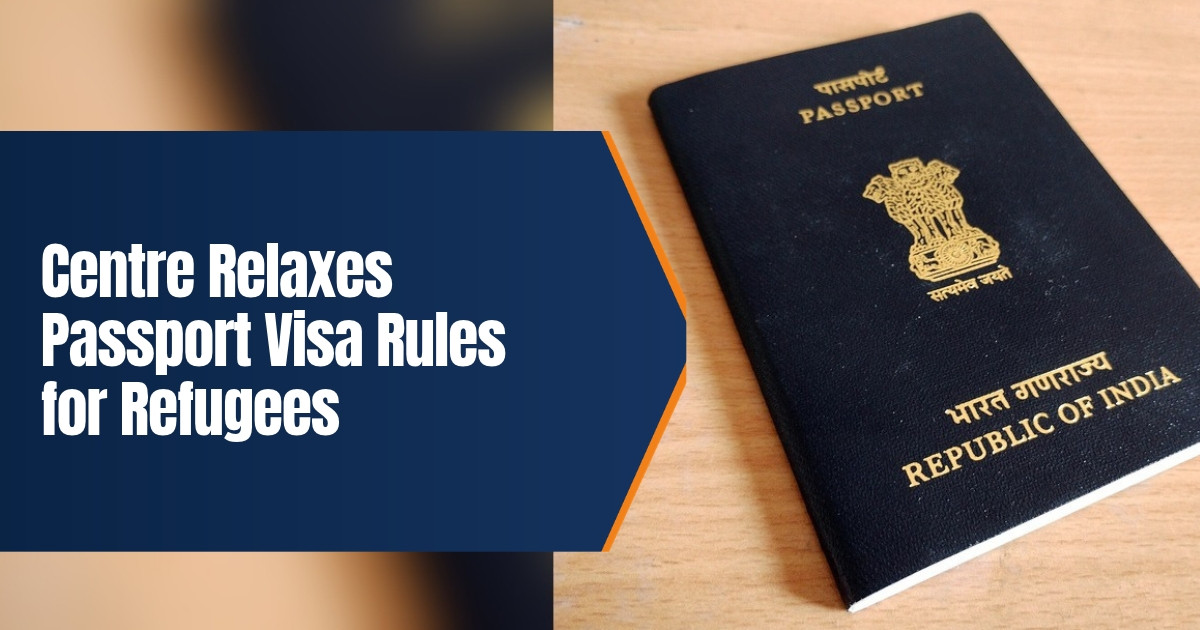
Featured image photo: Gpkp, CC BY SA 4.0, via Wikimedia Commons. It shows an Indian passport photographed in January 2026. The image is illustrative of travel documents and is not an official Home Ministry photograph of the new order.
FAQ
What order changed the passport and visa rules?
The Immigration and Foreigners (Exemption) (Amendment) Order, 2026, Gazette S.O. 6027(E) dated 4 November 2026, published on 5 November 2026.
Do minority refugees still need a visa?
Yes. The Gazette says every person covered by the minority community clause must obtain an appropriate category of visa after entry for continued stay in India.
Sources
- Gazette Tracker / S.O. 6027(E), Immigration and Foreigners (Exemption) (Amendment) Order, 2026: full text of the amendment; primary legal source.
- The Indian Express, 6 November 2026: summary of Pakistani, minority, Sri Lankan Tamil and Tibetan relief; Nepal Bhutan note.
- The Economic Times, 5 November 2026: Kerala returnee and Malaysia Singapore PIO clauses; Visa Manual travel rules; military exemptions.
- India Today, 5 November 2026: Tibetan permit windows; Nepal Bhutan carve outs; armed forces and ship repair crew.
- The New Indian Express, 5 November 2026: parallel summary of exemptions and neighbour travel norms.