

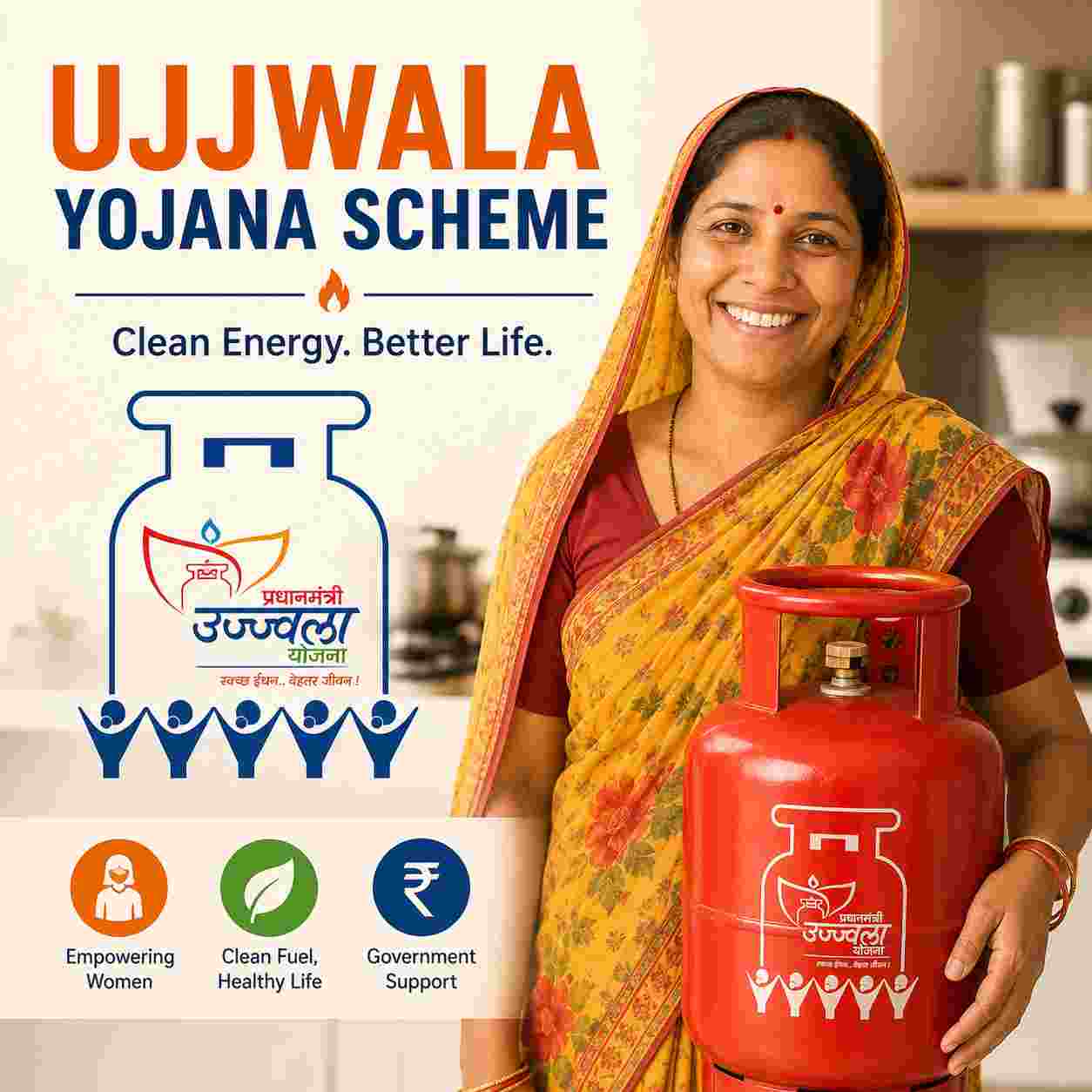
Ujjwala Yojana Scheme
Walk into any village in India and ask an older woman how she used to cook, and you will probably hear the same story. Smoke-filled kitchens, eyes that burned every morning, and a cough that never fully went away. That was daily life for crores of households before the Pradhan Mantri Ujjwala Yojana came along. The scheme did something fairly simple on paper, it gave free LPG connections to women from poor families, but the real-life impact of that one change has been massive.
If you are trying to understand what this scheme actually does, who can apply, and why it matters even years after its launch, this piece walks through all of it in plain language, without the usual government jargon.
Table of Contents
What Is PM Ujjwala Yojana, Really?
Pradhan Mantri Ujjwala Yojana was launched in 2016 by the central government with one clear goal, to move rural and low-income households away from firewood, cow dung cakes, and kerosene, and onto clean cooking gas. It is one of the biggest women welfare schemes India has rolled out in recent years, and it was built specifically with women as the main beneficiaries, since they are the ones who spend hours every day in front of a chulha breathing in smoke.
Under this LPG subsidy scheme India families that fall below the poverty line get a free gas connection, along with a free first refill and a stove in many cases. There is no huge paperwork trail or connection fee that stops a woman from applying. The whole idea was to remove that upfront cost, which was the biggest reason families kept using traditional fuel even when gas was technically available nearby.
Why the Government Felt This Was Necessary
Before you dismiss this as just another government scheme, it helps to look at the numbers that pushed it into existence. Indoor air pollution from burning solid fuel was linked to lakhs of premature deaths every year in India, mostly among women and small children who stay close to the cooking fire. Respiratory illness, eye problems, and pregnancy complications were common in households that had no access to clean fuel.
There was also a time factor nobody talks about enough. Women in rural households were spending several hours a day just collecting firewood, time that could have gone into earning an income, looking after children, or simply resting. A free gas connection scheme sounds like a small welfare measure, but it directly gave women back hours of their day.
Who Can Apply for Pradhan Mantri Ujjwala Yojana
The eligibility criteria are fairly straightforward. A woman above 18 years of age, belonging to a below poverty line household, and not already owning an LPG connection in her name or in the name of anyone else in the family, can apply. Over time, the government has widened the eligible categories to include SC and ST households, beneficiaries under the Antyodaya Anna Yojana, forest dwellers, residents of river islands, and tea garden workers, among others.
One thing worth noting is that the applicant does not need to prove BPL status through a long list of documents in every case. Many state governments and oil marketing companies have simplified the process using ration card details and self-declaration forms, which has made it easier for genuinely poor households to get covered without running from office to office.
How the Application Process Works
Applying is not as complicated as people assume. A woman can either walk into her nearest LPG distributor, whether that is Indane, Bharat Gas, or HP Gas, or apply online through the official Ujjwala portal. She needs basic identity proof, an address proof, and a BPL certificate or equivalent document like a ration card. Bank account details are also required since the subsidy amount, where applicable, gets credited directly.
Once the application is verified, the connection along with the first cylinder and, in most cases, a stove, is handed over without any deposit charge. Some states have also tied up with banks to offer easy repayment options for the stove and subsequent refills, since not every family can afford full-priced refills right after getting the connection.
The Real Difference It Has Made
Numbers only tell part of the story, but they still matter. Over 10 crore connections have been given out under this scheme since it started, reaching homes in the smallest villages and remote hamlets that earlier had no access to cooking gas at all. That scale alone makes it one of the largest LPG subsidy scheme India has ever run.
Health workers in rural areas have reported a visible drop in complaints related to breathing problems and eye irritation among women who switched from firewood to gas. Cooking time has also gone down, since gas stoves heat up faster and do not need constant tending like an open fire does. For many families, this also meant safer homes, since open fires inside small kitchens have always carried a fire risk, especially with children around.
Challenges That Still Exist
It would be unfair to say everything about this scheme has gone perfectly. Refill rates in some states remain lower than expected, mainly because the cost of a full cylinder is still a stretch for very poor households, even with the subsidy. Some families received the connection but went back to firewood for regular cooking, using gas only occasionally, which somewhat limits the health benefits the scheme was designed to deliver.
The government has responded to this with additional subsidy support for Ujjwala beneficiaries, cutting down the effective price per cylinder for this group. Whether this fully solves the refill problem is something that will only become clear over the next few years, as more data comes in from the ground.
Why This Scheme Matters Beyond Just Gas Connections
At its core, this is not just about cooking fuel. It is about dignity, health, and time. Giving a woman control over how she cooks, without smoke in her eyes or hours lost to collecting firewood, changes daily life in a way that is hard to measure but easy to notice if you have ever visited a household before and after the switch.
It also fits into a bigger pattern of women welfare schemes India has introduced over the past decade, where the focus has shifted from generic welfare to targeted support that directly improves the daily routine of women in low-income households. Ujjwala Yojana stands out because its benefit is felt every single day, multiple times a day, inside the kitchen.
A Quick Word on Renewals and Top-Up Support
Beneficiaries do not need to reapply once the connection is issued. The subsidy, wherever applicable, continues to reflect in the bank account linked to the connection. Families are encouraged to keep their KYC details updated with the distributor so that subsidy transfers and any additional government support keep reaching them without interruption. For anyone unsure about their current subsidy status, checking directly with the local distributor or the online portal is the fastest way to get clarity.
Frequently Asked Questions
Who is eligible for PM Ujjwala Yojana?
Any adult woman from a below poverty line household who does not already have an LPG connection in her name or her family’s name can apply. This includes SC, ST, and other economically weaker sections identified by the government.
Is the gas connection completely free under this scheme?
Yes, the connection itself comes without any deposit charge, and beneficiaries usually also receive the first refill and a stove free of cost. Later refills are subsidised but not entirely free.
Which documents are needed to apply?
A woman needs an identity proof, address proof, a BPL certificate or equivalent document such as a ration card, and her bank account details for subsidy transfer.
Can I apply online for Pradhan Mantri Ujjwala Yojana?
Yes, applications can be submitted online through the official Ujjwala portal, or offline by visiting the nearest LPG distributor with the required documents.
Does the subsidy under this scheme ever expire?
The subsidy continues as long as the beneficiary’s KYC and bank details remain updated with the distributor. There is no fixed expiry date tied to the scheme itself.
For more updates on government welfare initiatives and everyday explainers like this one, you can check bharatstories.com.