

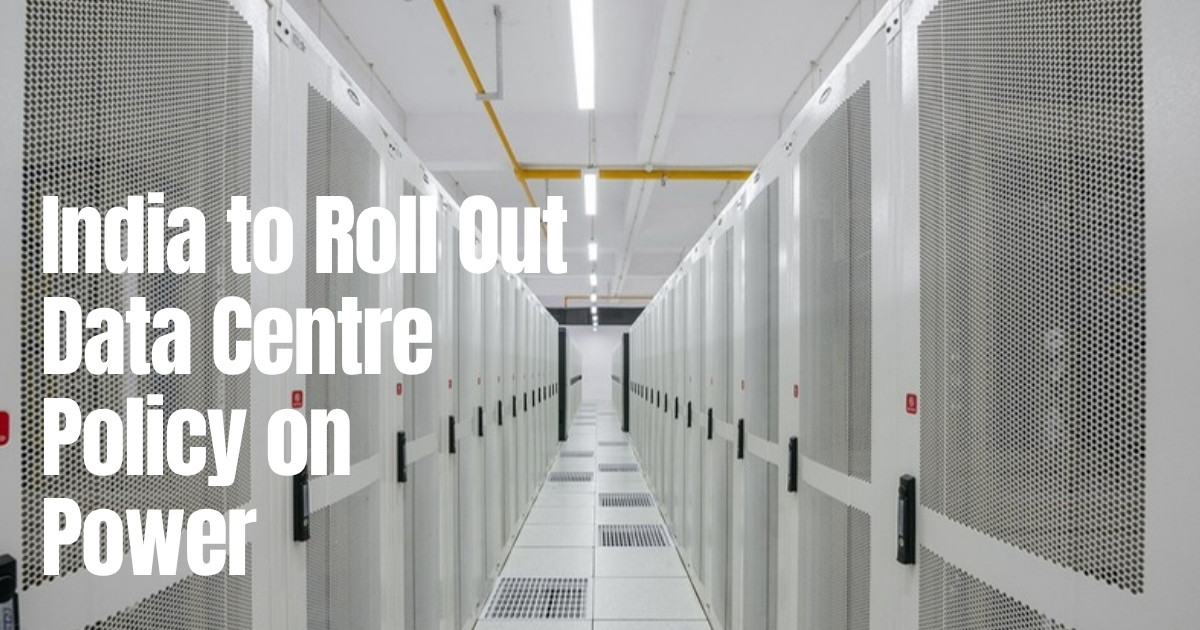

New Delhi: India is preparing a national policy for data centres, Junior IT Minister Jitin Prasada said on Wednesday, 14 October 2026. He said the government wants to stop a rise in household electricity bills as big computer halls use more power.
Prasada spoke at a New Delhi event of the Central Electricity Authority on making the power sector ready for artificial intelligence. He did not say what the policy will cover or when it will be published. Here is a simple guide to the India data centre policy plan and why power use is the main worry.
Table of Contents
India data centre policy: the key facts
- Who spoke: Jitin Prasada, Minister of State for Electronics and Information Technology.
- What: a dedicated national policy for data centres is being rolled out.
- Why: to keep consumers from paying more for electricity as data centres grow.
- When: no date was given for the final text.
- Today: India has no single national data centre law. Projects follow environmental and building rules. About 15 states have their own local policies, The Economic Times reported.
What did the minister say?
“India is a very fertile ground for hyperscale data centres,” Prasada said, according to Reuters and The Economic Times.
He said that in some countries data centres take power that households need, so people pay more for electricity. “We don’t want to get into that,” he said. He added that India wants to use technology so that power is available where it is needed.
The Economic Times also quoted him saying artificial intelligence can help manage flexible power supply for data centres and make the system more efficient.
Why power and water are in the news
Reuters reported that residents in places such as Mumbai and Visakhapatnam have protested against large data centre plans by Amazon and Google. Their worries include electricity use, water use, noise, and land.
Inc42, citing local concern around Amazon’s proposed site in Thane near Mumbai, said the project is expected to use about 422 MW of power. Residents have also raised noise from backup diesel generators and tree cutting.
Google has begun work on an AI hub in Visakhapatnam as part of a planned $15 billion investment in India between 2026 and 2030, Inc42 and Reuters reported. Critics say the project raises questions on land, water and wildlife. Google and Amazon deny wrongdoing and say their sites use advanced technology to cut resource use.
What policy exists today?
MeitY released a draft data centre policy in 2020. It talked about giving the sector infrastructure status and making approvals faster. A final national policy was never notified, The Economic Times said.
In the meantime, states have written their own rules and incentives. The Centre has also offered wider support. One example is a tax holiday until 2047 for eligible foreign cloud firms that use India based data centres for global work, The Economic Times and Inc42 reported.
National policy drafts in other sectors show how the government sets long term goals. One recent example on our site is the Draft National Steel Policy 2047.
Why the government wants more data centres
Prime Minister Narendra Modi has invited “the whole world’s data to reside in India,” Reuters noted. The government sees the sector as a $200 billion opportunity.
Big technology firms are expanding in India. That fits a wider technology wave. For a plain overview of where tech is heading, see our guide to latest technology trends in India 2026.
Power saving tools matter as more machines run day and night. Ideas from other industries, such as energy efficiency, IoT and smart controls, show how sensors and controls can cut waste.
What is still not clear
Prasada did not say whether the new policy will set hard caps on power or water, change state rules, or only give incentives. He did not name a release month. Those details will decide how useful the policy is for cities that already face protests.
Until the text is public, data centre projects will keep going under current environmental and building clearances, plus whatever each state offers.
What hyperscale means in plain words
Hyperscale data centres are very large buildings packed with servers that store data and run cloud software for millions of users. They need steady electricity and cooling. That is why cities watch their power and water use so closely.
India wants these projects because they create construction and tech jobs and can attract global cloud firms. The risk, Prasada said, is copying countries where data centres push household power prices up.
Earlier signals from the minister
Inc42 noted that last month, at a Microsoft data centre event, Prasada said India has land, talent and other needs to attract investment, while the government works to make setup easier. He also said growth should not harm the environment or use too much water, and pointed to green power and systems that reuse water in closed loops.
Those comments match Wednesday’s message: grow the sector, but plan power carefully.
How this fits India’s tech push
Data centres sit under a wider push for digital services, cloud computing and artificial intelligence. Firms such as Microsoft, Amazon and Google are among the global names building or planning capacity in India, according to Reuters and Inc42.
A clear national policy could, in theory, set common rules on power, water and approvals so states and companies know what to expect. Until then, each big project will keep facing local questions case by case.
FAQ
Is India launching a data centre policy?
Yes. Junior IT Minister Jitin Prasada said on 14 October 2026 that the government is rolling out a dedicated policy for data centres.
Why now?
The government wants to grow hyperscale data centres without pushing up household power bills. Protests over electricity and water have also grown around some projects.
When will the policy be published?
No date was given.
Does India already have rules for data centres?
There is no final national policy. A 2020 draft was never notified. About 15 states have their own policies, and projects follow environmental and building rules.
Sources
- Reuters, 14 October 2026: Prasada announcement; power bill concern; no scope or date; $200 billion opportunity; Modi quote on world data; Mumbai and Visakhapatnam protests; Amazon and Google response; CEA event.
- The Business Standard (Reuters copy), 14 October 2026: same Reuters facts used for cross check.
- The Economic Times, 15 October 2026: fertile ground quote; 2020 MeitY draft never notified; 15 state policies; tax holiday till 2047; AI and power flexibility comments.
- ET Datacenters, 15 October 2026: policy to protect consumers from higher electricity costs; protest cities; hyperscale quote.
- Inc42, 14 October 2026: CEA AI conclave name; Thane Amazon ~422 MW; Google Vizag AI hub and $15 billion 2026 to 2030; Microsoft remarks last month; tax holiday Budget link.