


Table of Contents
About Ajmer Sharif Dargah
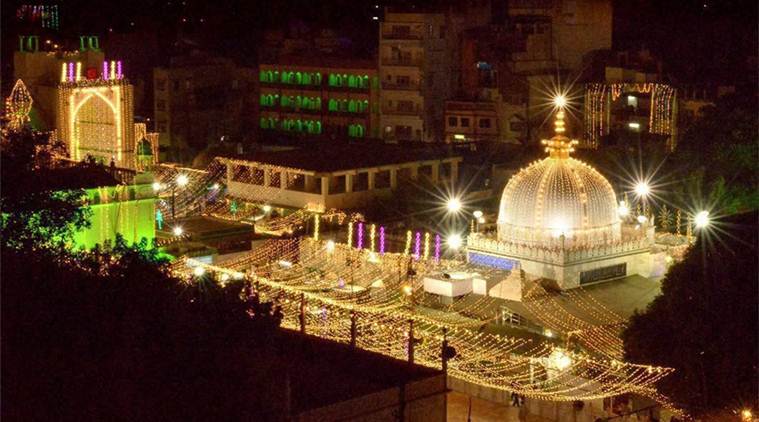
Ajmer Sharif Dargah is not only a Rajasthan monument. It is a living faith-based place where all the emotions, prayers, and traditions are united day by day. This is a sacred, holy shrine that is located in Ajmer and houses the remains of a great saint of Sufism, Khwaja Moinuddin Chishti.
Peers of various religions have been passing through its gates in their hearts, hoping for centuries. Some come to ask for strength. Some come to say thank you. Others just come to be silent and experience peace. The shrine has a strong spiritual attraction, as it is an esteemed Rajasthan attraction, which cannot be defined clearly unless one has visited the place.
Meanwhile, it is still considered one of the key components of Ajmer tourism, being visited by the representatives of India, as well as other countries, both local and foreign.
Khwaja Moinuddin Chishti Biography and Message
In order to obtain the impression of Ajmer Sharif Dargah, one would have to know what the story of Khwaja Moinuddin Chishti is about. In the 12 th century, he landed in India, where he settled in Ajmer. His doctrines were not advanced. His thoughts were that he had to feed the hungry, assist the people, and love all humankind irrespective of their sex.
People started to refer to him as Gharib Nawaz, which means protector of the people. The name has its weight even nowadays. People were not divided by the message given by him. On the contrary, it united them.
Even today, when a person enters this famous Sufi compound in India, he or she recalls the simple notion that kindness is everything. The words he wrote are not printed in books, but can be seen in how food is consumed and in prayers said at the shrine.
A Look at the History
Khwaja Moinuddin Chishti used to be a tomb constructed in the 13 th century. In the course of time, kings and worshipers built additional gates, courtyards, and marble construction. Akbar and other Mughal emperors used to pay regular visits. It is historical that Akbar had strolled naked once from Agra to Ajmer to offer prayers to have a child.
These incidents transformed the Ajmer Sharif Dargah into one of the most admired spiritual sites in India. It has been made over the years a main focus in all significant Rajasthan pilgrimage paths.
The white marble dome, the detailed carvings, and the large courtyards may be regarded as centuries of worship. These features are also of interest to travelers who have an interest in art and history, and this is one way of marketing the Ajmer tourism in a big way.
What is So Special about this Sufi Shrine in India?
Something is amiss about what is going on here. As soon as the visitors enter Ajmer Sharif Dargah, the surrounding noise becomes gradually repressed. The qawwali fragrance, quiet praying, and sound combine to help one have a serene environment.
Numerous followers do believe that heartfelt prayers, made in this Sufi shrine in India, are answered. There are those families that come annually as they believe that their desires were met. Others only go to give a thank you.
The Urs festival is one of the most significant moments in the shrine every year. It is in remembrance of the death of the Khwaja Moinuddin Chishti. Urs takes place when thousands of people come to pray, listen to devotional music, and engage in charity. It is not as mournful, but more of a celebration of his spiritual legacies.
Rituals That Keep the Faith Alive
The Ajmer Sharif Dargah has traditions that visitors follow when entering the place. These traditions have existed over generations.
Ordinary Worship at the Shrine
- Covering up the head before entering.
- Taking off shoes outside a primary room.
- Offering a chadar at the tomb
- Bringing trading in flowers as a show of respect.
- Giving food or money to the people.
Giving out a chadar is one such touching experience for a number of families. It is a representation of faith and thankfulness. The charity element portrays the teachings of Khwaja Moinuddin Chishti, who believed that serving the people was a paramount form of prayer.
These ceremonies are not very complicated, but effective. They constitute an essential element in every Ajmer pilgrimage in Rajasthan.
Visiting Plan in Ajmer Sharif Dargah
It can be easily planned by all people who plan to visit it. The city is connected via road and rail, and the tourism there has been developed specifically in recent years.
How to Reach
- Jaipur Airport is the nearest airport in terms of distance.
- Ajman Railway Station is another station that connects major Indian cities.
- It is regularly transported by bus and taxis to the neighbouring towns.
Best Time to Visit
- The autumn-spring period of the year (between October and March) is pleasant.
- Urs’ season is a spiritual one, but it might be overcrowded.
Tourists should also dress decently. Men and women ought to wear a head cover when they are inside the shrine. By observing these tiny rules, one would still be keeping the religious atmosphere of this Sufi shrine in India alive.
Facilities and Management
The shrine runs under a legal framework that is referred to as the Dargah Khwaja Saheb Act. The committee is in charge of cleanliness, security, and the promotion of good arrangements for pilgrims.
There are facilities available such as:
- Drinking water
- Basic medical assistance
- Hotels and guest houses close to each other.
- Stores dealing with religious objects.
These services ensure a comfortable visit to Ajmer Sharif Dargah for both pilgrims and tourists, which goes ahead to enrich its contribution to Ajmer tourism.
Social and Cultural Impact
In addition to spiritualism, Ajmer Sharif Dargah has a very powerful social role. It unites the individuals of various communities. There is a grouping of Hindus, Muslims, Sikhs, and Christians in prayer. That communion dreads the ideas of Khwaja Moinuddin Chishti.
The stable stream of tourists positively impacts the local enterprises. The city is very active and vibrant during the time of festivals. Being a large Rajasthan pilgrimage, the shrine sustains the spiritual and local economic life.
The reason This Pilgrimage Still Matters
It is such a place as the Ajmer Sharif Dargah that provides a reprieve in a world that seems to be in a hurry. People have come here to demand something as well as to think. The message of forgiveness and equality is still topical even these days.
It is a holy Sufi shrine in India, and it is still popular among the generations. Some people go there because of faith, history, or interest, but the impression is usually unspoken but long-lasting.
Frequently Asked Questions (FAQs)
What is so important about Ajmer Sharif Dargah?
The reason why Ajmer Sharif Dargah is significant is because of the resting site of Khwaja Moinuddin Chishti. It symbolizes togetherness, religion, and service to humanity, which attracts millions of people annually.
Is it possible to find other religions visiting this Sufi shrine in India?
Indeed, there is a welcome for people of every religion. The shrine is in line with the message of love and equality, treating everyone as part of it.
What occurs at the Urs festival?
Urs also celebrates the death anniversary of the saint. The followers come together to worship, engage in devotional music, and practice philanthropy as part of his spiritual doctrines.
What are the things that visitors would remember when planning Ajmer tourism?
The visitors are not to dress rudely and are to cover their heads in the shrine, as well as to respect the traditions in the country. It is also good to plan travel early in advance, especially in the high season when there are a lot of people.