

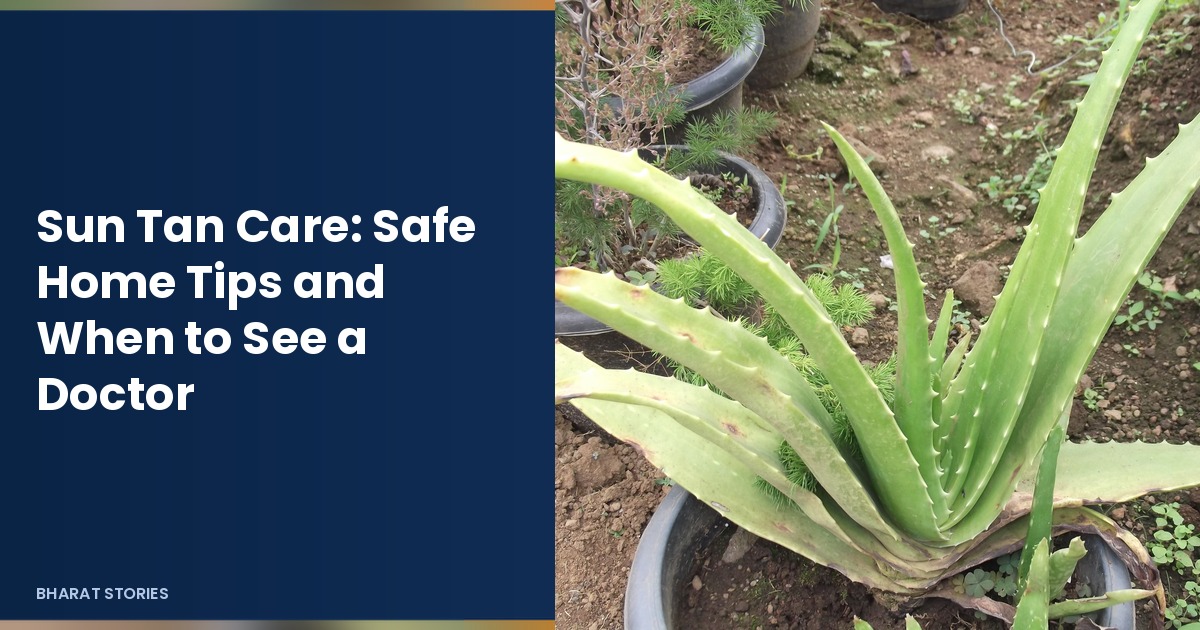
 Photo: Yercaud-elango, CC BY-SA 4.0, via Wikimedia Commons
Sun Tan Care: Safe Home Tips and When to See a Doctor
Sun tan is the darkening of skin after ultraviolet light from the sun or from tanning devices. Melanin rises as a defence response. A light seasonal glow is common in outdoor life, but repeated unprotected UV exposure also ages skin and raises long term cancer risk. The old version of this page listed “top 20 home remedies to remove sun tan”. Most such lists overpromise. Kitchen mixes do not reliably erase pigment and some can irritate skin.
This updated guide explains how tan forms, how to prevent more damage, which gentle home steps are reasonable for comfort, and when you should see a doctor instead of trying another DIY paste. For everyday habits that protect skin, see our notes on daily skin care mistakes to avoid and affordable skincare finds.
Table of Contents
Sun Tan Care at a Glance
| Item | Detail |
|---|---|
| Cause | UV light raising melanin in the skin |
| Best first step | Prevent further UV with shade, clothes and sunscreen |
| Home care role | Comfort and gentle moisturising; not a proven cure |
| Avoid | Harsh acids, lemon on broken skin, abrasive scrubs on burns |
| See a doctor if | Blisters, fever, severe pain, odd new patches or changing moles |
How Tan and Burn Differ
A tan is colour change without the acute injury of a burn. A sunburn is red, hot and painful inflammation; severe burns blister. Both signal UV damage. Darker skin types tan more easily and burn less often, but they are not immune to UV harm or to pigment conditions such as melasma. Fair skin burns more quickly. Children and outdoor workers need extra care.
UV levels peak around midday. Reflection from water, sand and concrete adds exposure even in shade near bright surfaces.
Prevention Comes First
- Shade and timing: plan outdoor tasks outside the strongest midday window when you can.
- Clothing: long sleeves, hats and UV style sunglasses help more than any cream alone.
- Sunscreen: use a broad spectrum product on exposed skin, apply enough, and reapply after swimming or heavy sweat.
- Lips and ears: often forgotten; they burn and tan too.
- Skip tanning beds: they are another UV source, not a safe shortcut to colour.
Prevention does more for long term skin health than any after the fact kitchen recipe.
Gentle Care After Mild Exposure
If skin feels tight or lightly sore without blisters, cool the area with a clean damp cloth, drink water, and use a plain moisturiser. Aloe vera gel from a clean leaf or a simple commercial gel is a common comfort step for mild redness. It may soothe; it does not bleach a deep tan overnight.
Stay out of further strong sun until redness settles. Fragrant alcohols and heavy fragrances on hot skin can sting. Gentle cleansing once or twice a day is enough; do not scrub.
What Not to Do
- Do not apply undiluted lemon, strong vinegar or other acids to burned or broken skin.
- Do not use harsh scrubs or abrasive powders on inflamed areas.
- Do not combine many “brightening” chemicals at once from random social media lists.
- Do not treat a blistering burn only with home pastes; that needs medical advice.
- Do not assume fairness creams sold with big promises are safe; some have contained harmful steroids or metals in past enforcement cases. Prefer plain moisturisers and sunscreen unless a dermatologist advises a specific medicine.
Stubborn Pigment and Medical Options
Colour that lingers after a holiday may fade slowly over weeks if you protect from more UV. Patches that are uneven, or pigment on the face linked to hormones (often called melasma), need a dermatologist’s view rather than a turmeric mask marathon. Doctors may discuss prescription creams, procedures or simply strict sun protection. This article does not recommend any specific drug or clinic.
Simple personal care habits in other areas, such as our tips for healthy nails, follow the same idea: steady gentle care beats harsh shortcuts.
When to See a Doctor
Seek medical help for blistering sunburn over large areas, fever, chills, confusion, severe pain, signs of infection, or if you cannot keep fluids down. Also see a doctor for moles that change size, shape or colour, for sores that do not heal, or for sudden facial pigment that worries you. People on photosensitising medicines should ask a clinician about extra sun care.
Emergency services matter when burns are extensive or the person feels faint or confused after heavy sun exposure.
A Sensible Routine
Think in three layers: block UV, calm mild irritation, and get professional help for anything severe or odd. Patience matters; pigment cells turn over slowly. If a product stings strongly, wash it off and stop. Patch test new leave on products on a small area first.
Children, Outdoor Work and Special Cases
Children burn faster than many adults expect. Hats, shade tents and regular water breaks matter on sports days and family pilgrimages. Ask a paediatrician before using sunscreen on infants below the age on the label.
Farm workers, traffic police, vendors and construction crews face daily UV loads. Employer shade, rotated shifts and accessible water reduce harm. Wide brim hats beat caps that leave the neck exposed.
Photosensitising medicines and some cosmetics increase burn risk. Read leaflets and ask a pharmacist or doctor if you start a new drug in summer. Do not stop prescribed medicine on your own because of sun fear; ask for advice instead.
People with vitiligo, albinism or recent procedures need extra protection on affected areas. A dermatologist can suggest clothing and product strategies suited to the condition.
After mild peels or waxing, skin can be more UV sensitive for a time. Delay strong sun and use gentle moisturisers. Salon staff should warn about this; ask if they do not.
Swimming holidays combine water reflection and longer outdoor hours. Reapply sunscreen after towels and swimming. Rash guards help children who hate cream.
If pigment worries you for cosmetic reasons alone, a dermatologist can discuss realistic timelines. Social pressure for very light skin is common in advertising; healthy skin of any shade deserves care without harsh bleaching.
Sports coaches should schedule water and shade breaks and never treat severe sunburn as toughness training.
After a beach day, rinse salt off skin and moisturise; salt and wind dry the barrier.
Perfume sprayed on freshly burned skin often stings; wait until redness calms.
Makeup artists working outdoors can set a shade tent and use setting sprays without replacing sunscreen.
If a beauty influencer promises overnight tan erasure with a secret mix, treat it as marketing, not medicine.
Travel sized sunscreen in carry on bags helps when checked luggage is delayed.
After shaving, wait before heavy sun to reduce sting and burn risk.
Cool showers help comfort after mild sun; very hot water can worsen redness.
Track UV index apps as a planning tool, not as a reason to skip protection entirely.
Umbrellas block some UV when the sun is high; they help as an extra layer with sunscreen.
Sand on beach towels acts like grit; brush skin gently before moisturising.
Night cricket under floodlights still may follow a sunny day; check skin before more outdoor time.
Frequently Asked Questions
Can home remedies remove sun tan completely?
There is no reliable kitchen cure that clears tan on a fixed timetable. Prevention and time do most of the work; some medical treatments exist for certain pigment problems under a doctor’s care.
Is aloe vera a cure?
No. It may comfort mild sunburn. It does not replace sunscreen or medical care.
Should I exfoliate tan away?
Avoid abrasive scrubbing on burned skin. Even on calm skin, gentle methods are safer than harsh powders.
Does darker skin need sunscreen?
Yes. Melanin helps but does not block all UV harm or pigment conditions.
When is a tan a medical issue?
When burns are severe, when pigment looks unusual, or when moles change. See a doctor in those cases.
Reapply sunscreen after swimming even if the bottle says water resistant.
Clouds block some heat but not all UV; burns still happen on overcast days.
Car glass blocks much UVB but not all UVA; long drives can still add exposure on arms.
Children need shade and clothing first; use sunscreen made for their age group as advised on the label.
After swimming in chlorinated pools, rinse skin and moisturise to reduce dryness.
Store sunscreen away from hot glove boxes so the formula stays stable.
Makeup with SPF rarely replaces a proper sunscreen layer applied in enough amount.
If you work outdoors, schedule water breaks and use a wide brim hat daily.
Aftercare for procedures such as laser should follow the clinic sheet, including sun rules.
Lip balm with UV filters helps on snowy or high altitude trips.
Sweat bands that drip chemical sunscreen into eyes should be rinsed promptly.
Dark clothing feels hotter but can block more UV than thin white weave; specialised UV shirts exist.