

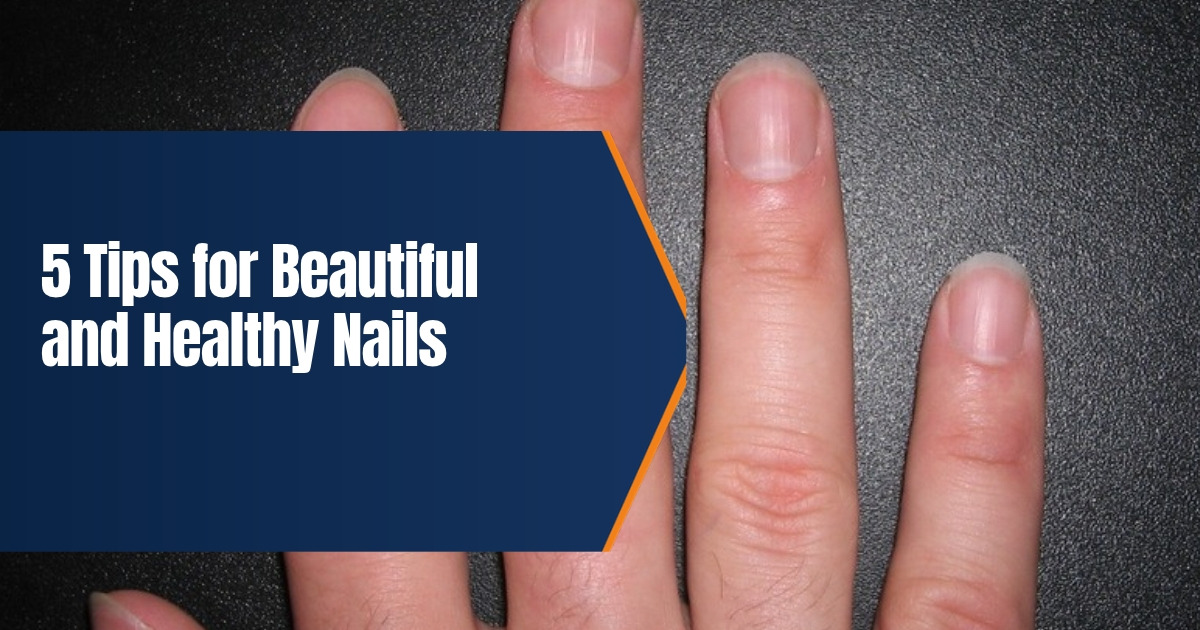
5 Tips for Beautiful and Healthy Nails
Look at your nails for a second. Healthy ones are smooth, evenly coloured and strong enough that they do not split or peel every time you open a parcel. Getting them there has less to do with pricey bottles than with small, boring habits repeated every day. Below are five practical tips for beautiful and healthy nails, drawn from NHS advice and some basic nail science, plus the changes that are worth showing a doctor. We updated this guide in October 2026.
This article is general information, not medical advice. If you notice an unexplained change in your nails, speak to a doctor.
Table of Contents
Quick Facts
| Item | Detail |
|---|---|
| Nails are made of | Keratin, a tough protein |
| Fingernail growth | About 3.5 mm a month |
| Toenail growth | About 1.6 mm a month |
| Fingernail regrowth after loss | About 6 months |
| Toenail regrowth after loss | Up to 18 months |
How Nails Grow
A nail is layer upon layer of keratin, the same kind of protein that makes up hair. It grows out of the matrix, a pocket of living tissue tucked under the skin at the base. On some nails you can see a pale half moon there. That is the lunula, the visible edge of the matrix. The cuticle, together with the fold of skin above it, works like a seal to keep germs out.
Growth is slow. Fingernails add about 3.5 millimetres a month; toenails manage about 1.6. So a damaged fingernail needs roughly six months to grow out completely, and a toenail can take a year and a half. Whatever you change in your routine, expect to wait weeks before you see it.
Tip 1: Be Gentle With Nails When They Are Wet
Nails soak up water. Wet, they go soft and bend, tear or peel far more easily. Soaking and drying them over and over, day after day, can leave them brittle too.
- Pull on rubber gloves for the dishes, cleaning, or any long stretch with your hands in water.
- Trim just after a bath or shower, when nails are softer and less likely to crack. File later, once they are dry.
- Pat your hands dry instead of rubbing, and dry under the free edge of the nail.
- Stop using your nails as tools. Not for cans, not for labels, not for scraping.
Tip 2: Support Your Nails With a Balanced Diet
Your nails are built from your meals. A varied diet with enough protein, iron, zinc and vitamins gives them what they need. Think eggs, dal and other pulses, dairy, nuts, seeds, leafy greens, fish and lean meat.
Shelves are full of supplements that promise stronger nails. For most of them the evidence is thin, and if you already eat well they probably will not do much. Some nail problems, though, are tied to low iron or other conditions, so a chat with a doctor beats self prescribing. One example from the NHS: nails that curve inwards like a spoon can be a sign of iron deficiency anaemia.
Tip 3: Choose and Use Nail Polish Carefully
Polish looks great. Wear it constantly, though, and it can stain and dry out your nails. A few habits make a difference:
- Put on a clear base coat before colour to cut down staining.
- Go bare for a few days every so often.
- Use remover sparingly and moisturise afterwards, because removers dry out nails and skin.
- Never pick or peel off polish or gel. It takes layers of nail with it.
- Read the label, and open a window while you paint.
- For gel or acrylics, pick a salon with clean tools, and let your natural nails rest between sets.
Tip 4: Moisturise and Massage Your Nails and Cuticles
The NHS suggests rubbing hand cream into your nails and fingertips regularly. One minute is enough. Working a little cream or oil into the nail and the skin around it keeps both supple and helps stop splits and hangnails. Do it at bedtime and the cream has all night to sink in.
As for cuticles, leave them be as much as you can. They guard the base of the nail against infection. After a bath you can ease them back gently with a soft towel. Do not cut the living skin, though; that can lead to pain, bleeding and infection.
Tip 5: Trim and File the Right Way
If you buy one nail tool, make it a good file. Smooth edges snag less and tear less.
- Trim regularly with clean, sharp clippers or scissors.
- Cut toenails straight across and leave the edges alone. This helps prevent ingrown toenails.
- File in one direction with a fine file. No sawing back and forth.
- Round fingernail tips slightly so they catch less.
- Keep your tools clean, and do not share them.
Habits to Avoid
- Biting or picking at nails or the skin around them. It damages the nail and opens the door to infection.
- Digging under nails with sharp objects.
- Shoes that squeeze your toes, especially for exercise.
- Ignoring fungal skin infections such as athlete’s foot, which can spread to the nails.
- Smoking, which can stain nails.
How Nails Change With Age and Life Stages
According to the NHS, nails often get thicker or more brittle as we age, and that is normal. Pregnancy can make them harder, softer or more brittle; they usually settle back within about six months after the baby arrives. An injured nail may change colour, lift and fall off, then slowly grow back over the following months.
A Simple Weekly Nail Care Routine
- Wash your hands and scrub gently under the nails with a soft nailbrush.
- After a bath or shower, trim any nails that need it, toenails straight across.
- Once they are dry, file the edges smooth in one direction.
- Ease cuticles back with a soft towel. Do not cut them.
- Rub hand cream or oil into nails, cuticles and fingertips.
- If you wear polish, start with a base coat, and give your nails a break every few weeks.
Looking After Your Toenails
Toenails grow more slowly than fingernails and spend most of the day hidden in shoes, so trouble can creep up unnoticed. Keep feet clean and dry, particularly between the toes, and put on fresh socks every day. Wear shoes that fit and leave your toes some room. In shared showers, gyms and around pools, sandals lower the risk of picking up a fungal infection. If your toenails get too thick or hard to cut, or you simply cannot reach them easily, a podiatrist can help.
When to See a Doctor About Your Nails
Most nail problems are minor. A few changes deserve a proper look. The NHS says to see a doctor if:
- A nail has changed shape or colour, or fallen off, and you do not know why.
- The skin around a nail is sore, red, swollen and warm. That can mean infection or an ingrown nail.
- You notice small dents or pits, deep lines running across the nails, or nails curving like a spoon.
Sometimes nail changes are linked to conditions such as psoriasis, iron deficiency anaemia, thyroid problems, diabetes, or heart, lung or liver disease. Certain medicines can affect nails as well. A doctor can put all of that together.
Healthy Nails and Nail Art
Nail art looks best on healthy natural nails. Once yours are in good shape, browse ideas in our posts on long nail designs and stiletto nail designs. For a wider health check, see our post on signs of good health.
A few small tricks round things off. Leave a tube of hand cream by the sink and you will actually use it after washing up. Cotton lined rubber gloves are kinder for long cleaning jobs and keep hands drier. Children’s nails grow faster than adults’, so they need trimming more often. If you work with your hands, shorter nails break and tear less. And if a nail starts to look odd, take a photo every week or so; it shows your doctor how the change has developed.
Frequently Asked Questions
How can I make my nails healthy?
Wear gloves for wet chores, eat a balanced diet, moisturise nails and cuticles, trim regularly, and stop biting or picking.
How fast do nails grow?
Fingernails grow about 3.5 mm a month and toenails about 1.6 mm, so any change takes weeks to show.
Should I cut my cuticles?
No. The cuticle protects the nail from infection. Push it back gently instead.
When should I worry about my nails?
See a doctor if a nail changes shape or colour for no clear reason, or the skin around it turns red, swollen and painful.