

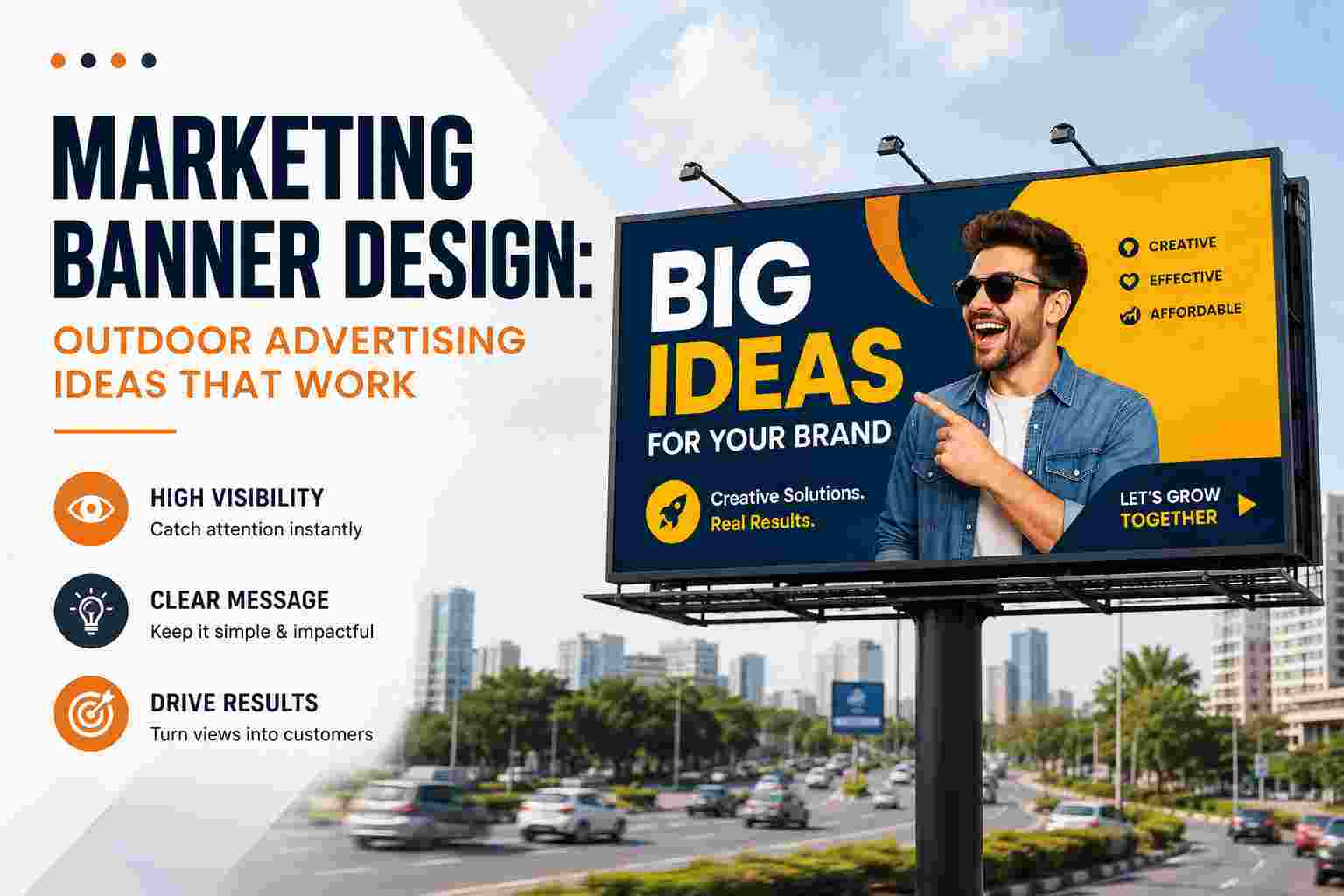
Marketing Banner Design: Outdoor Advertising Ideas That Work
Walk down any market street in India and you’ll notice something — banners are everywhere. Outside sweet shops during festivals, on construction sites, at weddings, near election season. They never really went out of style, even with everyone glued to their phones these days.
At Gureka, we’ve worked with shop owners, event planners, and small business teams for years now, and one thing keeps coming up: people want banners that actually work, not just banners that look pretty on a screen. This guide is our attempt to pass on what we’ve learned, in plain language, without the jargon.
Table of Contents
Why Bother With Advertising Banners At All?
It’s a fair question. With Instagram ads and Google campaigns everywhere, why would a business still spend money on something physical?
Here’s the thing — advertising banners do a job that digital ads simply can’t. They sit in the real world, in places where your actual customers are walking, driving, or standing in a queue. Someone might skip your ad on their phone in half a second, but a well-placed banner outside their local market? That’s harder to ignore.
A few reasons banners still earn their place in a marketing plan:
- They’re working round the clock, not just when someone’s online
- They tend to cost less over time compared to running ads continuously
- People trust what they see physically in their own neighbourhood
- They support whatever you’re doing online too, rather than competing with it
None of this means digital marketing isn’t important. It just means banners haven’t lost their job either.
What Goes Into Good Marketing Banner Design
Here’s a mistake we see often — business owners think marketing banner design means fitting in every detail about their company. Address, phone number, services, tagline, offers, all of it, squeezed onto one banner.
That’s the opposite of what works.
A banner has maybe two or three seconds to say something to a person walking or driving past. That’s it. If it takes longer than that to understand, most people have already moved on.
What Actually Makes a Banner Work
The banners that get noticed usually keep it simple — one clear message, fonts you can actually read from a distance, and colours that match what the brand already uses elsewhere. Nothing fancy, just clear.
We tell our design team to imagine someone seeing the banner from a moving car. If the message doesn’t land in that quick glance, it goes back to the drawing board.
Mistakes We See All the Time
Honestly, the same problems show up again and again:
- Too many fonts or clashing colours fighting for attention
- Long sentences where a short phrase would’ve worked better
- A tiny logo tucked in a corner, easy to miss
- No thought given to how far away people will actually be standing or driving
Fixing even one or two of these can change how a banner performs, without spending extra money.
Promotional Banner Tips Worth Remembering
Promotional banners have a short job to do — get attention fast, usually for a sale, a festival offer, or a launch that won’t be around for long. Because the timeline is tight, there’s no room for a slow build-up.
A few things that tend to work well:
- Put the offer first. Customers care about what they’re getting before they care about the brand name.
- Stick to one bold background colour so it actually stands out against everything else around it.
- Keep the text short — a headline and maybe one line under it, nothing more.
- Always include something for people to do next, like “Visit Today” or “Offer Ends Soon.”
- Match the mood of the design to the urgency of the message — a flash sale shouldn’t look as calm as a brand banner.
These aren’t rules carved in stone, but they’ve held up well across the campaigns we’ve worked on.
Branding Materials Should Feel Like One Family
Here’s something people often overlook — a banner isn’t standing alone. It’s one piece next to business cards, packaging, shop signage, and whatever’s on the website. All of these are branding materials, and ideally, they should all feel like they came from the same place.
Think about it from a customer’s side. They see your banner outside the shop, then later come across your Instagram page or a flyer. If the colours and tone don’t match, something feels off, even if they can’t quite say what.
We usually suggest businesses keep things simple — settle on your logo placement, your brand colours, your fonts, before printing anything. It saves a lot of back and forth later, especially if you’re working with more than one vendor.
Outdoor Advertising Ideas Beyond the Usual Banner
A vertical banner outside the shop is the obvious choice, but it’s not the only one. Depending on the budget and what you’re trying to achieve, there’s quite a bit of room to experiment.
Where You Place It Matters
A banner near a busy crossing works completely differently from one near a mall entrance. It’s worth thinking about who actually passes that spot, and at what time of day there’s the most footfall or traffic.
A Few Formats Worth Trying
Some outdoor advertising ideas that have worked well for businesses we’ve worked with:
- Vinyl banners for shop fronts or temporary events
- Standee banners near entrances or billing counters
- Mesh banners for buildings under construction, since they handle wind better
- Arch banners for weddings or local festivals
- Banners on delivery vans or rented vehicles, for advertising that moves with the city
Each one suits a different purpose. A vinyl banner can stay up for months, while a standee is more of a short-term tool inside a store.
Picking the Right Banner for Your Situation
Before deciding on anything, it helps to ask a few simple questions. Is this going indoors or outdoors? Will it stay up for a few days or several months? Is the goal a quick sale, an event, or just getting your name known in the area? And, of course, what’s the budget?
Once those answers are clear, the rest falls into place fairly easily. A banner for a one-day event doesn’t need the same heavy-duty material as one meant to survive a few months of rain.
Should You Hire a Banner Design Team?
Plenty of small business owners try designing banners themselves using free tools online. For something quick and simple, that can work fine. But it often ends up looking cluttered, or the print quality just isn’t there.
Working with a team that does this professionally, like ours at Gureka, tends to help in a few ways:
- They know what file formats and resolution actually print well
- They understand that colours look different on screen than they do once printed
- They can recommend materials suited to weather and where the banner’s going
- They handle the technical side, which saves business owners a lot of time
That doesn’t mean every project needs a big budget. Even a quick design benefits from a second pair of expert eyes.
A Final Word
A banner might seem like a small detail in a much bigger marketing plan, but it’s often the first thing a customer notices — sometimes before they even step inside. Getting it right matters more than people realise.
The basics aren’t complicated: clear design, branding that stays consistent, and placement that actually makes sense. We’ve seen this play out repeatedly with clients who gave their banners proper thought instead of treating them as a last-minute task.
Good advertising doesn’t always need a massive budget behind it. Sometimes it just needs a banner saying the right thing, in the right place, at the right time.
FAQs
What size should an outdoor banner be?
It really depends on how far away people will be standing or driving. Roadside banners usually need to be larger — 4×6 feet or bigger — so they’re readable from a distance. Indoor standees can stay smaller, around 2×5 feet.
How long do vinyl banners last outdoors?
With decent quality material, vinyl banners can hold up anywhere from six months to a couple of years, depending on the weather and how well they’re looked after.
What’s the difference between a banner and a hoarding?
Banners are smaller, easier to put up or take down, and meant for shorter use. Hoardings are bigger, fixed structures built for long-term advertising in busy areas.
How much does a custom banner cost?
It depends on the size, the material, and how detailed the design is. Simple ones don’t cost much, while larger or custom-shaped banners cost more because of the extra material and printing work involved.
Can the same banner be reused for different campaigns?
Yes, as long as it doesn’t have specific dates or offers printed on it. A lot of businesses keep the main banner simple — just the logo and tagline — and add offer details separately so they can swap them out easily.