

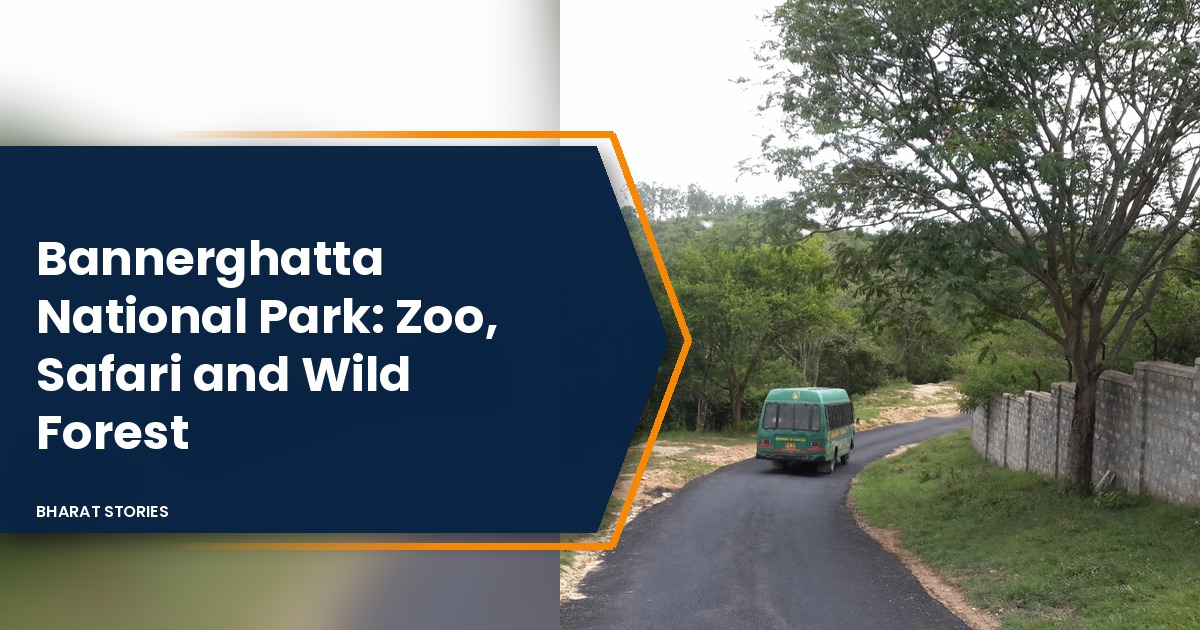
Bannerghatta National Park: Zoo, Safari and Wild Forest
Few big Indian cities have wild elephants living less than an hour from their busiest tech corridors. Bengaluru does. Bannerghatta National Park begins about 22 km south of the city centre, a patch of scrub, dry forest and granite hills that still links up with larger forests across the Tamil Nadu border. Most people know it for the zoo and lion safari, but the national park around them is a working wildlife habitat with real conservation challenges. To see how it compares with other protected areas across India, browse our state-wise list.
This guide separates the two things visitors often mix up, the biological park and the wider national park, and explains what each offers, when to go and how to plan a trip that respects the place.
Table of Contents
Bannerghatta at a Glance
| Item | Detail |
|---|---|
| Location | South of Bengaluru, Karnataka, mainly in Anekal taluk |
| Declared a national park | 1974 |
| National park area | About 260 sq km |
| Bannerghatta Biological Park | About 732 hectares inside the park, run as a separate unit since 2002 |
| Main attractions | Zoo, safaris, butterfly park, rescue centre, wild elephants in the larger forest |
| Weekly holiday | Biological park closed on Tuesdays |
| Distance from city centre | Roughly 22 km |
National Park and Biological Park: Not the Same Thing
Bannerghatta National Park was notified in 1974 and now covers about 260 sq km of forest, much of it closed to tourists. It runs as a long, narrow strip south from the city towards the Kanakapura side and the Tamil Nadu border. The hills are rocky, the soils thin, and the vegetation is largely dry deciduous forest and thorny scrub, with greener stretches along streams such as the Suvarnamukhi.
In 2002 a small part of this area, about 732 hectares near the main entrance, was separated as Bannerghatta Biological Park. That is where the zoo, safari enclosures, butterfly park and rescue centre are. When people in Bengaluru say they are going to Bannerghatta for the day, this is almost always where they mean. The rest of the national park is managed by the forest department as protected habitat.
What the Biological Park Offers
The zoo
The zoo houses a wide range of Indian and some exotic species, from leopards and sloth bears to gharials, hippos and many birds. Enclosures have been redesigned over the years to give animals more space and natural cover. Expect a lot of walking. A full loop can take three hours or more at a relaxed pace.
Safaris
Closed buses and jeeps take visitors through large fenced enclosures holding tigers, lions, bears and herbivores such as spotted deer and sambar. These are captive or rescued animals in big paddocks rather than a wild safari, but they give children and first time visitors a close and safe view. Safari routes and the mix of enclosures change from time to time, so check what is running on the day.
Butterfly park
Opened in 2006, the butterfly park was described as the first butterfly enclosure of its kind in India. A domed enclosure planted with nectar and host plants holds dozens of local species, and a small museum explains their life cycles. Visit on a sunny morning, when butterflies are most active.
Rescue and rehabilitation
The park also cares for rescued animals, including leopards caught in conflict situations, elephants confiscated from illegal captivity and bears once used for street performances. Not all of these are on public display, which is as it should be.
Wildlife in the Wider National Park
Beyond the fences, Bannerghatta is home to wild Asian elephants, leopards, sloth bears, wild pigs, spotted deer, barking deer, porcupines, jackals and many smaller animals. Wild elephants use the park as part of a corridor that runs south into the Hosur forests of Tamil Nadu and towards the Cauvery Wildlife Sanctuary. Their movement through farmland and new housing on the fringe makes Bannerghatta one of the clearest examples in India of wildlife living alongside a growing city.
Bird life is rich for a scrub forest. Over 200 species have been recorded, including the yellow throated bulbul, painted spurfowl, Indian grey hornbill, shikra and several owls. Early morning walks on the park’s edge, where permitted, can be rewarding.
Conservation Pressures
Bannerghatta faces pressures that most remote parks do not. Quarrying in the surrounding hills, new roads, resorts and apartments all press in on its boundaries. The eco sensitive zone around the park, which limits certain kinds of development, has been the subject of repeated debate and legal challenges. Elephants and leopards straying into villages and new layouts lead to crop losses and, at times, dangerous encounters.
Visitors can help in small ways: do not feed animals, do not stop on fringe roads to watch elephants at dusk, and carry all waste out with you. Supporting the zoo’s adoption programme or volunteering with recognised conservation groups is another way to give back.
A Simple Half Day Plan
Most families get the best out of Bannerghatta by arriving when the gates open, usually around 9:30 am, and heading straight for the safari counter before the queues build. The bus ride takes roughly an hour. After that, the butterfly park is a short walk away and is at its liveliest in late morning sunshine.
Lunch can be had at the food court near the entrance, or you can carry a packed meal and use the picnic areas. Spend the cooler part of the afternoon in the zoo, starting with the big cats and finishing at the bird aviaries and reptile house. Leave before the evening rush on Bannerghatta Road, which can turn a 22 km drive into a two hour crawl.
If you have time to spare, the small hilltop Champakadhama Swamy temple near the village of Bannerghatta is a quiet stop, with views across the scrub forest. Keep to the paths and avoid lingering on fringe roads after dark, when elephants often move.
When to Visit
Bannerghatta is open through the year except on Tuesdays and on certain public holidays. Bengaluru’s mild climate means there is no bad season, but there are better ones.
- October to February: cool, clear days and the most comfortable time for long walks around the zoo.
- March to May: warm afternoons; go early and keep to shaded paths.
- June to September: monsoon showers make the forest green and the butterfly park busy, but carry an umbrella.
Weekends and school holidays are crowded, with long queues for safari buses. A weekday morning visit is far more pleasant.
Getting There and Practical Tips
Bannerghatta Road runs straight from the city to the park gate. City buses run regularly from several bus stations, and cabs and autos are easy to find. Kempegowda International Airport is on the opposite side of the city, around 60 km away, so allow plenty of time in traffic. Parking is available near the entrance.
Tickets for the zoo, safari and butterfly park are sold separately or as combined packages, at the counter and through the official online booking site. Prices differ for adults, children and foreign visitors, and camera fees may apply. Carry water, a hat and comfortable shoes, and keep food packed away; macaques near the entrance have learned to snatch bags.
If you want to see Karnataka’s wildlife in a truly wild setting, plan a separate trip to Bandipur National Park on the Mysuru to Ooty road. For background on the state, see our overview of Karnataka’s history, geography and tourism. Rules for the wider protected forest are set by the Karnataka Forest Department, while the biological park posts its own timings and ticket rates at the entrance and on its booking site.
Frequently Asked Questions
Is Bannerghatta a zoo or a national park?
Both. The national park is a large protected forest. The biological park, with the zoo, safaris and butterfly park, occupies a small part of it near the main gate.
On which day is Bannerghatta closed?
The biological park is closed on Tuesdays. Check for extra closures on certain holidays before you travel.
Are the safari animals wild?
No. Safari animals live in large fenced enclosures. Wild elephants, leopards and other animals live in the wider national park, which is not part of the safari route.
How much time do I need?
Half a day covers the safari and butterfly park. Add two to three hours if you also want to walk the full zoo.
Is it suitable for young children?
Yes. Paths are mostly paved, there are rest areas and food stalls, and the closed safari buses are safe for families.