

Betla National Park: Jharkhand’s Forest and Palamu Forts
Jharkhand has only one national park, and it is easy to miss on a map. Betla sits in Latehar district on the western edge of the Chota Nagpur plateau, a quiet forest of sal and bamboo cut by the North Koel river and watched over by the ruins of two hill forts. It has none of the crowds of the famous central Indian parks. What it does have is history, a strong elephant population and a sense that you have the forest largely to yourself.
Betla is the visitor face of the Palamau Tiger Reserve, one of the first nine tiger reserves in India. This guide covers its size and history, the animals you may see, the best months to go and how to get there from Ranchi or Daltonganj. For more on the state, see our overview of Jharkhand’s history, geography and tourism.
Table of Contents
Betla National Park at a Glance
| Item | Detail |
|---|---|
| State and district | Jharkhand; Latehar district |
| National park area | About 226 sq km, notified in 1986 |
| Parent reserve | Palamau Tiger Reserve, about 1,130 sq km, set up in 1974 |
| Rivers | North Koel, with the Burha and Auranga draining the wider reserve |
| Known for | Elephants, gaur, sal forest, Palamu forts |
| Open to tourists | 1 October to 30 June |
| Nearest town | Daltonganj (Medininagar), about 25 km |
| Nearest airport | Ranchi, about 170 km |
A Forest With a Long Record
The Palamau forests were under scientific management as early as the 1860s, and they hold a quiet place in the history of Indian conservation. In 1932, under the forest officer J. W. Nicholson, Palamau became the site of what is generally described as the first tiger census anywhere based on counting pugmarks. That method went on to be used across India for decades before camera traps took over.
When Project Tiger started in 1973, Palamau was among the first reserves selected, and it was formally constituted in 1974. Within it, a block of about 226 sq km was notified as Betla National Park in 1986. The remaining area is protected as the Palamau Wildlife Sanctuary, and the Mahuadanr Wolf Sanctuary lies a little to the south.
Landscape
Betla is hill country, with elevations in the wider reserve ranging from about 300 metres to over 1,100 metres. Sal dominates, mixed with mahua, palash, kusum and large stands of bamboo. In March the palash, often called the flame of the forest, covers bare branches in orange flowers. Grassy clearings near the Betla gate, created in part by old management work, are where most animals are seen.
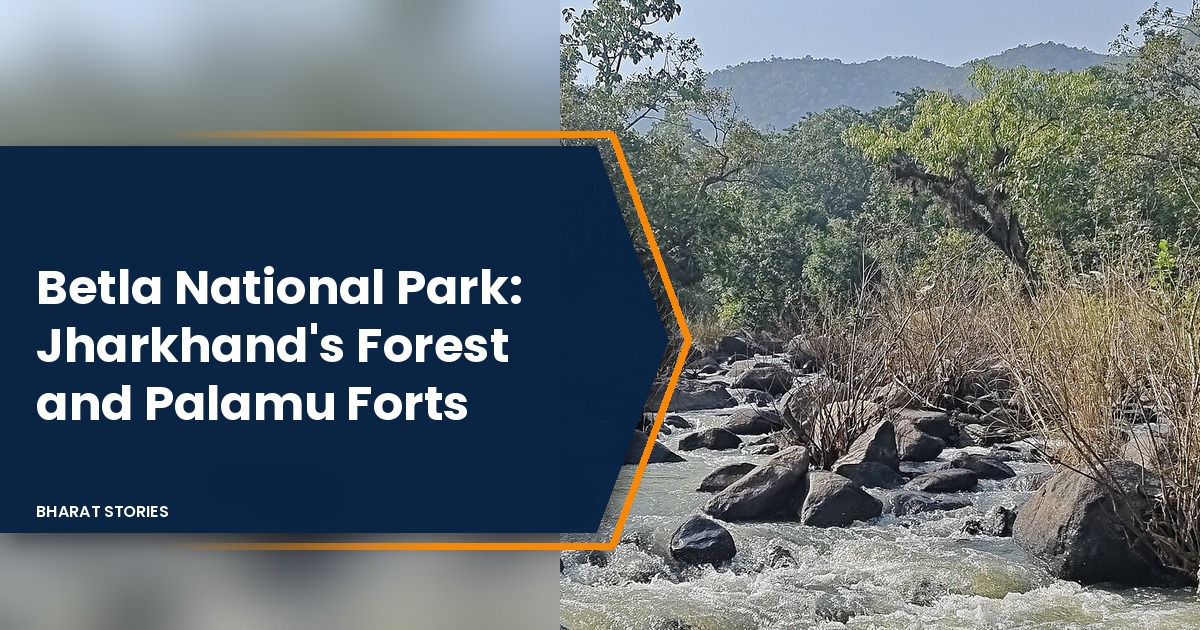
The North Koel river runs along the edge of the park and is the lifeline for wildlife in the dry months. Its rocky bed, almost empty in May, fills dramatically in the monsoon. Near the village of Kechki, a short drive away, the Auranga meets the Koel in a broad sandy confluence that makes a fine picnic spot.
Wildlife You May See
Elephants are the most reliable large animals at Betla, and herds are often seen near the water holes and along the Koel. Gaur, the big wild cattle locally called bison, graze in the clearings. Spotted deer, sambar, barking deer, mouse deer, nilgai and wild pigs are common. Langurs and rhesus macaques gather near the gate and lodges.
Tigers are another story. Palamau once held a healthy population, but national estimates over the last two decades have recorded very few, and at times almost none. Poaching, conflict and left wing extremism in the region all played a part. The forest department has worked to rebuild the prey base, and occasional tiger presence is still reported, but visitors should not come expecting to see one. Leopards, sloth bears, wolves, jungle cats, wild dogs and porcupines are present, though most are shy.
Birders will find hornbills, peafowl, red junglefowl, crested serpent eagles, drongos and many woodpeckers and barbets. Winter brings migrant ducks to the river pools.
The Palamu Forts
A short drive from the Betla gate, two forts rise from the forest above the Auranga. Both are linked with the Chero kings, who ruled Palamu until the 18th century. The older fort stands on lower ground, while the newer one, higher up the hill, was added in the 17th century. Medini Rai, the best remembered Chero ruler, is still honoured locally, and the district town of Daltonganj has been renamed Medininagar after him.
Much of the stonework is in ruins and overgrown, but the gateways, walls and views over the valley make the climb worthwhile. Visit with a local guide, as some paths are steep and slippery, and avoid going late in the day.
Safaris and Activities
Jeep safaris run from the Betla gate in the early morning and late afternoon. Vehicles and guides are arranged through the forest department. A watchtower near the water holes gives good views, and some visitors use the hides to sit quietly and wait. Elephant rides have been offered in the past but depend on current rules and the availability of trained elephants; ask at the reception rather than planning around them.
The forest department and the Jharkhand tourism agency run lodges in and around Betla. Rooms are simple, and bookings can be made in advance through official channels. Food is basic but filling. Mobile signal is patchy inside the forest.
Practical Tips
Betla is a low key destination, and that is part of its charm, but it rewards a little preparation. Carry enough cash, because card machines and ATMs are not dependable near the park. Pack a torch, insect repellent and a light jacket for winter evenings, when the plateau gets surprisingly cold after sunset.
Book the first morning safari of your stay. Animals are most active at dawn, and the light on the sal trunks is lovely. Drivers and guides at Betla are often local villagers who know the forest well; ask them about plants, tracks and the history of the forts, not only about where the elephants are.
Respect the communities that live inside and around the reserve. Ask before photographing people, buy from local stalls, and keep music and voices low near villages as well as in the forest.
When to Visit
The park is open to tourists from 1 October to 30 June and closed from 1 July to 30 September for the monsoon.
- October to February: pleasant days and chilly nights, with the forest still green. The best time for most visitors.
- March to April: flowering palash and leaf fall improve visibility; elephants come regularly to water.
- May and June: very hot, with temperatures in the reserve reaching well over 40 degrees. Sightings near water can be good, but mid day is harsh.
How to Reach Betla
By road, Betla is about 170 km from Ranchi via Latehar, a drive of around four to five hours. From Daltonganj it is about 25 km. Patna is roughly 260 km away by road. The nearest railway stations are Barwadih, about 12 km away, and Daltonganj, both with trains to Ranchi, Patna and further afield. Ranchi’s Birsa Munda Airport is the closest airport with regular flights, and Gaya is another option.
Nearby sights include the Kechki confluence, Lodh Falls near Mahuadanr, usually described as the highest waterfall in Jharkhand, and the Netarhat plateau to the south, known for its sunrise and sunset points. Combining Betla with Netarhat makes a satisfying three or four day trip.
If you enjoy quiet eastern Indian forests, you may also like Buxa Tiger Reserve in North Bengal. Official notices on opening dates and entry fees are published by the Jharkhand Forest Department.
Frequently Asked Questions
Is Betla the only national park in Jharkhand?
Yes. Betla is the state’s only national park. It forms part of the Palamau Tiger Reserve along with the Palamau Wildlife Sanctuary.
Can I see tigers at Betla?
It is very unlikely. Tiger numbers in Palamau are extremely low. Elephants, gaur and deer are far more likely sightings.
When is Betla closed?
The park closes to tourists from 1 July to 30 September every year.
Is Betla safe to visit?
Tourist areas around Betla receive regular visitors, including families. Travel in daylight, use official lodges and guides, and check current local advice before you go.
Where should I stay?
Forest and tourism department lodges near the Betla gate are the most convenient. Daltonganj has more hotels if those are full.