

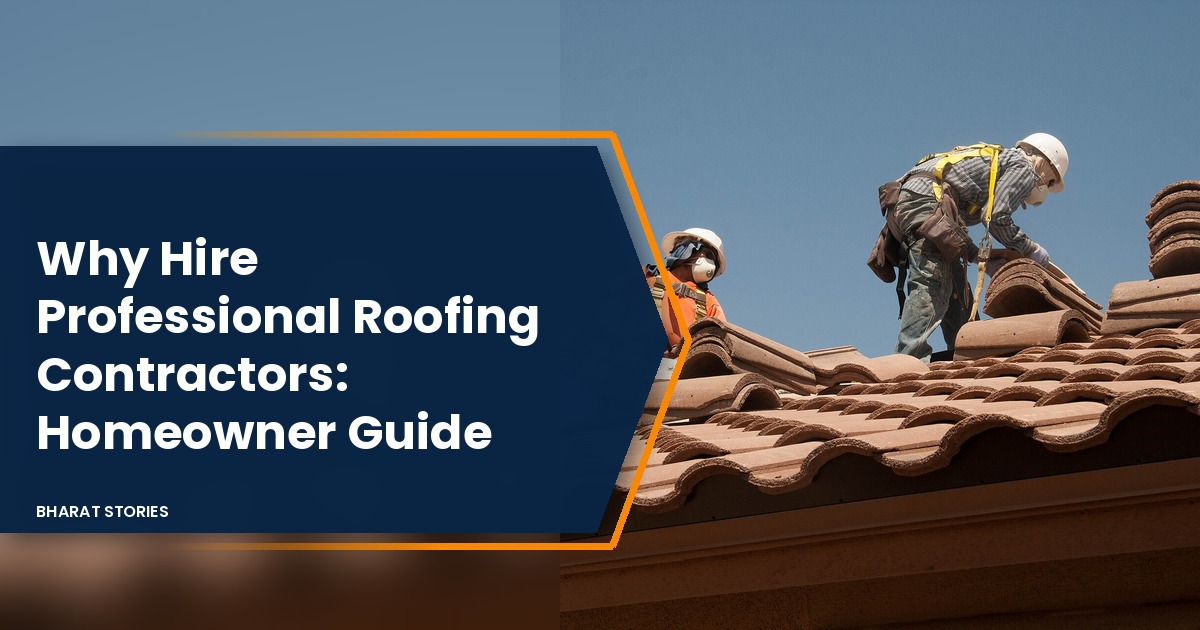

A roof is easy to ignore until water starts dripping onto the bed or a sheet lifts in a storm. When that happens, many homeowners are tempted to call the nearest handyman or climb up themselves. Roofing, however, combines work at height, structural loads, waterproofing and materials that have to last for decades. Getting it wrong can be expensive, and in the worst cases it can cost a life.
This guide explains when you need a professional roofing contractor, what a good one does that a casual worker may not, how to check a contractor before you hire, what should be in the written quotation and how to keep the roof in good shape afterwards. It is written for Indian homes, whether you have an RCC terrace, a sloping tiled roof or metal sheets over a shed or upper floor.
Table of Contents
When You Need a Professional
Small jobs such as clearing leaves from a gutter can often be handled safely from a ladder or a terrace. Call a professional when the work involves any of the following:
- Leaks that return after every monsoon, or damp patches spreading on the ceiling
- Cracked, lifted or rusted metal sheets, or loose screws and flashing
- Broken clay or concrete tiles on a sloping roof
- A new roof, a replacement roof or a roof over a new floor or extension
- Waterproofing an RCC terrace that has developed cracks
- Any work on fragile sheets, skylights or old asbestos cement roofing
- Damage after a cyclone, hailstorm or falling tree
Why Roof Work Is Riskier Than It Looks
Falls from roofs are among the most common causes of serious injury in construction and maintenance work. The danger is greatest on fragile roofs. A guidance note from the Tamil Nadu Directorate of Industrial Safety and Health on working safely on fragile roofs warns that cracked sheets often cannot be spotted by eye, that such sheets can shatter without warning under a person’s weight and that most falls through them are fatal. It advises treating any roof as fragile until it has been confirmed otherwise.
India’s building and construction workers law and the related safety rules require employers on construction sites to provide fall protection, such as harnesses and lifelines, guard rails at open edges, crawling boards on fragile surfaces and safe access. A professional contractor should bring this equipment and know how to use it. A casual worker who climbs up in chappals with no harness is taking a risk with his life and, indirectly, with your liability as the person who hired him.
What a Good Roofing Contractor Brings
A Proper Assessment
A competent contractor starts by finding the cause rather than patching the symptom. Water often travels along a slope or a purlin before it drips, so the visible stain may be some distance from the real leak. Expect them to inspect the roof surface, joints, flashing, gutters, the condition of the supporting structure and, for terraces, the slope and drainage outlets.
The Right Materials
Material choice depends on climate and use. Coastal homes need corrosion resistant coatings, homes in hot regions benefit from insulation and light colours, and heavy rain areas need the correct slope and overlaps. For steel roofing sheets, the government’s Steel and Steel Products Quality Control Order of August 2024 lists galvanised, aluminium zinc coated and pre painted sheets among products that must meet their Indian Standards and carry the BIS Standard Mark. A good contractor will source certified material and can show you the manufacturer’s details.
Correct Installation
Most roof failures come from installation errors rather than bad material. Screws fixed in the wrong place, missing washers, too little overlap between sheets, poor flashing around walls and pipes, or a terrace laid without enough fall towards the outlets all lead to leaks. Experienced crews follow the manufacturer’s instructions on fixings, spacing and minimum slope, and finish the details that a hurried job tends to skip.
Clean Up and Disposal
Old sheets, broken tiles, offcuts and screws need to be removed and disposed of safely. Metal fragments left in gutters rust and stain new sheets, and stray screws are a hazard on the ground. Old asbestos cement sheets need particular care because breaking or cutting them can release harmful fibres. Ask whether the contractor has experience handling them safely, or whether a specialist is needed.
How to Check a Contractor Before Hiring
- Ask for local references. Talk to two or three recent customers, ideally ones whose roofs have been through at least one monsoon.
- See completed work. A short visit to a finished job tells you more about workmanship than any brochure.
- Check registration and billing. An established business should be able to give a proper GST invoice and a fixed address.
- Ask about safety. Find out what fall protection the crew uses and whether workers are covered by accident insurance.
- Compare several quotations. Get at least three, and compare the scope of work line by line, not just the total.
- Clarify the warranty. Separate the manufacturer’s warranty on the material from the contractor’s own guarantee on workmanship and leaks, and get both in writing.
What the Written Quotation Should Include
| Item | What to look for |
|---|---|
| Scope | Exactly what will be removed, repaired or installed, with area in square feet or square metres |
| Materials | Brand, product name, thickness, coating and colour of sheets or membranes |
| Accessories | Ridge, flashing, gutters, screws and sealants, and who supplies them |
| Labour and scaffolding | Whether access equipment and safety gear are included in the price |
| Timeline | Start date, expected finish and what happens if rain delays work |
| Payment | A staged schedule linked to progress, not full payment in advance |
| Warranty | Length and conditions of both the material and workmanship guarantees |
| Disposal | Removal of old material and debris from the site |
Red Flags
- Pressure to pay the whole amount upfront
- A price far below every other quotation with no clear explanation
- Refusal to put the scope or warranty in writing
- No safety equipment on site
- Door to door offers after a storm from people nobody in the area knows
- Vague answers about the brand or thickness of materials
Timing Your Roof Work
In most of India the best time for roof work is the dry season, well before the monsoon. Contractors are busiest in April and May, so book early. Plan major work so that the roof is never left open overnight when rain is likely, and keep tarpaulins ready if work must continue in uncertain weather.
Looking After the Roof Afterwards
A roof lasts longer with simple care. Clear gutters and terrace outlets before and during the monsoon, trim branches that rub against the roof, check screws and sealant after strong winds and look into the attic or ceiling for stains once a year. A professional inspection every few years catches small problems early. Our guide on when to call roofing contractors for an inspection covers the warning signs in more detail, and if you are planning a new sheet roof, read about choosing the right metal roofing.
Frequently Asked Questions
Is it safe to repair my own roof?
Simple tasks such as clearing a terrace drain are usually fine. Anything that needs you to stand on sheets, tiles or a sloping surface is best left to trained workers with fall protection.
How do I know if a roof is fragile?
You often cannot tell by looking. Asbestos cement sheets, translucent roof lights and old or corroded sheets are commonly fragile, so assume a roof is unsafe to walk on until a professional confirms otherwise.
How many quotations should I get?
At least three. Make sure each one describes the same scope and materials so the prices are genuinely comparable.
What warranty should a roofing contractor give?
Ask for a written guarantee on workmanship and leaks from the contractor, in addition to whatever the material manufacturer offers. Terms vary, so read the conditions.
Should roofing sheets carry the ISI mark?
Steel roofing sheets covered by the 2024 quality control order must conform to the relevant Indian Standard and carry the BIS mark. Ask your contractor to confirm this for the product being used.
When is the best time to repair a roof?
During dry weather, ideally a few months before the monsoon, when contractors have time to do the job properly and materials can be fixed in good conditions.