

Jim Corbett National Park: Zones, Tigers and Booking Guide
Jim Corbett National Park is where India’s story of protected wilderness begins. Set up in 1936 in the foothills of the Himalayas, it was the country’s first national park, and in 1973 it was the place where Project Tiger was launched. Nearly a century on, it still holds more wild tigers than any other tiger reserve in India, and its riverside grasslands remain among the best places on earth to watch wild elephants.
This guide explains the park’s history, its landscape and wildlife, how the tourism zones and bookings work, the best time to go and the challenges the reserve faces today. For other protected areas around the country, see our list of national parks of India.
Table of Contents
Jim Corbett National Park at a Glance
| Item | Detail |
|---|---|
| State | Uttarakhand; spread across Nainital, Pauri and Almora districts |
| Established | 1936, as Hailey National Park |
| National park area | About 521 sq km |
| Tiger reserve area | About 1,288 sq km: 822 sq km core and 466 sq km buffer |
| Tigers | 260 in the reserve in the 2022 national estimate, the highest of any reserve |
| Main river | Ramganga, with the Ramganga reservoir in the west |
| Gateway town | Ramnagar, which also has the nearest railway station |
| Official booking | Corbett Tiger Reserve website only |
From Hailey to Corbett: A Short History
The forests along the Ramganga were once managed for timber and hunting under British rule. In 1936 an area of a little over 300 sq km was set aside as Hailey National Park, named after the then Governor of the United Provinces, Sir Malcolm Hailey. It was the first national park in India. After independence it was renamed Ramganga National Park, and in the mid 1950s it was renamed again in honour of Jim Corbett, who had died in Kenya in 1955.
Corbett is a fascinating figure. Born in Nainital in 1875, he became famous for tracking down tigers and leopards that had killed people in the villages of Kumaon, and he described those hunts in his book Man Eaters of Kumaon. Later in life he turned firmly to conservation, photographing wildlife instead of shooting it and urging people to protect the forests. His winter home at Kaladhungi, on the road between Ramnagar and Nainital, is now a museum.
The park grew over the following decades, and on 1 April 1973 it became one of the first nine reserves under Project Tiger, the national programme to save the tiger from extinction. Today’s Corbett Tiger Reserve combines the national park, the Sonanadi Wildlife Sanctuary and surrounding forests.
Landscape and Habitats
Corbett lies where the outer Himalayan ridges meet the plains. The terrain is a mix of hills, river valleys and flat land of boulders and sand known as the bhabar. Tall sal forest covers much of the reserve, with mixed deciduous trees, bamboo and a few stands of chir pine on the higher ridges.
The most famous habitat, though, is the grassland. Open meadows known locally as chaurs, the largest of them at Dhikala, spread along the Ramganga. Many of these meadows grew up on the sites of old villages and clearings, and the reserve now works to stop trees and weeds taking them over. The Ramganga reservoir, created by the Kalagarh dam, floods part of the western valley and attracts birds and elephants, especially in the dry months.
Wildlife You Can Hope to See
Tigers are the headline. In the 2022 All India Tiger Estimation, Corbett Tiger Reserve had 260 tigers, more than any other reserve, and many more lived in the forest divisions around it. The 2026 estimation began in Uttarakhand in December 2025, so updated figures are expected. Even with that density, sightings are never guaranteed, and the tall grass of winter can hide a tiger a few metres from the track.
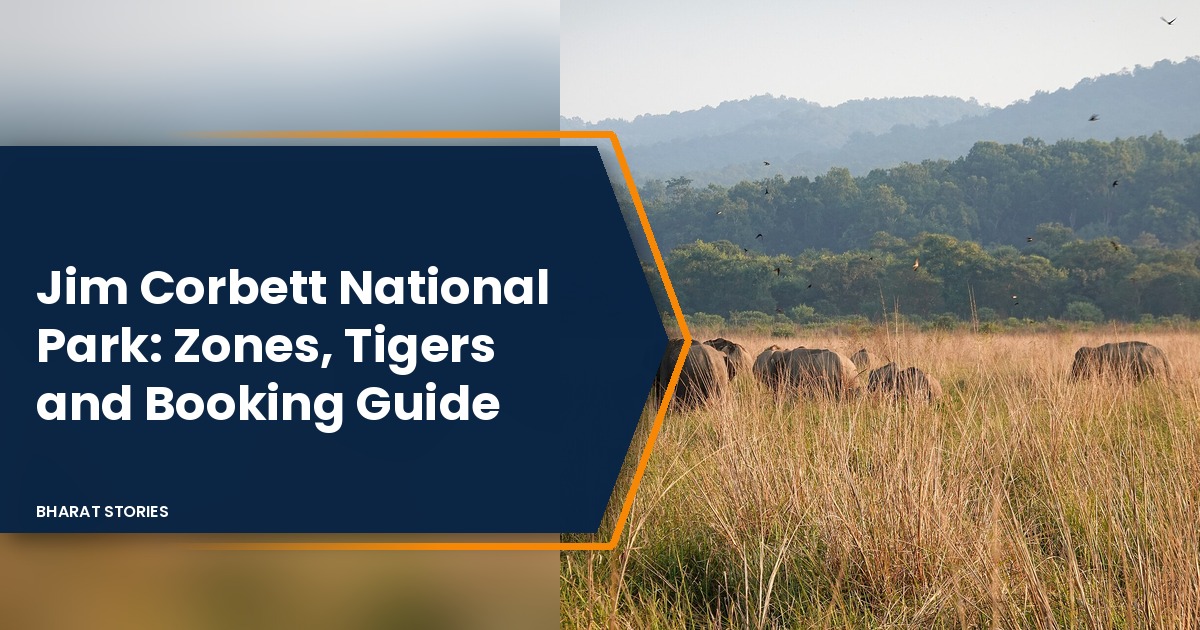
Asian elephants are often easier to see. Herds move between the reserve and neighbouring forests, and on a good day dozens can be watched grazing across the Dhikala meadows. Leopards keep mostly to the hillier edges. Chital, sambar, hog deer and barking deer are common, along with wild pig, langurs and rhesus macaques. Sloth bears, jackals, yellow throated martens and otters are seen less often.
The Ramganga holds both the long snouted gharial and the mugger crocodile, as well as the golden mahseer, a prized river fish. Corbett is also one of India’s richest birding sites, with several hundred species recorded, from great hornbills and crested serpent eagles to the ibisbill on winter river beds. Reptiles include the king cobra and the Indian rock python.
Tourism Zones
Visitors enter the reserve through set zones, each with its own gate and daily quota of vehicles. The best known are:
- Dhikala: the heart of the park, with the large grasslands and the forest rest house complex on the Ramganga. It is open for overnight stays and canter safaris, and in the 2026 season it reopens on 15 November.
- Bijrani: close to Ramnagar, with sal forest, open clearings and good chances of tigers. It is popular for day jeep safaris.
- Jhirna and Dhela: on the southern edge, with a mix of forest and grassland. These zones usually stay open for a longer part of the year.
- Durga Devi: in the north east, hilly and riverine, known for birds and mahseer pools.
Most zones close during the monsoon, roughly from late June to mid October, when rivers rise and tracks wash out. Dhikala in particular depends on river levels, and some areas across the Ramganga may stay closed until the water drops.
How Booking Works
All safari permits and forest rest house rooms are sold through the official Corbett Tiger Reserve website. Night stays at Dhikala and other rest houses open in slots about 45 days before the date of stay, and they sell out fast. For the 2026 season, the first slots for stays from 15 November to 21 December were fully booked soon after they opened.
The reserve has warned repeatedly against unofficial websites and agents that sell fake or overpriced permits, so book only on the official site. From 22 September 2026, the group leader must upload both sides of a valid identity document, and the identity numbers of all other members must be entered. The same original documents must be shown at the gate, and any mismatch can lead to entry being refused.
Best Time to Visit
November to February is cool and green, with misty mornings, migrant birds and comfortable days, although the grass is tall. March to mid June is hot, but the grass thins and animals gather near water, which improves the odds of seeing tigers and elephants. Early morning drives are usually the most rewarding throughout the season.
Getting There
Ramnagar is the main gateway town and has a railway station with trains from Delhi. By road, Ramnagar is roughly 250 km from Delhi, a drive of five to seven hours depending on traffic. The nearest airport is Pantnagar, with Delhi offering far more flights. Taxis and safari vehicles are available in Ramnagar for the run to the zone gates.
Challenges Facing Corbett
Corbett’s success has created new pressures. Tiger numbers have grown faster than the space available inside the reserve, so young animals move into villages and farmland on the fringe, and incidents of livestock loss and attacks on people have risen in some areas. The forest department works with villages on compensation, early warning and safer practices, but conflict remains a serious issue.
Tourism is another. Hundreds of thousands of visitors come each year, and the strip of resorts along the Kosi river near Ramnagar sits close to important wildlife corridors. Managing crowds, traffic and noise without harming the animals people come to see is a constant balancing act for the reserve.
Invasive weeds such as lantana, the gradual loss of grasslands to woodland and occasional forest fires in the dry season also demand attention. For a neighbouring reserve in the same Himalayan foothills, see our guide to Rajaji National Park.
Frequently Asked Questions
Why is it called Jim Corbett National Park?
It was renamed in honour of Jim Corbett, the hunter turned conservationist and author who was born in Nainital and spent much of his life in the Kumaon hills. He died in 1955.
How many tigers are in Jim Corbett National Park?
The 2022 All India Tiger Estimation counted 260 tigers in Corbett Tiger Reserve, the highest of any reserve in India. A new national estimate is under way.
Which is the best zone in Corbett?
Dhikala and Bijrani are generally the most rewarding for wildlife. Dhikala offers grassland views and overnight stays, while Bijrani is easier to reach on a day trip from Ramnagar.
When does Dhikala zone open?
Dhikala usually opens in mid November after the monsoon. In 2026 it reopens on 15 November, subject to river levels.
How do I book a Corbett safari?
Book only on the official Corbett Tiger Reserve website. Carry the original identity documents used during booking, since they are checked at the gate.
Was Corbett India’s first national park?
Yes. It was established in 1936 as Hailey National Park and is considered India’s first national park.