

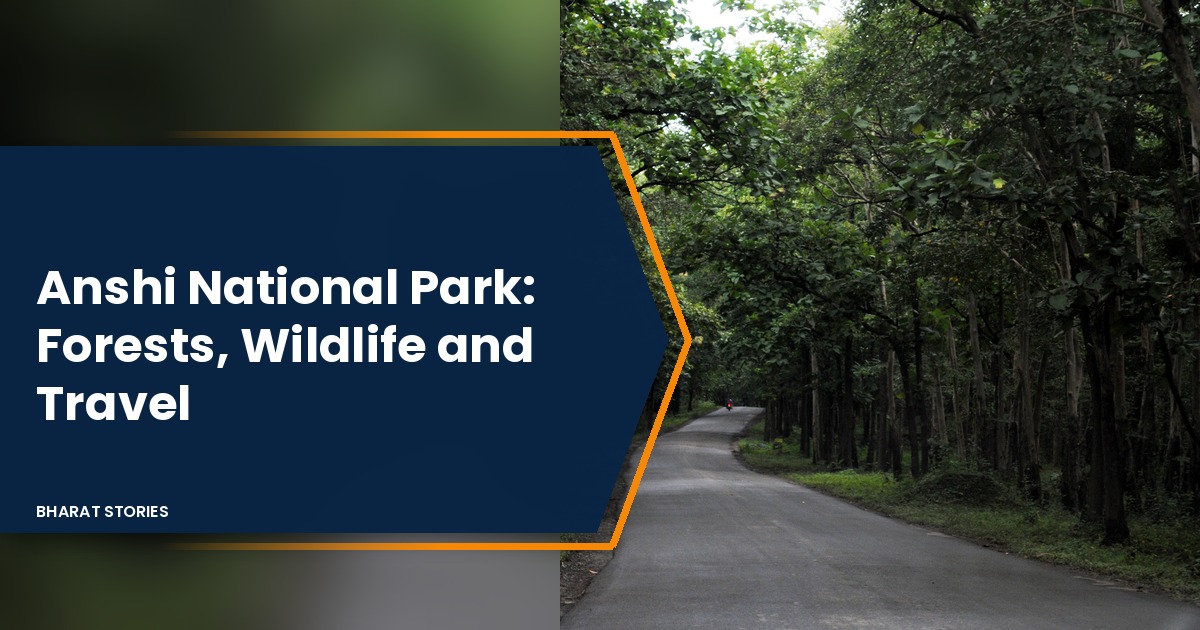
 Photo: Ms.Mulish, CC BY SA 3.0, via Wikimedia Commons
Anshi National Park: Forests, Wildlife and Travel
Anshi National Park sits in the Western Ghats of Uttara Kannada, Karnataka, and forms part of the Kali Tiger Reserve together with the Dandeli wildlife area. Dense evergreen patches, rivers and steep roads define the landscape. Mist hangs low after rain, and the forest can feel close to the road even when you are only a few minutes from a small town.
This rewritten guide covers where Anshi is, what wildlife visitors may see, and how to travel responsibly. Compare it with nearby and related parks such as Bandipur National Park and Balpakram National Park.
Table of Contents
Anshi National Park at a Glance
| Item | Detail |
|---|---|
| State | Karnataka (Uttara Kannada) |
| Landscape | Western Ghats forests and river valleys |
| Reserve link | Part of Kali Tiger Reserve with Dandeli |
| Flagship interest | Tiger habitat, birds, evergreen flora |
| Visitor tip | Book authorised stays and drives; expect rain |
Location and Landscape
Anshi lies inland from the Karnataka coast where the Ghats catch heavy monsoon rain. Roads climb through thick forest and can turn slippery after showers. The Kali river system shapes valleys and wildlife movement. Bridges and hairpin bends need patience; rushing invites skids and stress for drivers who know the road less well than local guides.
Because Anshi and Dandeli are managed together as a tiger reserve, visitor rules often apply across both. Check which gate and route your permit covers before you start. A voucher for one sector does not automatically open every track.
The administrative history explains the overlap. Dandeli Wildlife Sanctuary was declared in 1956, and Anshi was carved out of it as a national park in 1987; its final area of about 340 square kilometres was notified in 2002. In 2007 the two were brought under Project Tiger as the Dandeli Anshi Tiger Reserve, renamed Kali Tiger Reserve in 2015 after the river that ties the landscape together. With neighbouring protected forests in Goa and Maharashtra, it forms one of the largest continuous forest blocks in this part of the Western Ghats.
Homestays and forest lodges around the wider Dandeli Anshi landscape differ in comfort and in how carefully they handle waste. Ask how they dispose of plastic and whether they hire local naturalists. A cheap room that dumps rubbish into a stream costs the forest more than your discount saves you.
Mobile networks drop inside forest stretches. Download offline maps, tell your lodging your return plan, and carry a paper note with the lodge phone number. Do not count on live streaming a safari to friends while you drive.
Wildlife You May Encounter
Tigers are present but sightings are never guaranteed in dense forest. Leopards, deer, primates and many bird species are more commonly noted by guides. Hornbills and other Western Ghats birds draw birders in season. Malabar species reward quiet walking more than noisy convoy traffic.
Anshi is best known for its black panthers, which are leopards with a dark coat rather than a separate species; seeing one is mostly luck. The reserve also holds elephants, gaur, sambar, spotted deer, sloth bears, wild dogs and bonnet macaques. Birders come for the four hornbills recorded here, the great, Malabar pied, Malabar grey and Indian grey, along with many other Western Ghats species. King cobras live in the moist forest, which is one more reason to stay on paths. The vegetation shifts from moist deciduous and semi evergreen stands to true evergreen patches in the wetter western valleys.
Do not expect open meadow viewing like some central Indian parks. Patience, quiet and a good guide matter more than racing between junctions. When an elephant appears on the road, stop, give space and follow the guide’s hand signals without argument from the back seat.
Night drives, where allowed, show a different cast of animals and a higher risk of glare and sudden stops. Follow speed limits that look conservative on paper; they exist because animals step from shadow without warning.
Insects, leeches in wet months and humid heat are part of the deal. Pack repellent, salt for leeches if advised locally, and spare socks. Complaining about mud misses the point of a rainforest reserve.
Planning a Visit
Most visitors base themselves in Dandeli or drive in from Karwar on the coast; the road between them runs close to the Anshi range. Hubballi has the nearest airport, roughly two to three hours away by road, and Goa’s airports are another option. Alnavar and Londa are the usual railheads. Carry rain gear even outside the peak monsoon, and book safaris and nature drives only through the forest department or operators it authorises, because freelance offers at the gate can ignore quota and safety rules.
Stay in authorised lodges. Ask about meal times if you return late from a drive. Vegetarian and simple non vegetarian food are usually available; special diets need advance notice in remote kitchens.
Carry cash for small fees where cards fail. Keep ID ready for forest checkposts. Children should stay seated in jeeps and keep hands inside; excitement is fine, standing up is not.
Combine Anshi with a slower coastal or heritage stop if your itinerary is tight. Trying to tick Bandipur, Anshi and a beach in seventy two hours produces tired travellers and little attention for any one place.
Responsible Travel
Keep noise low, never feed animals and pack out plastic. Flash photography in the faces of animals at night is poor form and sometimes banned. Support guides who correct unsafe behaviour even when a guest grumbles.
Buy forest entrance tickets through official counters. Tips for guides are welcome when they reflect care and knowledge, not when they buy rule bending. Leave drones at home unless you hold written permission.
Western Ghats forests are a shared heritage across states. Similar care applies when you visit other hill and forest parks across India, including Meghalaya landscapes around Balpakram.
If you hike short nature trails, stay on marked paths. Shortcuts through undergrowth crush seedlings and surprise animals. A slow walk with binoculars beats a sweaty scramble for a mediocre selfie cliff.
What Guides Wish Guests Knew
Ask questions about trees and birds, not only about tigers. A guide who spends the morning on calls and canopy stories is doing real work even when big cats stay hidden. Thank them for that.
Alcohol and loud music at forest edges ruin the night for animals and for other guests. Lodge rules against both exist for reasons you feel clearly at 5 a.m. when the forest should sound like a forest.
Share sightings with the group rather than hogging the best window. Wildlife watching is a collective patience game. The guest who insists on exclusive angles usually leaves with fewer friends and the same photos.
Seasons, Roads and Health
October to May is the usual visiting window, and winter mornings are the most comfortable. The dry months make jeep tracks firmer and river crossings simpler, yet the forest looks different when the rains return: birdsong rises and leeches clock in for work. Safari routes may close in the heaviest monsoon weeks, so confirm before you book. Many travellers also raft the Kali near Dandeli; that activity runs under its own permits and safety rules, separate from park drives.
Drink water even when you do not feel thirsty in the jeep wind. Carry personal medicines and a basic kit. Snake bite panic is common; prevention means closed shoes and a torch after dark.
Keep a dry bag for phones, because sudden showers soak open jeep seats fast. Before you leave, check shoe soles for seeds so you do not carry plants out of the forest, and do not pick orchids to take home.
If a resort promises private off route drives, treat that as a reason to book elsewhere. Carry a small rubbish bag in the jeep for peels and tissues. End the trip by tipping fairly and writing one concrete compliment in the lodge book.
Frequently Asked Questions
Is Anshi the same as Dandeli?
They are linked inside the Kali Tiger Reserve but have different access points and experiences. Confirm your route with the forest department.
When is the best time to visit?
Many visitors prefer drier months for road access, but birdlife can be rich around monsoon edges. Ask locally about closures.
Are tigers easy to see?
No. Dense forests hide animals. Enjoy birds, trees and rivers even if big cats stay out of sight.
Do I need to book in advance?
Yes for peak weekends and holidays. Walk in options can vanish by mid morning.