

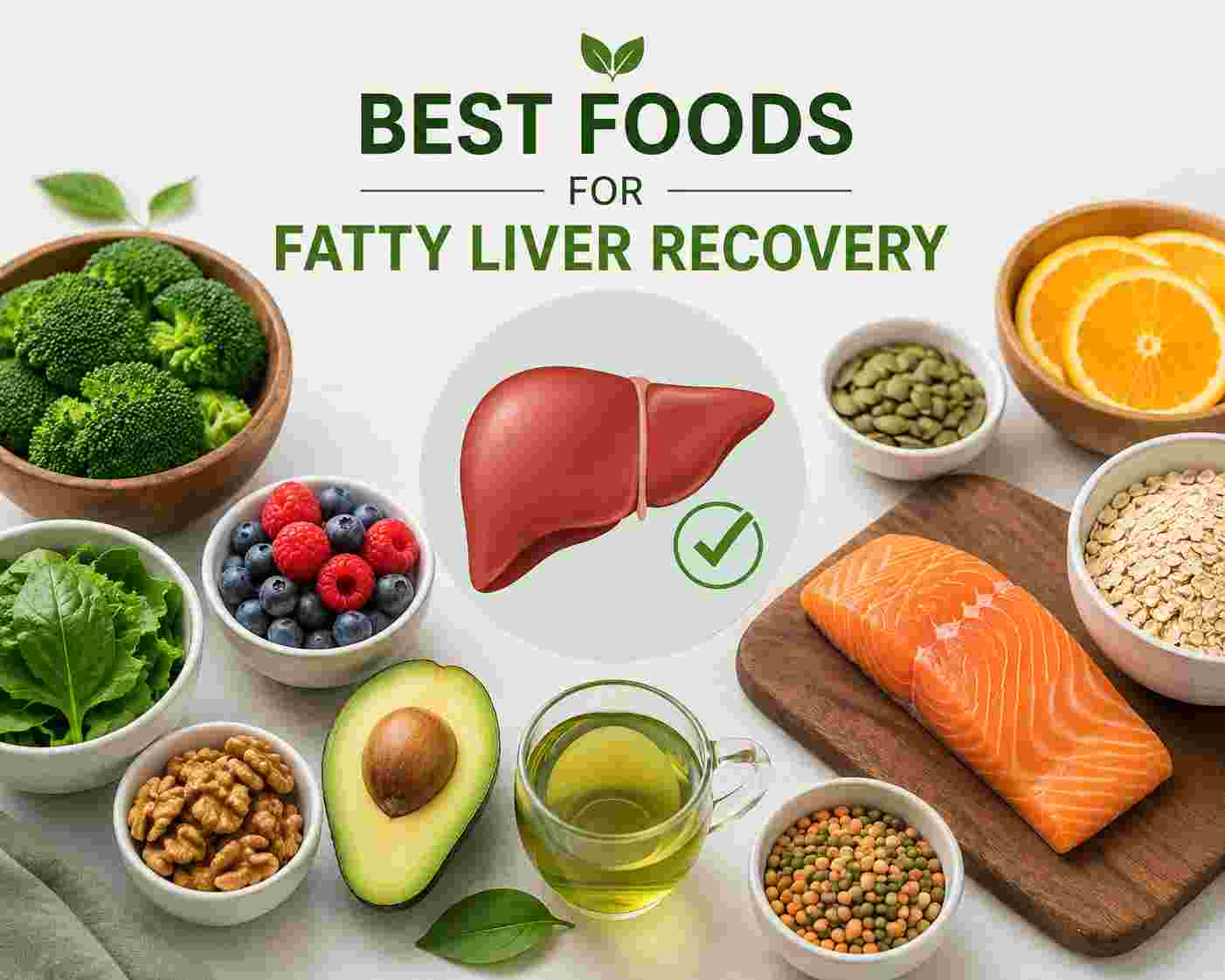
Best Foods for Fatty Liver Recovery
A fatty liver diagnosis sounds alarming, but here’s something most doctors will tell you early — it’s one of the few serious conditions where food genuinely does a lot of the healing.
The liver is remarkably good at recovering when you stop loading it with things that damage it and start giving it what it needs. For many people with early-stage non-alcoholic fatty liver disease, a consistent fatty liver diet combined with regular movement is enough to reverse the condition meaningfully over months.
This piece covers what foods for fatty liver do the most good, what to cut out, and how to build a daily eating pattern that supports real recovery.
Table of Contents
What Is Fatty Liver and Why Does Diet Matter?
Fatty liver happens when too much fat builds up in liver cells. The most common type in India is non-alcoholic fatty liver disease, closely linked to high-calorie diets, refined carbohydrates, excess sugar, and a sedentary lifestyle.
The liver processes almost everything you eat and drink. When it’s overwhelmed by fat and sugar, fat accumulates in liver tissue and slows down how the organ functions. In serious cases it leads to inflammation and scarring.
The encouraging part is that in early to moderate stages, liver health can improve substantially through diet alone. The liver regenerates. Give it the right environment and it responds.
Foods That Support Fatty Liver Treatment
Coffee
This surprises most people, but coffee is one of the most studied foods for fatty liver support. Multiple large-scale studies have found that regular coffee drinkers have a lower risk of liver fibrosis and cirrhosis. It reduces liver inflammation and slows fat buildup in liver cells.
Two to three cups of black coffee daily — without sugar or full-fat milk — show the clearest benefit. This applies to regular filtered or instant coffee, not just speciality varieties.
Leafy Greens
Spinach, methi, and palak contain nitrates and antioxidants that help reduce fat accumulation in the liver. Research has found that spinach specifically prevents fat buildup when eaten regularly. These greens already appear in Indian cooking daily — it’s about eating enough of them, not treating them as occasional additions.
Garlic
Garlic is used in almost every Indian kitchen, and it genuinely earns its place in a liver health diet. Studies show that garlic reduces body weight and fat in people with fatty liver. The active compound allicin has anti-inflammatory properties that directly benefit liver tissue.
Raw garlic is more potent, but cooked garlic still carries benefits and is far easier to eat consistently.
Walnuts
Walnuts are rich in omega-3 fatty acids and antioxidants, both of which reduce liver inflammation. Research shows that people who eat walnuts regularly have better liver function results. A small handful a day as a snack fits easily into a fatty liver diet.
Oily Fish
Salmon, mackerel, sardines, and tuna carry omega-3 fatty acids that actively reduce liver fat and inflammation. Including these two to three times a week makes a real difference. For those who don’t eat fish, flaxseeds and walnuts offer plant-based omega-3s as an alternative.
Oats and Turmeric
Oats contain beta-glucan, a fibre that reduces blood sugar spikes and supports fat metabolism in the liver. Plain oats for breakfast with no added sugar is one of the simplest changes to make.
Turmeric’s active compound curcumin reduces liver inflammation and fat accumulation. Including it in daily cooking — as Indian meals already do — contributes to a healthy liver environment over time.
What to Avoid for Liver Health
Knowing what to eat is only half the picture. What you stop eating matters just as much — often more.
Here’s what consistently makes fatty liver worse:
- Refined sugar and sugary drinks — fructose in soft drinks, packaged juices, and sweets is processed almost entirely by the liver and directly drives fat accumulation; this is one of the biggest contributors to NAFLD in India
- Refined carbohydrates — white rice in excessive amounts, maida-based foods, and packaged snacks spike blood sugar and drive fat storage in liver cells
- Fried and processed foods — trans fats found in fried snacks and packaged products damage liver cells and increase inflammation
- Alcohol — even moderate alcohol consumption significantly stresses an already fatty liver; complete avoidance is recommended during recovery
- Red and processed meats — high consumption of red meat and processed meats correlates with higher liver fat levels in multiple studies; reducing frequency helps
Building a Daily Fatty Liver Diet That Works
Knowing individual foods is useful. Putting them into an actual daily pattern is where real change happens.
A practical fatty liver diet for an Indian household might look like this:
- Morning — black coffee or green tea; oats with a small amount of fruit and walnuts; no sugar
- Lunch — dal with rice in moderate portions or roti with a generous portion of sabzi made with leafy greens; garlic in the cooking; turmeric in any curry base
- Evening — a handful of walnuts or a small portion of roasted chana; green tea
- Dinner — grilled or lightly curried fish (oily varieties preferred) or paneer; a salad with spinach or cucumber; minimal oil in cooking
- Through the day — water consistently; avoid packaged drinks entirely
This isn’t a dramatic overhaul of Indian eating. It’s more about adjusting portions, reducing refined foods, and making sure the foods for fatty liver that help most are appearing daily rather than occasionally.
A Note on Exercise and Medical Monitoring
Diet is the foundation of fatty liver treatment, but exercise plays a role that food can’t fully replace. Even 30 minutes of walking five days a week significantly accelerates fat reduction in the liver. Physical activity directly reduces liver fat independent of weight loss.
It’s also important to say clearly — dietary changes support recovery but they don’t replace medical care. Regular liver function tests, ultrasound monitoring, and follow-up with a doctor are essential parts of managing fatty liver properly. Severe stages of fatty liver require medical intervention that diet alone cannot address.
Think of the fatty liver diet as the most powerful tool you have in your hands right now — but use it alongside proper medical oversight, not instead of it.
Frequently Asked Questions
-
Can fatty liver be reversed completely through diet?
In early stages, yes. Non-alcoholic fatty liver disease at the mild to moderate stage can reverse significantly with consistent dietary changes and physical activity over three to six months. Severe or advanced stages require medical treatment alongside dietary changes.
-
What is the single most important food to avoid for liver health?
Refined sugar and sugary drinks cause the most direct harm to a fatty liver. Fructose from soft drinks and packaged juices is processed almost entirely in the liver and directly drives fat accumulation. Cutting these out is the most impactful single change most people can make.
-
How quickly does a fatty liver diet show results?
Most people see improvement in liver enzyme levels and ultrasound findings within three to six months of consistent dietary changes combined with regular exercise. Some improvement in energy and digestion is noticeable earlier than that.
-
Is rice bad for fatty liver?
White rice in large quantities contributes to blood sugar spikes that promote liver fat storage. Smaller portions, replacing some white rice with brown rice or millets, and balancing it with fibre-rich dal and vegetables reduces the impact significantly.
-
Should someone with fatty liver take liver supplements?
Some supplements — vitamin E and omega-3s in particular — have reasonable evidence behind them for fatty liver support. However, supplements should only be taken after consulting a doctor. Some herbal supplements marketed for healthy liver support can actually stress the liver further.