

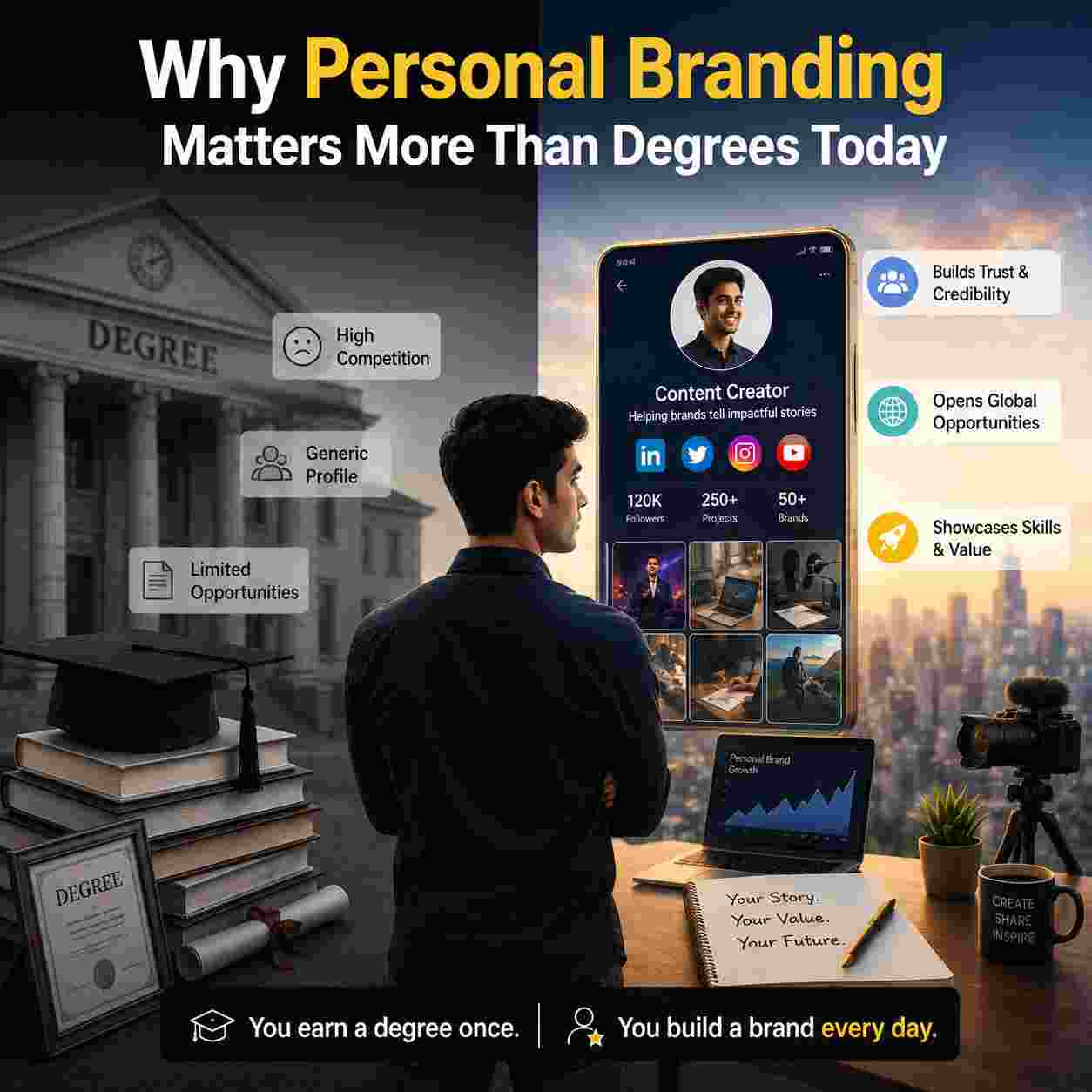
Why Personal Branding Matters More Than Degrees Today
For decades, a degree was the ticket to a good job. It still helps, no doubt about that. But it doesn’t guarantee attention the way it used to. Recruiters, clients, even college admission panels now check what a person shows online before they bother looking at a transcript. That’s the real reason personal branding has become one of the most useful skills a working professional can pick up.
BharatStories has been watching this shift play out across industries — tech, media, finance, even government roles. The pattern repeats everywhere: people who put effort into personal branding get noticed faster than those who only have paper qualifications to show.
If you’re wondering whether your resume is enough on its own, the honest answer is probably not. A resume tells someone what you’ve done. Personal branding tells them who you are and why they should pick you over the next person.
Table of Contents
The Changing Value of a Degree
A degree proves someone studied a subject. That’s about it. It doesn’t prove how that person communicates, handles pressure, or works with a team. Employers know this already, which is why so many job postings now ask for a portfolio or a LinkedIn link alongside the resume.
This doesn’t mean degrees have stopped mattering. They’re just one piece of a bigger picture now. The other piece gets built through personal branding — how someone presents their skills, opinions, and actual work out in the open.
What Personal Branding Really Means
Strip away the buzzwords and personal branding is just how a person is known by others, especially online. It comes down to a handful of things:
- The posts someone shares on LinkedIn or wherever else they show up
- How they talk about their work and their ideas
- The recommendations and comments they get from people who’ve actually worked with them
- Whether what they say lines up with what they actually do
A strong personal brand tells a story in a few seconds flat. It tells people what someone is good at and why they’re worth trusting. Without it, even someone holding three degrees can get lost in a crowded job market.
How Personal Branding Affects Career Development
Career development used to follow one path: study, get a job, put in the years, get promoted. That path still exists, but there are a lot more side roads now. People switch industries, go freelance, or start their own thing far more often than they used to.
In a career like that, personal branding decides how fast new doors open. A hiring manager who’s already seen someone’s posts is more likely to pick up the phone. A client who’s come across someone’s work online is more likely to trust them with a project before even meeting them.
That’s why career development today leans on visibility almost as much as it leans on skill. Skill gets the work done. Visibility is what gets the work noticed in the first place.
LinkedIn Growth as a Branding Tool
LinkedIn has quietly become the place where most professional reputations get built in public. LinkedIn growth isn’t really about chasing follower counts, despite what some people think. It’s about showing real expertise to the people who actually matter, over time.
When someone shares their work, the lessons they’ve picked up, or an honest opinion on LinkedIn, trust builds slowly in the background. Recruiters check profiles before calling for an interview. Business partners check them before signing anything. A profile full of steady, useful posts often says more about a person than a resume ever could.
Steady LinkedIn growth also feeds into professional networking in a way cold messages just can’t. People comment, share, and connect on their own when the content actually helps them — not when it feels copied or forced.
Building Professional Networking Without a Big Resume
A lot of people assume professional networking only works for folks with big names or fancy titles. That’s not really true. Some of the strongest networks belong to people who started out with ordinary resumes.
A few habits tend to help here:
- Reaching out with a genuine question, not a sales pitch
- Giving credit out loud when someone helps with a project or an idea
- Showing up again and again in the same online groups or events related to the field
- Following up after a conversation instead of letting it go cold
Built this way, professional networking grows slowly, but it sticks. It’s based on actual conversations, not a pile of connection requests sent in bulk.
Why Online Reputation Now Outweighs a Certificate
A certificate proves someone passed a course. An online reputation shows how that person actually behaves with clients, teammates, and the public over time. Search for a name today, and what shows up usually matters more than what’s printed on a degree.
Online reputation gets shaped by reviews, posts, interviews, and even how someone handles criticism. One rude comment thread or a profile that’s gone quiet for two years can hurt someone’s chances more than a missing qualification ever would.
That’s exactly why companies now train people on managing their online reputation alongside their actual job skills. The two are tied together. A careless online presence can undo years of solid, hard-earned work.
Practical Ways to Build a Strong Personal Brand
Building personal branding doesn’t take a marketing degree or a big budget. It starts with small things, repeated often enough that they add up.
- Pick two or three topics that match real expertise and stick with them
- Post or comment a few times a week instead of vanishing for months
- Ask past colleagues or clients for honest feedback and recommendations
- Use the same name, photo, and short bio everywhere so people recognise you instantly
- Treat every public comment as part of the brand, because it already is one
None of this needs a degree behind it. It just needs patience and some honesty about what someone actually brings to the table.
A Balanced View, Not a Replacement
None of this means degrees should get tossed aside. Fields like medicine, law, and engineering still require formal qualifications, and that’s not changing anytime soon. What has changed is how much weight gets placed on everything around the degree.
Someone with a degree and barely any online presence might lose an opportunity to someone with a smaller degree but a clear, trusted personal brand. Qualifications and personal branding genuinely work better side by side than either one does alone.
If there’s one thing worth taking away from all this, it’s pretty simple: a degree gets someone through the door, but personal branding decides how long they stay in the room. People who treat both as equally important usually move ahead quicker, with fewer surprises along the way.
Frequently Asked Questions
-
Is personal branding only useful for entrepreneurs and influencers?
Not at all. Employees, freelancers, students, job seekers — all of them benefit. It just means being known for specific skills and values, which helps during interviews, promotions, and client work too.
-
How long does LinkedIn growth usually take to show results?
There’s no set timeline here. Some people start getting interview calls or client messages within a few months of posting regularly, while others take longer. Showing up consistently matters more than how fast it happens.
-
Can someone actually fix a damaged online reputation?
Yes, though it takes time and patience. Responding calmly to criticism, sharing genuine work, and staying active with helpful content slowly rebuilds trust. Ignoring the problem almost always makes it worse.
-
Does professional networking still matter when most jobs are found through job portals?
It does. Job portals show open roles, sure, but plenty of roles get filled through referrals before they’re even posted publicly. A solid network usually hears about openings earlier than everyone else does.
-
Should students start working on personal branding while they’re still studying?
Starting early definitely helps. Students who share their projects, write about what they’re learning, or connect with professionals in their field tend to land internships and entry-level jobs more easily than those who wait until after graduation.