

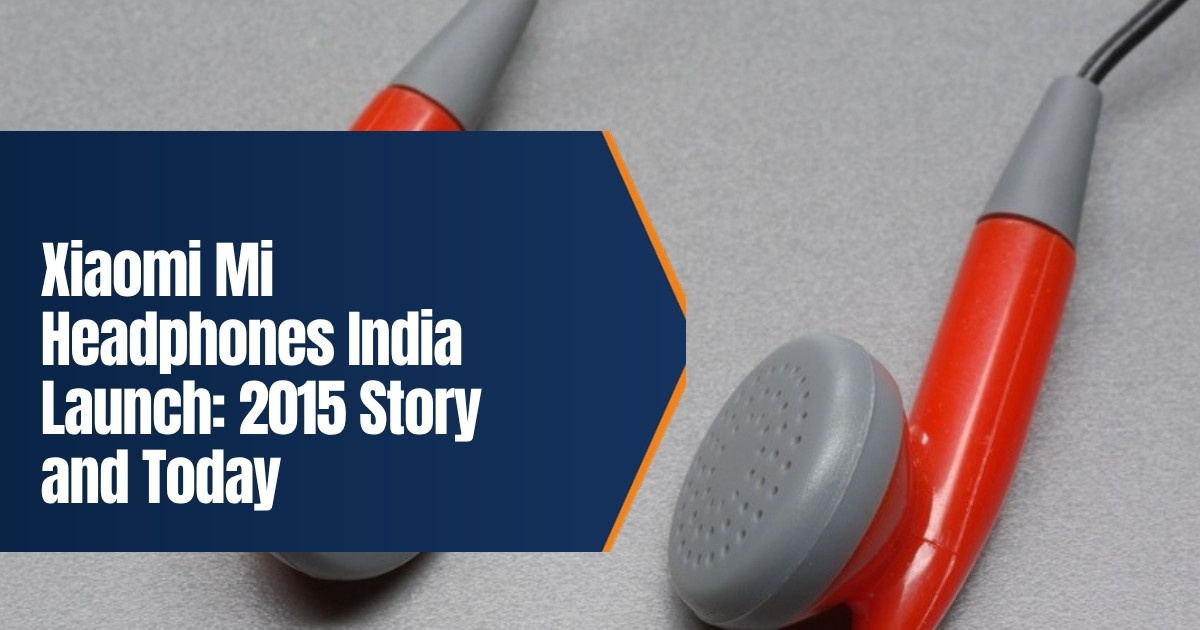
Xiaomi Mi Headphones India Launch: 2015 Story and Today
In July 2015, Xiaomi marked its first year in India by launching two audio products: the Xiaomi Mi Headphones at ₹5,499 and the Mi In Ear Headphones at ₹999. Both went on sale on Xiaomi’s own website from 23 July 2015. At the time, the company was best known in India for low priced phones sold through flash sales. This post looks back at those two products, explains why the launch mattered and updates the story with where Xiaomi and the Indian audio market stand in 2026.
Our older version of this page read like breaking news from 2015. We have rewritten it as a history piece with current context.
Table of Contents
Xiaomi’s First Year in India
Xiaomi was founded in Beijing on 6 April 2010 by Lei Jun and six partners. It released its first phone, the Mi 1, in August 2011, and by 2014 it had the largest share of smartphones sold in China. In 2014 it began selling outside China, and India quickly became one of its most important markets.
The company entered India in July 2014, selling phones online through flash sales that often sold out within seconds. By its first anniversary it had launched several phones, including the Mi 4i, and it used the anniversary to show that it wanted to be more than a phone maker. A 32GB version of the Mi 4i was announced around the same time as the headphones.
The Xiaomi Mi Headphones
The Mi Headphones were large, over ear headphones first shown in China in January 2015. Xiaomi pitched them as a premium product at a lower price than rival brands. Key points from the launch included:
- Drivers. 50mm drivers with a diaphragm that Xiaomi said was much harder than steel and lighter than titanium alloy.
- Design. A semi open design, aluminium grilles with a gold finish, and black leather with red stitching.
- Sound. Dual damping and tuning that Xiaomi said gave a wide, natural sound stage.
- Build. A cable reinforced with Kevlar fibre and a folding frame for travel.
- Microphone. A built in microphone for calls, using a MEMS microphone from Knowles, according to Xiaomi.
- Weight. About 220 grams.
- Price. ₹5,499.
These figures came from Xiaomi at launch. Reviews at the time generally praised the build and value, while noting that the headphones were wired and had no active noise cancellation, which was normal for the price in 2015.
The Mi In Ear Headphones
The cheaper product was a pair of wired in ear headphones, also known as earphones. At ₹999, they were aimed at buyers who wanted better sound than the earphones bundled with phones.
- Diaphragm. A metal diaphragm in what Xiaomi called a “sandwich” design.
- Body. A brushed aluminium finish in a space grey colour.
- Cable. A tangle and break resistant cable with Kevlar fibre.
- Comfort. An angled design to sit comfortably in the ear, and a balanced damping system to manage air pressure inside the earphone.
- Weight. About 14 grams.
- Price. ₹999.
Why the Launch Mattered
The launch showed how Xiaomi planned to grow in India. Instead of relying only on phones, it brought in accessories and other products that shared the same design style and pricing approach. Over the next few years this grew into a wide range sold in India, including power banks, fitness bands, televisions, air purifiers and smart home products.
It also put pressure on audio brands. In 2015, good quality earphones under ₹1,000 were not easy to find from well known brands. Xiaomi’s pricing pushed others to offer more for less, a trend that later shaped the budget audio market in India.
What Happened Next for Xiaomi in India
Xiaomi’s rise in India was fast. In the third quarter of 2017, it overtook Samsung to become the largest smartphone brand in the country, selling 9.2 million phones that quarter. It opened its own Mi Stores, began making phones in India with partners such as Foxconn, and in August 2018 launched POCO, a sub brand that first appeared in India. Around 2021, the company moved away from the “Mi” name on many products, using “Xiaomi” for its main range and “Redmi” for budget models. Its phones now run HyperOS, which replaced MIUI.
The market has since become more crowded. According to CMR, Xiaomi including POCO held 12.6 percent of India’s smartphone market in the second quarter of 2026, placing it fourth behind vivo, Samsung and OPPO.
How the Indian Audio Market Has Changed
The biggest change since 2015 is the move from wired to wireless. Most phones no longer have a headphone jack, and truly wireless earbuds, often called TWS, are now the most popular choice for many buyers. Indian brands have grown strongly in this space. Industry data for the second quarter of 2026 placed boAt as the leader in India’s TWS market with a 32.3 percent share.
Features that were rare or expensive in 2015 are now common in budget products:
- Active noise cancellation in earbuds under a few thousand rupees.
- Bluetooth with low latency modes for gaming.
- Long battery life, often with fast charging cases.
- Water and sweat resistance ratings.
- App support for sound tuning.
Wired headphones have not disappeared. Many people still prefer them for their consistent sound, no need to charge and lower price, and they remain popular with musicians and for studio work.
Types of Headphones Explained
The two 2015 products represent two of the main headphone types. Today buyers can choose from four broad designs:
- Over ear (circumaural). Large cups that surround the ear, like the Mi Headphones. They usually offer the widest sound and the most comfort for long sessions, but are bulky to carry.
- On ear (supra aural). Smaller pads that rest on the ear. Lighter and more portable, though some people find them less comfortable over hours.
- In ear. Small units that sit in the ear canal, like the Mi In Ear Headphones and most wireless earbuds. Very portable and good at blocking outside noise when they fit well.
- Bone conduction. A band that rests in front of the ears and leaves the ear canal open, popular with runners and cyclists who want to hear traffic.
Wired and Wireless Compared
| Point | Wired | Wireless |
|---|---|---|
| Charging | Not needed | Needed for earbuds and case |
| Sound delay | None | Small delay, reduced in gaming modes |
| Convenience | Cable can tangle | No cable, easy to carry |
| Phone support | Needs a jack or adapter | Works with almost any phone |
| Price for good sound | Often lower | Often higher |
A Quick History of Headphones
Headphones go back much further than smartphones. In the 1880s, telephone switchboard operators began using receivers mounted on the head so they could keep their hands free. Two earpiece listening devices followed in the 1890s. Headphones became common in public places from the 1980s with portable music players, and today they are used everywhere, from offices and classrooms to studios and airline cockpits.
Tips for Buying Headphones Today
- Decide between wired and wireless. Wired is simple and affordable. Wireless is more convenient but needs charging.
- Check the fit. In ear models usually come with several ear tip sizes. A good seal improves both sound and comfort.
- Look at call quality. If you take many calls, read reviews about microphone performance.
- Consider noise cancellation. Useful on trains, buses and flights, though it adds cost.
- Protect your hearing. Keep volume moderate and take breaks during long listening sessions.
For more, see our list of earphone brands in India, our Sony wired headphones review, our look at the Xiaomi Mi Notebook Pro and our picks of budget smartphones under ₹20,000.
Listening at around 60 percent of maximum volume for no more than about an hour at a time is a common rule of thumb from hearing experts.
Many earbuds now support the same USB Type C charging cable used by most new phones, which cuts down on extra chargers.
If you share earbuds or headphones, wipe them before use and replace worn ear tips regularly.
Prices in this post are launch prices from 2015 and do not reflect current market rates.
When buying any electronics, check the warranty terms and buy from authorised sellers.
Frequently Asked Questions
When did Xiaomi launch Mi Headphones in India?
In July 2015, with sales starting on 23 July 2015.
What was the price of Mi Headphones in India?
The Mi Headphones cost ₹5,499 and the Mi In Ear Headphones cost ₹999 at launch.
Are the 2015 Mi Headphones still sold?
They have been replaced by newer models, and Xiaomi now sells mainly wireless earbuds and headphones under the Xiaomi and Redmi names.
Where does Xiaomi rank in India today?
CMR placed Xiaomi including POCO fourth in India’s smartphone market in the second quarter of 2026, with a 12.6 percent share.