

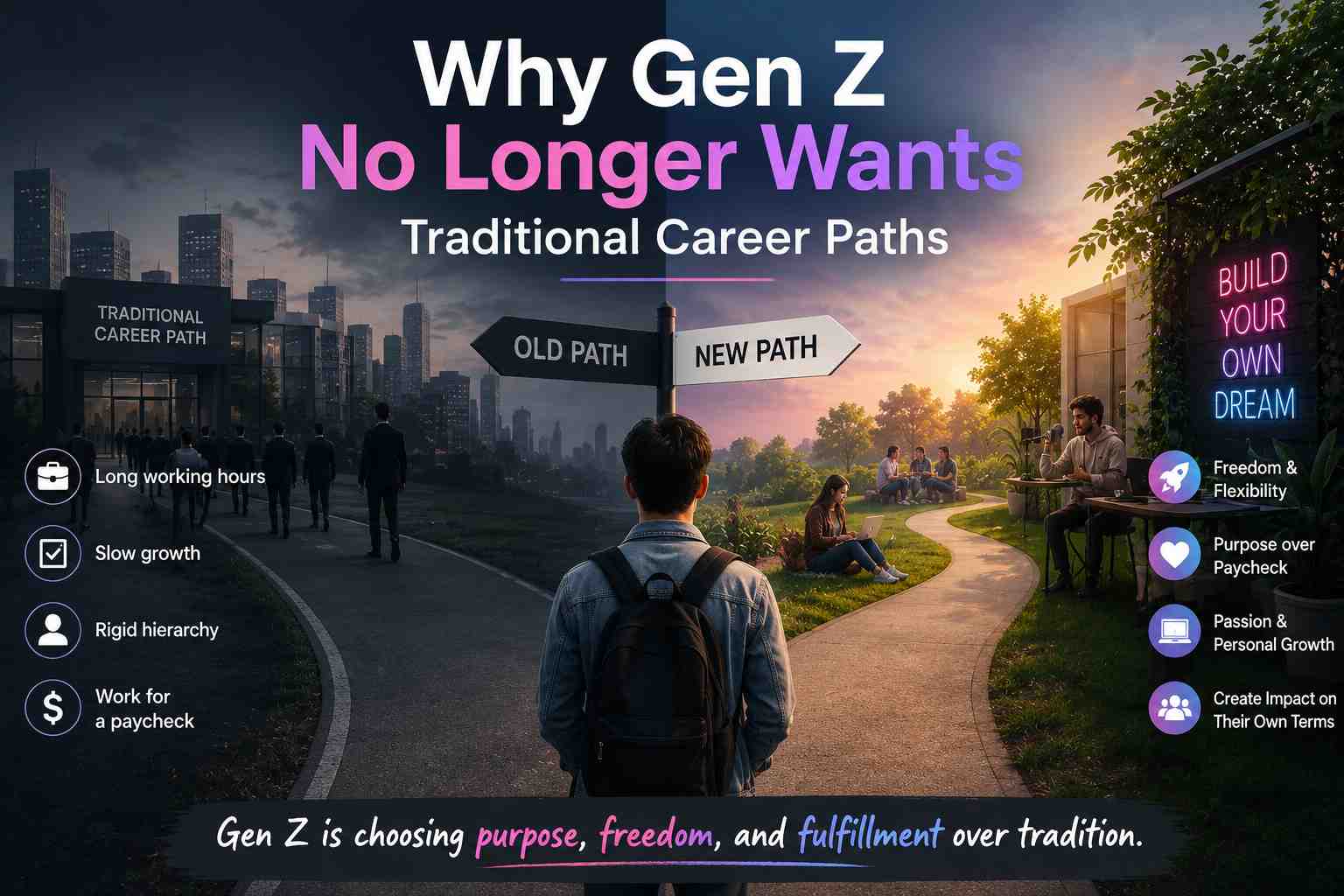
Why Gen Z No Longer Wants Traditional Career Paths
It was a “formula” that worked for several years. They completed their education, secured a steady job at a single company, and progressed steadily through the ranks. The promise of steady employment and workers’ wages was considered the most important. That’s not a view that is shared today. Young people are exploring alternatives to their “careers” on a new path.
Gen Z has a preference for flexibility, purpose, and breaking free of the rigid, long-term commitments of a single employer. In contrast, for many, it was about enduring a single job. For many, the path of Gen Z careers was more about a commitment to a single employer for years, rather than about flexibility, purpose, and breaking free from that rigid commitment.
Table of Contents
Understanding Gen Z’s Career Mindset
Generation Z can be defined as the cohort of individuals who were born in the late 90s and early 2000s. They have had cellphones, social media, and constant Internet access throughout their lives.
They have lived through an era of much faster-than-usual technological growth, economic volatility, and new trends in the world of work. These experiences have influenced their attitudes towards career and success.
For many young professionals, it is by their job title. They also value:
- Work-life balance
- Flexibility
- Personal growth
- Meaningful work
- Financial independence
- Career freedom
Changing priorities have significantly reshaped career priorities for Gen-Z. Now more than ever, plenty of young employees consider things based not just on salary but lifestyle, as well.
Why Traditional Career Paths Feel Less Attractive
Contrary to what many young workers would like to think, a ‘secure’ employment with the same company for life is no longer viewed as such. Businesses tend to restructure, cut staff, and make changes to their workforce. This leads Gen Z to develop transferable skills across various disciplines and jobs.
They like having options and flexibility (rather than relying solely on one employer). Many also want jobs that are personally-oriented and value-driven.
The Growing Appeal of Remote Work
In the modern world, with so many changes in the work environment and the rise of “work from home,” it is very easy to start thinking differently about work. With technology, employees can communicate with one another, collaborate, and carry out work tasks wherever they go. Many employees realized they could work without going to the office every day.
Benefits of Remote Work
Remote work offers:
- Flexible schedules
- Less commuting
- Better work-life balance
- Lower travel costs
- Greater location freedom
- The right to participate in other economic activities
Electronic labor is a better and more adaptable choice for many young people in Gen Z to establish their career paths.
The Creator’s Economy is Creating New Opportunities
Even experienced people don’t have the opportunities the creator economy provides. Anyone can earn money by sharing their expertise, abilities, or fun on social media, video sites, blogs, podcasts, and other forums.
Popular areas include:
- Technology
- Education
- Gaming
- Fitness
- Travel
- Business
There are several ways to earn money, such as sponsorships, advertising, memberships, and online products. The creator economy is attractive to young adults because it offers a more creative, hands-on approach to creating with greater control over their product. You no longer need to be an employee; people can build their own brands and reach their own audiences directly. The internet offers a wonderful opportunity to build a long-term career, and many creators have proven successful.
Why Freelancing Keeps on Rising
Nowadays, many people prefer becoming freelancers. Several companies employ freelancers and may choose their own work hours. The most common jobs in these areas are writing, graphic design, software development, marketing, consulting, or video editing.
Benefits of Freelancing
Freelancing lures many young workers to the profession due to the following:
- Independence
- Flexible hours
- Project variety
- Location freedom
- Improved work selection
Digital platforms have made freelancing more accessible, enabling professionals to attract clients from around the world. It has become accessible because digital platforms make freelancing easier, allowing professionals to find clients worldwide.
Career Opportunities Are Changing with Technology
New jobs are continually created with technology. Many new jobs will become available as the following areas develop:
- Artificial intelligence
- Cybersecurity
- Data analytics
- Software development
- Digital marketing
- E-commerce
- Content creation
Industries change rapidly, and many young professionals therefore focus on developing multiple skills to prepare for more than one career in their lifetime. This way, they will continue to be ready for the requirements of future jobs and of the changing world of work.
The Importance of Work-Life Balance
Achieving a balance between work and life is a key element in making a career choice. Many younger workers have experienced stress and burnout. Therefore, they may also be keen on taking care of their own health and being successful at work.
They want time for:
- Family
- Friends
- Travel
- Hobbies
- Personal interests
Many don’t measure commitment by how long they spend at work, but by the productivity and results they achieve. Multiple Income Streams Are Becoming Common
Many members of Gen Z are comfortable earning income from multiple sources.
Some combine:
- Full-time employment
- Freelancing projects
- Content creation
- Online businesses
That will provide flexibility, and the change from one employer to another will be limited. With the prevalence of remote work, freelancing, and the creator economy, it has now become more accessible than ever to have multiple income streams.
Learning Beyond the Books
Education remains an important factor, but it isn’t limited to college degrees; in fact, it isn’t always seen as the most important. A greater focus on employability skills, experiences, and qualifications. Young professionals often acquire the knowledge typical of their role by means of:
- Online courses
- Certifications
- Workshops
- Self-study
- Real-world projects
The ability to learn has become an important skill for successful Gen Z careers and future jobs among Gen Zs.
Problems of Non-Traditional Careers
Alternative careers offer numerous advantages and effective ways to address transitional difficulties.
Income Uncertainty
Frequent fluctuations in income for freelancers and creators.Unpredictable work income for freelancers and creators.
Fewer Traditional Benefits
The self-employed often must manage their insurance and long-term financial arrangements.
Strong Competition
Access to online opportunities links businesses to the global market while also raising competition.
Self-Discipline
When working remotely as a freelancer, it is important to know how to manage your time and yourself. Despite the problems, a wide range of young working officials feel the flexibility is worth their while.
How Employers Are Responding
Organizations are responding to the evolving expectations of their employees.
Fortunately, there are numerous companies now offering:
- Hybrid work models
- Remote work options
- Flexible schedules
- Wellness programs
- Skills-based hiring
- Career development opportunities
Knowing the changing preferences is key for firms that are more effective at luring younger workers.
The Future of Work
Work of the future will be expected to be more flexible and technologically advanced. The remote option will likely remain available in a variety of fields. Independent workers will continue to find opportunities to work in the creator economy. Companies will begin to seek the required talent in project mode, thus freelancing is expected to grow. Meanwhile, the future of jobs related to technical aspects will grow.
Conclusion
Gen Z is changing how careers are viewed. Many young professionals are choosing flexibility, independence, and meaningful work over traditional employment models.The growth of remote work, the creator economy, freelancing, and future jobs has created more options than ever before. These opportunities allow individuals to build careers that align with their goals and values. As workplace expectations continue to evolve, Gen Z careers will remain diverse and adaptable. Success is increasingly defined by skills, flexibility, and the ability to adjust to new opportunities rather than staying with a single employer for an entire career. This shift is encouraging organizations to rethink how they attract, support, and retain the next generation of talent.
FAQs
Why is Gen Z opting for unconventional work options?
The young professionals feel more satisfied with flex time, work-life balance, independence, and the opportunity to work for a worthwhile company than with being tied to a single firm.
What impact has remote work had on the jobs of Gen-Z?
The flexibility of working remotely, less time commuting to work, and the ability to access work opportunities, no matter where you live.
What makes the creator economy appealing to Gen-Z?
The creator economy is a unique space that enables people to generate revenue through content creation, make a name for themselves, and stay creative as they operate within the creative industry.
What are some examples of future jobs?
Future jobs include careers in artificial intelligence, cybersecurity, software development, digital marketing, data analytics, and content creation.