

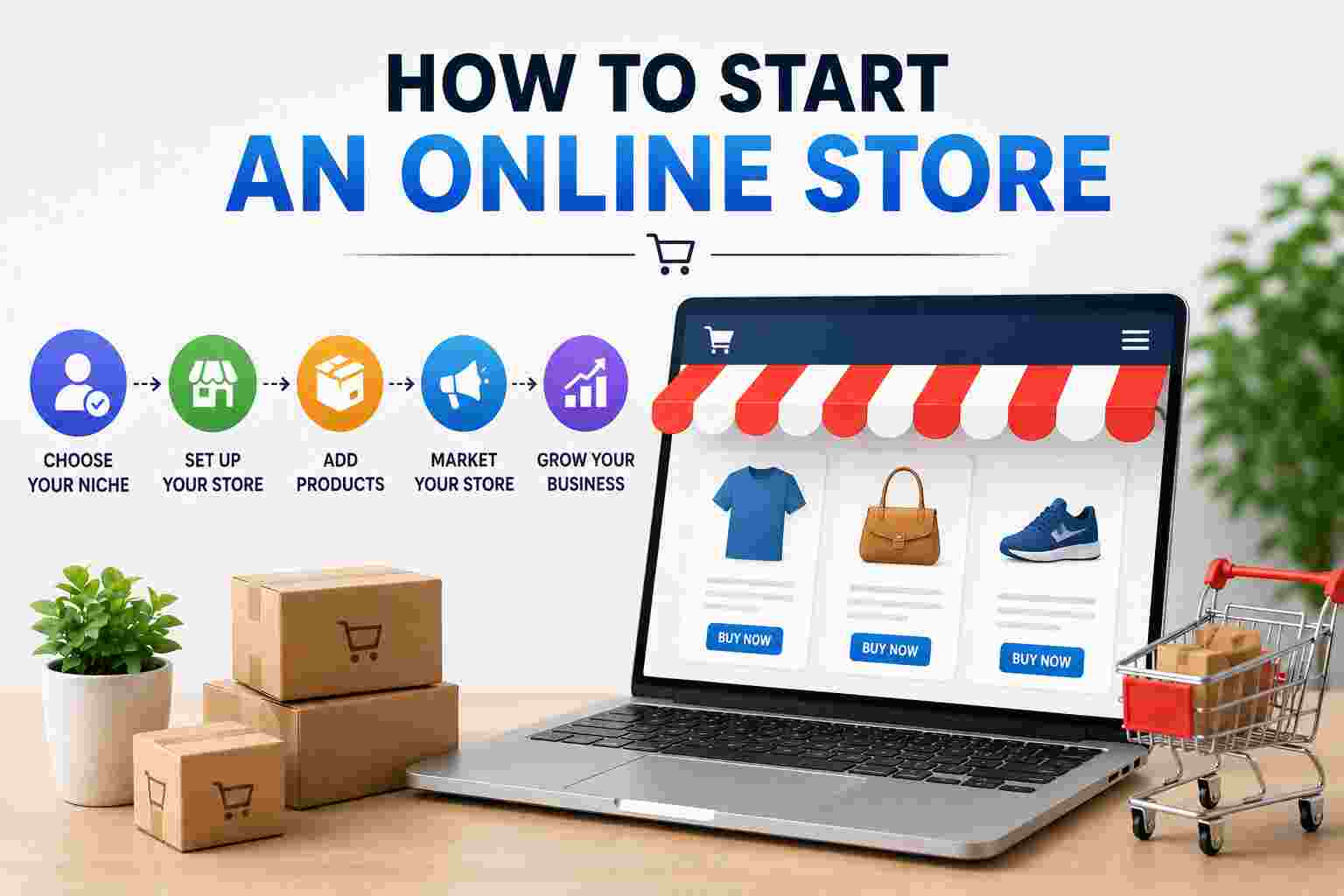
How to Start an Online Store?
Starting an online store sounds exciting until you sit down and try to figure out where to actually begin. There are about twelve different platforms everyone recommends, conflicting advice on every forum, and a hundred things nobody tells you until you are already in the middle of it.
This piece cuts through all of that. Whether you want to sell handmade goods, branded products, or resell items you source from suppliers — this is the honest, step-by-step picture of what building an ecommerce business actually looks like from day one.
Table of Contents
Start With the Product — Everything Else Follows
Before thinking about platforms or payment gateways — be very clear about what you are selling and why anyone should buy it from you specifically.
A lot of first-time sellers skip this step. They find a product that “looks popular,” build a store, and wonder why nobody buys. The problem is almost always that they never clearly answer: who is this for, and why would they choose me over the many other options already out there?
You do not need a completely original product. But you need a clear angle — better quality, better price, a more specific niche, or better storytelling around the product.
Choose Where to Sell Online
Deciding where to sell online is one of the first real decisions you will make. Your main options are:
Your Own Ecommerce Website
Having your own ecommerce website gives you complete control. You set the rules, keep more of the profit, own the customer relationship, and build a brand that belongs to you. Platforms like Shopify, WooCommerce (on WordPress), and Wix make this more accessible than it used to be.
The trade-off is that you have to drive your own traffic. Nobody lands on your ecommerce website by accident — you have to earn that through marketing, SEO, and social media. For beginners, that is a real challenge. But for long-term online business building, owning your store is almost always the better play.
Selling on Marketplaces
Platforms like Amazon, Flipkart, Meesho, and Etsy already have massive audiences. You can list your products and start getting orders without building your own audience from scratch. The downside is that the marketplace owns the customer relationship, competition is intense, fees eat into margins, and you are always one policy change away from losing your account.
Many successful sellers start on marketplaces to build cash flow and confidence, then move toward building their own ecommerce website alongside it. Both can work together.
Set Up Your Ecommerce Business Properly
Once you have decided where you want to sell online, the operational side needs attention. Skipping this creates serious headaches later.
Legal and Registration
If you plan to run a proper ecommerce business in India, you will need a GSTIN (GST registration) for most marketplaces and for issuing invoices. Sole proprietorship is the simplest structure to start with. You will also need a current account in your business name for clean financial tracking.
Product Sourcing
Where your products come from depends entirely on what you sell:
- Make it yourself — handmade goods, art, food products, clothing; highest margin potential, limited by production capacity
- Source from manufacturers or wholesalers — buy in bulk at lower cost and sell at retail price; works well for physical goods with clear demand
- Dropshipping — sell products without holding inventory; the supplier ships directly to your customer; lower margins but also lower upfront risk
- Private labelling — buy a generic product and sell it under your own brand; common in beauty, supplements, and kitchenware
Pricing
Prices are too low and you attract customers who will leave the moment someone is cheaper. Prices are too high without justification and you lose sales before they start. A clean pricing formula: cost of goods + shipping + platform fees + desired profit margin = your selling price.
Build Your Online Store
If you are going with your own ecommerce website, the platform matters — but not as much as people make it out to. Shopify is the most popular and genuinely beginner-friendly. WooCommerce gives more control but needs a bit more technical comfort.
What matters more than the platform is your product pages. A clear title, honest description, sharp photos, and visible pricing are what drive sales. Blurry photos and vague descriptions kill conversion faster than any platform choice ever will.
Spend real time on your photos. You do not need a professional — clean background, good natural light, and a decent smartphone to work well.
Market Your Online Business
Building the store is the easy part. Getting people to find it and buy from it is the real work. No online business grows without consistent marketing effort.
Here are the channels that work best for early-stage ecommerce business growth:
- Instagram and Facebook — visual products do very well here. Post regularly, use relevant hashtags, run small paid ads to test what resonates, and engage with your audience genuinely. Do not just post product photos — show the story behind the product, the process, the people.
- WhatsApp Business — massively underused for online business in India. Build a catalogue in WhatsApp Business, share it with your existing network, and ask for referrals. Word of mouth is still one of the most effective channels for new stores.
- Google SEO — if you have your own ecommerce website, invest time in writing useful content and optimising your product pages for search. It takes time but delivers free, consistent traffic over the long run.
- Email marketing — collect email addresses from day one. Even a simple newsletter keeps past buyers engaged and brings repeat orders, which are almost always more profitable than acquiring new customers.
Things That Trip Up First-Time Sellers
Most people who struggle with their online store hit the same few problems.
Underestimating logistics. Packing, shipping, and returns take real time. If you are doing everything yourself, factor this in honestly before you launch.
Waiting for perfection. Many first-time sellers spend months “getting ready.” A functional store with five products and honest photos is worth more than a perfect store that never goes live. Launch, learn, adjust.
Ignoring the numbers. Know your margins. Know what it costs to acquire a customer. An ecommerce business getting sales but losing money on each order is not a business — it is an expensive hobby.
Final Thought
Starting an online store is genuinely accessible today. The tools exist, the platforms are good, and the demand for online shopping is not going anywhere. What separates the stores that work from the ones that quietly disappear is not budget or luck — it is consistency, honest self-assessment, and a willingness to keep learning from what the numbers tell you.
Frequently Asked Questions
-
How much does it cost to start an online store in India?
It depends on the model. Selling on marketplaces has very low startup costs — mainly initial inventory. Building your own ecommerce website on Shopify starts around ₹1,500 to ₹2,000 per month. Add inventory and basic marketing and a realistic starting budget for a simple online business is ₹20,000 to ₹50,000.
-
Do I need GST registration to sell online in India?
Yes, for most cases. Major marketplaces require GST before you can list products. If you run your own ecommerce website and turnover crosses the threshold, registration is mandatory. Register early — it also makes your ecommerce business look more credible to buyers.
-
Which is the best platform to build an ecommerce website in India?
Shopify is the most beginner-friendly option for a standalone ecommerce website. WooCommerce on WordPress gives more flexibility with some technical setup. For marketplace selling, Meesho suits beginners with low capital, while Amazon and Flipkart offer much larger audiences.
-
How do I get my first customers when I sell online?
Tell everyone in your existing network. Use WhatsApp Business, Instagram, and Facebook. Run a small launch offer and ask early buyers to leave reviews and refer friends. The first sales almost always come from people who already know you — and those sales build the social proof you need to reach strangers.
-
Can I run an online store without holding inventory?
Yes. Dropshipping lets you sell online without keeping stock — your supplier ships directly to your customer when an order comes in. It lowers upfront risk but reduces margins. Many successful online store owners start with dropshipping to test products before buying stock in bulk.