

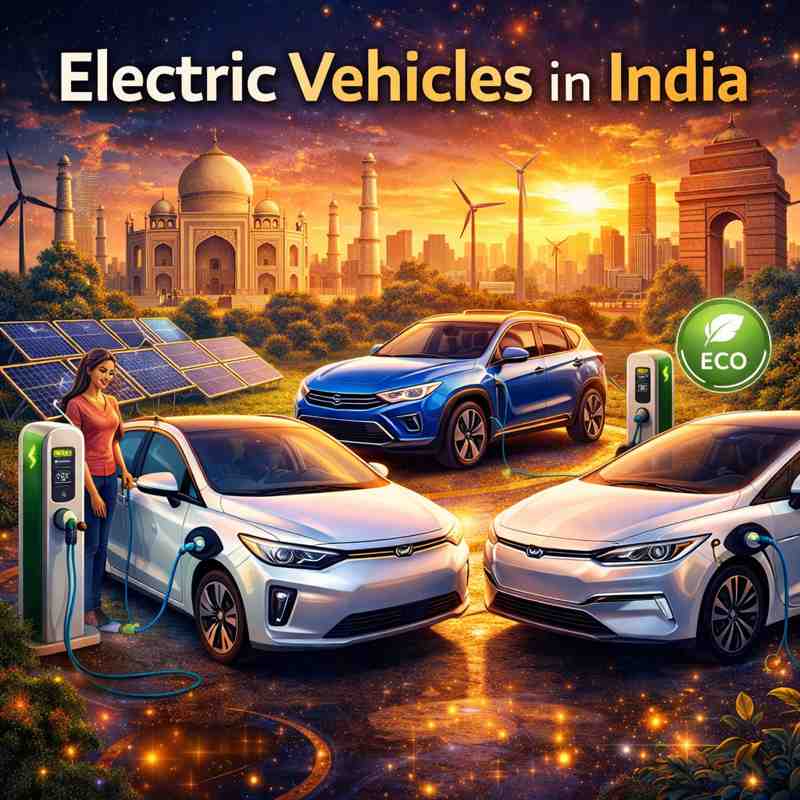
The Rise of Electric Vehicles in India
There is no longer a distant dream in India when it comes to electric cars. Their inclusion in the lives of several people is taking place. These two-wheelers, vehicles, and buses are not the only examples of the trend that has occurred in all cities and towns. The increasing number of people choosing electric vehicles in India indicates a gradual transition to relatively cheap, less harmful modes of transportation.
This article explores the reasons for this change, why the situation was like this at this stage, and what the future holds for EVs in India from the user’s perspective.
Table of Contents
Knowing about Electric Vehicles in India
EVs do not run on fuels such as petrol or diesel; they run on electricity. They possess home-charging batteries or ones that can be charged at a charging station. In India, EVs include:
- Electric scooters and bikes
- Electric cars
- Electric buses
- E-rickshaw Three-wheelers.
Electric mobility is gaining popularity in India due to people’s desire to pay as little as possible for fuel and to be less dependent on fossil fuels. EVs are increasingly the most important vehicle among first-time buyers, which is a good harbinger of more trust in the technology.
The reason why Electric cars are becoming popular
Several factors drive the adoption of electric vehicles in India. These are not changes made solely through policies, but also by users.
Lower Running Costs
The sale costs of electric cars are reduced. It is cheaper than a petrol or diesel tank because charging a battery is cheaper. This is why EVs can be an option for people facing the challenges of daily commuting.
Government Support
The Indian government has initiatives such as tax exemptions and the FAST (Faster Adoption and Manufacturing of Electric Vehicles) program, which provide silent subsidies to the Indian EV industry. Such activities are making more individuals aware of EVs.
Rising Fuel Prices
The costs of diesel and petrol are gradually rising. This has compelled individuals to find alternatives that promise well to the EV market in India.
Environmental Awareness
There is increasing environmental consciousness amongst many consumers about pollution and climate change. Electric vehicles are less polluting and therefore a better alternative for cleaner air.
Present status of the Indian EV Industry
The Indian EV market is expanding at an average rate. Although it is not yet as well developed as some other markets worldwide, improvements are being observed.
Key Developments
- The number of EV startups and manufacturers has been increasing.
- Penetration of well-known auto firms into the EV division.
- An increase in the number of electric two-wheelers and three-wheelers.
- Development of inflationary charging.
Market Trends
The EV market in India’s development is largely motivated by:
- Low-priced electric scooters.
- Logistics and delivery companies for EV.
- Electric cars are used on short routes taken by urban users.
This indicates that electric mobility in India is moving forward. There is also increasing demand in tier-2 cities, which augurs well for greater adoption.
Electric Vehicles on the market
There are various EV models available in the market to meet different needs.
Electric Two-Wheelers
These two are the most famous EVs in India. They are cheap and can be used on a day-to-day basis.
Electric Cars
Electric cars are becoming more popular, particularly in metro cities. They are perfect for traveling to offices and for family trips.
Electric Three-Wheelers
E-rickshaws are common in transportation and last-mile connectivity.
Electric Buses
To reduce pollution and improve transport, electric buses are being introduced in many cities.
The advantage of Electric Mobility in India
The emergence of electric mobility in India implies several benefits to users and the country.
Cost Savings
- Lower fuel expenses
- Reduced maintenance costs
- Less wear and tear is caused by fewer moving parts.
Environmental Impact
- Lower carbon emissions
- Reduced air pollution
- Better urban air quality
Energy Independence
India consumes a huge quantity of fuel. Switching to EVs would help reduce this reliance and pave the way for the future of EV India. It is also useful for creating a future-friendly transport system.
India: Problems with Electric Vehicles
Though the growth is bright, the Indian EV business continues to have setbacks.
Charging Infrastructure
Charging stations are not commonly covered, particularly in smaller towns. This renders traveling over long distances a challenge.
High Initial Cost
Electric cars are costly to purchase, but less costly to operate.
Battery Concerns
- Limited range in some models
- Charging time can be long
- Replacing the battery may be expensive.
Awareness Gap
The operation of EVs remains unknown to many people and becomes an obstacle to their use.
Policies and Support of Government
The Indian government is playing a significant role in shaping the future of EVs in India.
Key Initiatives
- FAME scheme to offer subsidies.
- Tax benefits on EV purchases
- Favorability to battery production.
- Investment in a charging facility.
Those measures are contributing EV market India growth and encouraging companies and users to switch to EVs.
Role of Private Companies
The increase in the number of electric vehicles in India is also, in part, due to contributions from private companies.
What Companies Are Doing
- Launching new EV models
- Installation of charging points.
- Diversifying into battery technology.
- Buyers should be provided with financing options.
The support is helping users build trust and strengthen the Indian EV industry.
Future of EV India
EV India has a bright future, as demand is on the rise and so is supply.
Expected Developments
- More affordable EV models
- More advanced battery technology that has a greater range.
- Faster charging solutions
- The reliability of the charging networks will be expanded.
What This Means for Users
Users in the next several years will be able to expect:
- More choices in EVs
- Lower costs
- Easier access to charging
- Figure 1: Improved driving experience.
All this will remain in favor of electric mobility in India. The resale markets and services networks will also be improved as the number of applications grows.
Guidelines for users planning to purchase an Electric Vehicle
In case a person decides to purchase an EV, the following are some of the helpful points to take into consideration:
Before Buying
- Check daily travel needs.
- Compare different models
- This is the battery range and charging time.
After Buying
- You should have a home charging facility.
- Planning course plans according to charging points.
- Adhere to good battery practices.
The following measures can make electric vehicles in India more user-friendly.
Impact on the Indian Economy
The Indian EV industry also has positive economic impacts.
Job Creation
- Manufacturing jobs
- Infrastructure job charging.
- Service and maintenance service roles
New Business Opportunities
- EV startups
- The recycling companies of batteries.
- Businesses of charging stations.
This development reinforces the entire EV market India growth and boosts the economy.
Conclusion
Electric vehicles in India are a definite direction of movement. Despite the weaknesses, the positive side is overwhelming and can be used to promote the long-term implementation. Provided that the government, companies, and users help, the future of EVs in India seems quite promising and feasible.
Electric mobility does not concern only new technology, but also making regular travel more cost-efficient and clean.
Frequently Asked Questions (FAQs)
Are electric cars feasible for day-to-day use in India?
Electric cars are usable every day and, of course, in short- to medium-range cars. Comfortably, many of its users in the urban settings are already on board.
Why is the market of EVs growing in India?
The key factors are increased fuel costs, government support, and reduced operating costs for EVs.
Does it have charging infrastructure throughout India?
The infrastructure for charging is increasing, though still lacking in other regions. Metropolitan cities are more accessible than smaller towns.
What will be the future of EV India within a 5-10-year period?
EV India has a bright future, as cheaper vehicles, more advanced batteries, and superior charging infrastructure should help expand the technology’s use.