

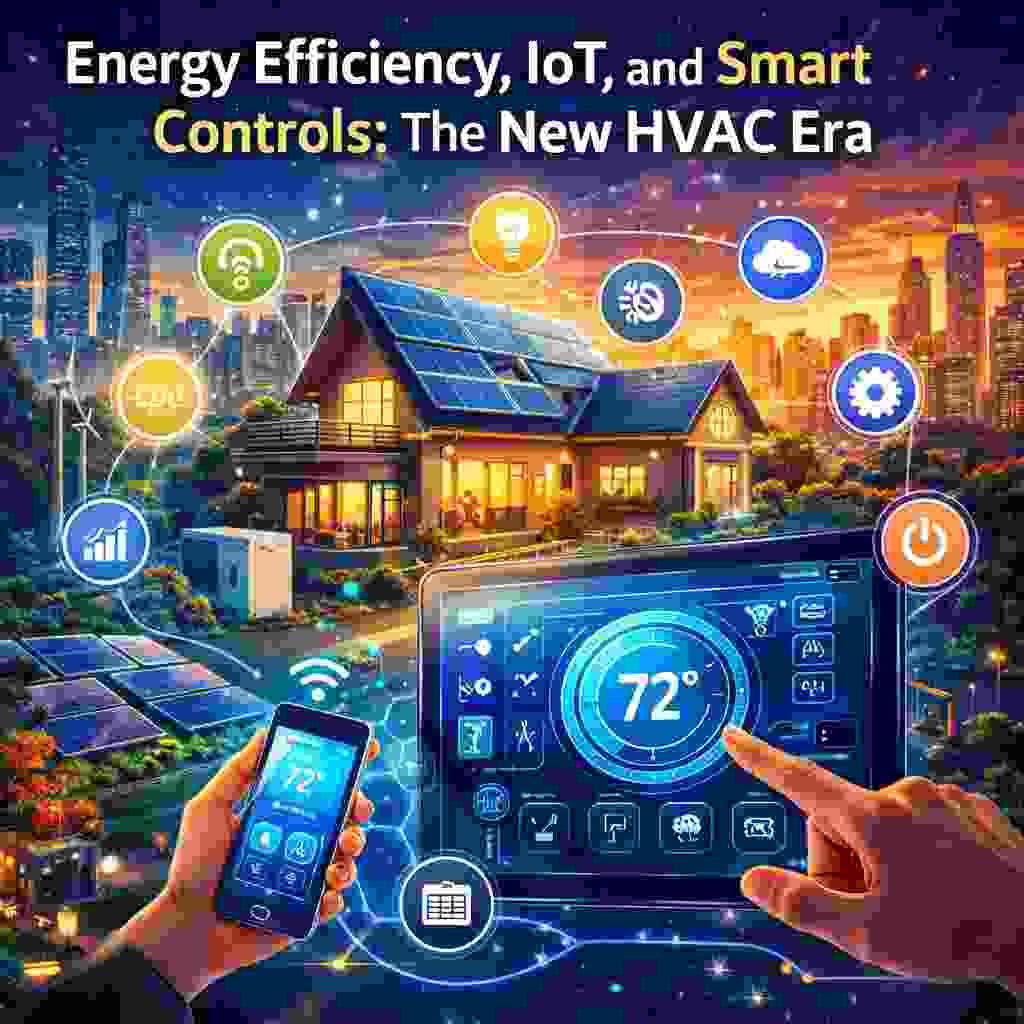
Energy Efficiency, IoT, and Smart Controls: The New HVAC Era
The fast transformation of the heating, ventilation, and air conditioning sector has never occurred at a faster rate. Innovative HVAC technologies are defining the design, installation, and maintenance of systems. It is no longer an option to keep up with any contractor. It directly influences the quality of service provided, customer satisfaction, and long-term business development.
Heating and cooling are no longer enough for the customers. They desire comfort, energy saving, clean air, and intelligent control. This is prompting the contractors to reconsider how they operate and the services they provide. People who are up to date with the latest HVAC systems are better placed to meet these expectations.
This paper describes major trends in HVAC innovation, practical-based tools, and how contractors can remain relevant in the competitive market.
Table of Contents
The Shift To Intelligent HVAC Technologies.
HVAC systems have ceased being mere machines. They are becoming smart systems that learn, adapt, and communicate. Home-based and commercial buildings now have smart thermostats, connected sensors, and cloud-based controls.
A contractor with knowledge of these HVAC technologies can provide superior solutions to clients. Smart systems enable users to monitor temperature and energy consumption via a mobile application and be alerted whenever the system requires maintenance. It implies reduced failures and improved long-term performance.
This also alters the service model for the contractors. They do not have to wait until problems arise, as they can monitor systems remotely and correct errors. This leads to the development of trust and continuous service prospects.
HVAC Solutions are a Part of priority Energy Efficient solutions.
Being energy efficient is no longer a selling point. In many regions, it is compulsory due to rising energy costs and tightening regulations. Customers are actively seeking a system that will minimize electricity bills without compromising comfort.
The present-day HVAC systems incorporate new features such as variable-speed compressors, inverter technology, and advanced heat exchangers. With these, the systems will respond to real demand rather than operate at full capacity all the time.
For contractors, it is important to understand energy-efficient HVAC so they can provide appropriate systems for the various spaces. It is also a way for them to explain long-term savings to customers. When a contractor can demonstrate how a system saves energy in the long term, it is easier to secure deals.
The IoT in Contemporary HVAC Systems.
The Internet of Things has transformed how HVAC systems operate. Devices are connected and share information in real time. Sensors monitor air quality, temperature, humidity, and the system’s performance.
This information is beneficial to the contractor and the customer. It enables better decision-making, proper diagnostics, and frontline service. Indicatively, a system may issue an alert when a filter is replaced or performance decreases.
Contractors that embrace IoT-based HVAC technologies can provide predictive maintenance services. This reduces emergency repairs and extends a system’s life. It also generates a steady stream of revenue through maintenance contracting.
There is a growing concern about indoor air quality.
Following recent global health issues, indoor air quality has become a major topic. Customers are now keen on what they inhale in their homes and workplaces.
Contemporary HVAC systems include air purifiers, UV light systems, sophisticated filtration, and humidity control. These supplements help remove dust, bacteria, and other harmful particles from the air.
It is a new service area for contractors. They can provide comprehensive air quality solutions beyond just temperature control. Informing customers about these options would build credibility and make the contractor an expert one can rely on.
Building Management Systems and Automation.
HVAC systems in commercial spaces can be integrated into a broader building management system. Such systems are responsible for lighting, security, energy consumption, and HVAC.
With automation, control can be centralized and executed efficiently. For example, smart technology can heat or cool offices based on the time of day and occupancy levels. This minimizes waste and keeps energy costs contained.
Incorporating HVAC technologies into commercial systems is something contractors undertaking projects should know. This expertise will make them more useful and enable them to access bigger projects.
The Emanation of Renewable Energy Incorporation.
The future of HVAC is being affected by sustainability. Many systems have been developed to operate with renewable energy sources, such as solar.
Heat pumps (in particular) are also growing in popularity. They consume less energy and can heat and cool areas. They can be used with solar panels to help reduce reliance on conventional power sources.
Those contractors accustomed to these systems may gain access to a surge in the market. Interested customers usually seek professionals capable of offering such solutions to minimise their environmental impact.
Contractor Training and Skills Development.
Technology would be useful only if the contractor is familiar with its use. Due to still-developing HVAC innovation trends, continuous learning becomes necessary.
New systems often come with training programs, usually offered by the manufacturer. There are also many online courses, certifications, and practical workshops. Those contractors who take the time to acquire new skills will be able to handle challenging installations and troubleshooting competently.
Talented contractors are more likely to win customer confidence. They can describe systems clearly, prescribe appropriate alternatives, and achieve improved outcomes.
Digital Tools: The world is transforming its daily operations.
In addition to equipment, digital tools transform how contractors conduct business. Programs used for scheduling, handling customer records, and invoicing are becoming standard.
These tools help manage jobs more efficiently. Not only can contractors track service history, but they can also offer a reminder service and communicate easily with customers. This enhances service quality and conserves time. The combination of digital tools also produces a professional image. Customers value good communication and well-organized service.
Keeping up with the Changing Customer Expectation.
The changing trends of customer expectations follow the development of HVAC technologies. Individuals desire fast service, transparent pricing, and efficient solutions.
When contractors listen to their customers and adapt to their needs, the chances of success increase. This involves providing flexible services, explaining system features in plain language, and being transparent about costs. This industry is very dependent on trust. Customers are more likely to revisit and refer others to the service when they are convinced of a contractor’s honesty and knowledge.
Remaining Relevant in an Expanding Market.
The HVAC market is quite competitive, with new entrants. Simultaneously, demand is rising due to the growth of cities and changes in climate.
Contractors must focus on technical expertise and customer service to stay ahead of the competition. It is important to provide modern HVAC systems, keep pace with HVAC contractor technologies, and maintain strong relationships with clients.
Being open to change is key. Those contractors who oppose new technologies might struggle to keep up with market demands.
Peering into the Future: What the Future has in Store.
The future of HVAC would remain efficiency-, connectivity-, and sustainability-related. The process will be more automated and require relatively less manual control. Information will be more significant in service and efficiency. Contractors who keep up with these changes and follow them will have a new opportunity. It will remain strong in the market, and those who invest in their training, tools, and customer relationships will be well-positioned.
Things in the industry might evolve, but there is something that will never change. As long as customers need heating and cooling, they will need the best possible solutions. The process of delivering these solutions is what sets one contractor apart from another.
FAQs
What do the latest HVAC technologies require contractors to know?
Contractors will need to be conversant with intelligent thermostats, IoT systems, energy-efficient HVAC solutions, and enhanced air-quality systems. Such technologies have already become a standard in contemporary HVAC systems, and customers frequently demand their use.
What are some of the ways through which HVAC contractors can keep abreast of emerging trends?
Contractors can participate in training, complete online education, and stay up to date on manufacturer updates. Being aware of HVAC innovation trends and being associated with industry groups is also beneficial.
What is the significance of the energy-efficient HVAC solutions?
Green systems reduce electricity consumption and meet environmental requirements. These systems are desirable to customers because they result in long-term cost savings and greater comfort.
What is the significance of IoT in HVAC systems?
The IoT enables systems to instantly share and gather data. This assists with performance monitoring, predictive maintenance, and problem forecasting. This technology can enhance contractors’ service.
Is indoor air quality such a big issue?
Indeed, IAQ is about health and comfort. The current HVAC technologies are characterized by functions of air cleaning and filtration, which are essential in households and workspaces.
Should HVAC contractors be taught digital tools?
Yes, online applications help with scheduling, customer communication, and billing. They facilitate the smooth running of operations and enhance the general customer experience.