

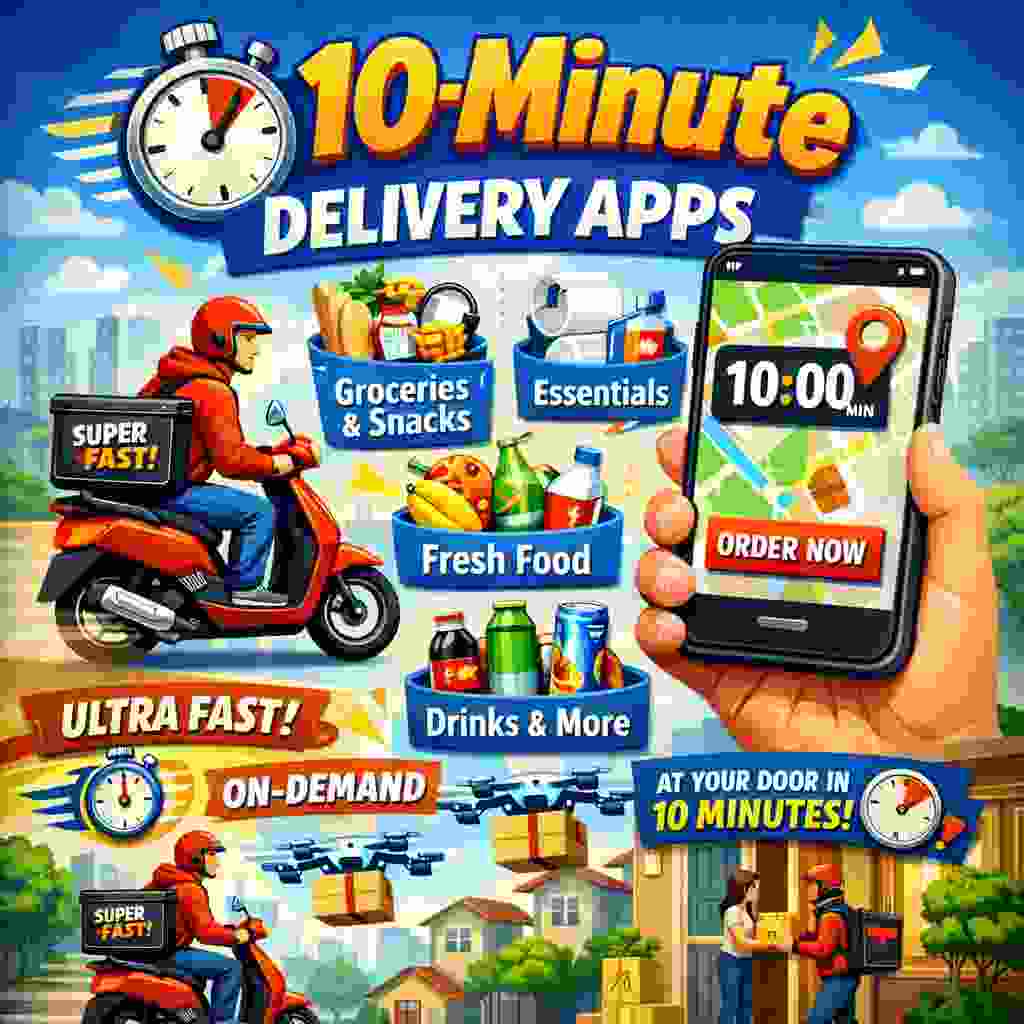

India’s shopping habits for groceries and other items have evolved at a rate of 5 years over the past 20 years. What used to be time off over the weekend in the supermarket or late evening shopping in the local kirana shop now takes only a few things on a phone. Quick commerce in India has created a new culture of instant purchases.
Today, there are 10-minute delivery apps that claim they can deliver milk, vegetables, ice cream, and phone chargers in a few minutes. This has ceased to be a luxury for a good number of urban shoppers; it is becoming a habit.
There is, however, a bigger question behind the speed and convenience: Is this rapid growth sustainable? Or is it a trend fueled by intense financing and price wars?
In this article, the writer focuses on the online grocery trend in India, the competition in the industry (Blinkit vs Zepto), the realities behind their operations, and what the future of these instant-delivery services could be.
Table of Contents
Knowing Quick Commerce India
Quick commerce India is a term that defines hyperlocal delivery technologies, which guarantee extremely fast delivery, typically 10-20 minutes. Contrary to the classical model of e-commerce, which requires large warehouses located outside of urban centers, quick commerce companies are built on dark stores that are small and based in neighborhoods.
Dark stores are simple warehouse stores where the commonly used products are kept. They do not have to be accessible to customers and exist solely to process online orders as quickly as possible.
Large organizations that are in this sector are:
- Blinkit
- Zepto
- Swiggy Instamart
- BigBasket
Comparisons between Blinkit and Zepto have become household discussions amongst the urban consumers as the market swells.
The reason 10 Minute Delivery Apps are gaining so fast
It is not by chance that the swift development of a 10-minute delivery app is taking place. It is motivated by certain shifts in lifestyles and purchasing habits.
Fast Urban Lifestyle
Time is now a luxury in hustling cities such as Mumbai, Delhi, Bengaluru, and Hyderabad, which are metro cities. Quick shopping is very appealing due to long office hours and traffic jams.
People are ready to place an order rather than go out to get a single crucial product.
E-Comfort Payments and App
The transaction has been facilitated through UPI payments and wallet-based systems. The online grocery trend in India is on the rise as confidence in digital platforms surges.
Shift to On-Demand Culture
Bar users have already been trained to expect fast service through offerings such as streaming services, food delivery, and cab bookings. The option of possessing instant delivery services is well within this line of behavior.
Smaller Households
Nuclear families tend to buy smaller amounts more frequently. This favors the economics of fast commerce in India.
The functioning of the Quick Commerce Model
To make judgments about sustainability, one has to know what operations are.
Dark Store Network
The dark stores are located within a residential community, within a 2-3 kilometer radius. This is a short distance that helps meet the 10-minute promise.
Focused Inventory
Instead of a great variety of goods stocked in a supermarket, most shops carry 2,000-3,000 high-demand goods. This accelerates the picking and packing.
Delivery Partner Allocation
This is done automatically when the proximity rider is dispatched for an order. Speed is measured in seconds.
This system enables a 10-minute delivery application to meet delivery deadlines; however, it is very stressful and expensive to operate.
Blinkit vs Zepto Competition and Strategy
The rivalry between Blinkit and Zepto has brought to light the aggressiveness that has spread in the market.
Blinkit
- Backed by Zomato
- Strong in major metro cities
- Entering into electronics and higher margin products.
Zepto
- Young entrepreneurs started the company.
- It is speed-oriented and youth-oriented branding.
- Metropolitan rapid expansion plan.
The two companies aim to grow the frequency and size of the orders. Nevertheless, the actions of Blinkit and Zepto, which use heavy shop pricing, remain relevant for profitability.
Advantages of Instant Delivery Services
As a user, one can appreciate the attractiveness of instant delivery companies.
Immediate Problem Solving
Forgot cooking oil? Guests arriving suddenly? Milk finished at night?
These problems are resolved through 10-minute delivery apps, which do not add pressure.
Time Efficiency
Customers avoid:
- Traffic delays
- Parking hassles
- Checkout queues
- Carrying heavy grocery bags
Flexibility in Ordering
The population can now order what they require, when they require it, rather than make a weekly plan for what they want to buy in bulk. This shift powers the trend behind the online grocery in India.
Support Services: Working Professionals
Busy professionals and older people in India use quick commerce to meet their essential needs.
Cost and Profitability Issues
Despite high consumer demand, profitability has been an issue.
High Real Estate Expenses
Dark stores are located in prime areas of urban areas. Rent prices in these regions are high.
Delivery Cost Per Order
Individual orders entail picking, packing, and delivery. When the value of order is low, profit margins are reduced.
Heavy Discounts
Blinkit vs Zepto has been a case where promotional pricing has emerged amid a competitive rate race. Although this is appealing to customers, it reduces profitability in the short run.
Operational Complexity
Timelines of 10 minutes need to be properly coordinated. Delays that we cause, even in small amounts, can influence customer satisfaction.
Environmental Impact and Social Impact
Quick commerce in India is growing rapidly, with significant environmental impacts.
- More consumption of packaging materials.
- Increased short route fuel trips.
- Greater plastic waste
While sustainability experts say that the online grocery trend in India should adopt greener packaging and electric delivery trucks to minimize the carbon footprint.
It also raises issues concerning the safety of delivery riders. Speed pressure can cause accidents when not applied responsibly.
Influence on Retail Store
In India, kirana stores remain significant in the retail ecosystem.
Some store owners view 10-minute delivery apps as competition, especially in affluent neighborhoods. Partnership opportunities, however, are perceived by others.
Numerous platforms are collaborating with local suppliers as distributors. With proper organization, instant delivery services and traditional retail may co-exist.
Altering Consumer Psychology
There has been a dramatic shift in consumer expectations. Given the simplicity of quick commerce in India, it is uncomfortable to wait 24 hours for groceries.
Price sensitivity, however, is an issue. Once the cost of delivery rises considerably, behaviour could change again.
The online grocery trend in India is influenced by both cost and convenience. Sustenance will be based on the balance of this long-term loyalty.
Market Evolution and investing activity
At its early stages, investors were concerned with growth and customer acquisition. It is now concerned with sustainable unit economics.
Among the things that a company is trying:
- Subscription models
- Higher minimum order values
- Private label products
- Increased supply chain management.
This competitive battle between Blinkit and Zepto could result in consolidation, with incumbents taking over the market.
Beyond Metro Cities, it is time to expand to metro cities beyond cities
Quick commerce in India is entering its next phase in Tier-2 cities.
However, challenges include:
- Lower order frequency
- Varied quotas of consumption.
- Cost-sensitive consumers
India’s online grocery trend in smaller cities is gaining momentum; however, it needs alternative pricing models and operational improvements.
Does a 10-Minute Promise Have to Be There?
Specifically, when it comes to hard-core 10-minute promises, industry experts think they can soften over time. Operational stress would be minimised with satisfied customers, because a 15-20 minute window can have that effect.
Provided that corporations can slightly shift the timeframes, instant delivery services can be offered in a more stable financial state.
Long-Term Outlook
There is the reality of convenience brought about by 10-minute delivery apps, which is valued. Urban consumers are increasingly relying on such services for their daily needs.
Sustainability, however, lies in:
- Controlled expansion
- Sensible timelines of delivery.
- Guest rider management.
- Cost discipline
- Eco-friendly practices
The online grocery trend in India is not immediate. It has stronger tendencies towards digital adoption
Meanwhile, it can be assumed that the aggressive speed race between Blinkit and Zepto will shift more slowly toward profitability-centered approaches.
Conclusion
Quick commerce in India has transformed how households in cities make purchases. The model is highly convenient and compatible with the contemporary lifestyle.
However, convenience is not a determinant of sustainability. Sustained growth, operational discipline, and financial stability will contribute to the success of 10-minute delivery apps.
Consumers value the increased immediacy of delivery services, and demand is high. The time it will take to turn into a fixed retail format or a more gradual, consistent form is yet to be determined.
Business intelligence will make the online grocery trend in India less about speed and more about smart business decisions.
Frequently Asked Questions (FAQs)
What is Quick Commerce India?
Quick commerce in India means hyperlocal delivery systems that bring groceries and daily essentials within a 10-20-minute range, using local dark stores.
What do 10-minute delivery applications earn?
Their profits are based on product margins, delivery charges, subscriptions, and the sale of their own-label products, yet profitability remains low.
In Zepto v Blinkit, who has it better?
These two sites are competitive. The option would be based on the availability, cost, and delivery experience in a particular location.
Can the online grocery trend in India be sustained in the long term?
The online grocery trend in India is on the rise; however, in the long run, cost control, rider safety, and operational efficiency are crucial.