

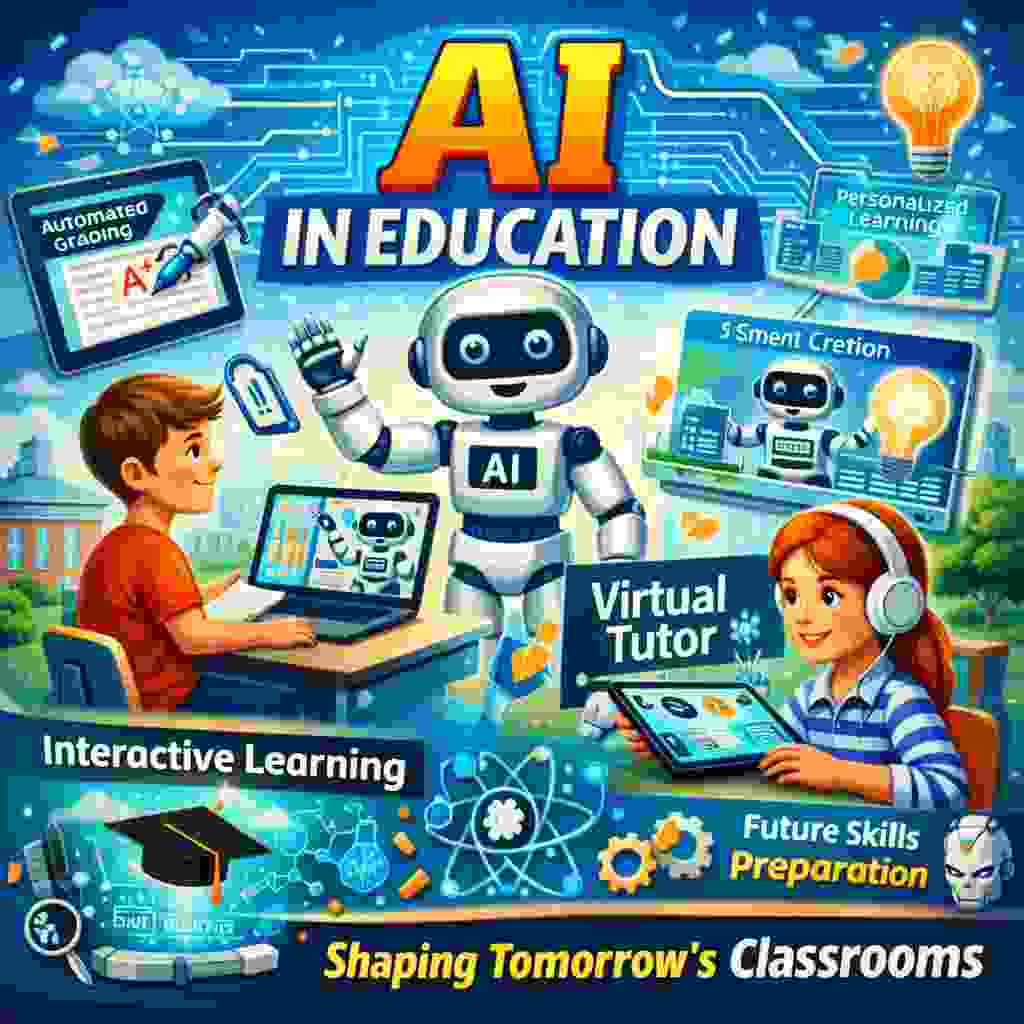
AI in Education: How Indian EdTech Is Reinventing Learning
The education system in India has changed dramatically within the last ten years. Technology has begun to assume greater importance in how learners study, how they are taught, and how they acquire competencies that will work in real careers. Indian EdTech startups are leading this change by introducing new approaches to teaching and learning in the country.
Education is a major aspect of digital platforms, where schoolchildren might be doing homework before an exam and employees are learning new skills at work. In the online learning setting in India, students now have access to courses and classes offered online, as well as teachers, in places they could not access before.
Indian education has seen a similar transformation with the use of AI, which has helped personalise lessons and monitor student progress. Concurrently, digital classrooms in India are introducing technology into schools and colleges, directly making lessons interactive. Most of these attempts also target skill-based education in India; this will make certain that learning is related to a real-world career.
We should learn about how Indian EdTech is transforming education and what this would entail for the students, teachers, and institutions.
Table of Contents
The Startups in Emerging EdTech in India
Indian EdTech startups have been growing in the past few years. Businessmen recognized the potential to address the long-standing problems in the education system, including the shortage of talented teachers, inadequate teaching materials, and outdated teaching methods.
These startups developed internet-based platforms that let students study anytime, anywhere. The use of smartphones has been on the rise, driven by internet penetration in the country, and more learners are using them.
The factors that contributed to this growth include:
- The internet usage in rural and urban areas should be expanded.
- Necessity: inexpensive smartphones and internet packages.
- Request for the flexible learning option.
- It should have more exam-preparation tools.
Consequently, online education in India has become a massive part of the education system. Students who plan to take competitive exams, board exams, or professional examinations use EdTech platforms to learn about them and practice.
In the meantime, to do this, schools and colleges are starting to invest in EdTech startups in India to introduce digital learning technology in classrooms.
Education is becoming more available through online learning
One of the biggest technology-induced transformations entails online learning in India. Earlier, all they could rely on was physical coaching centres or classroom teaching. A student can now participate in live courses, record classes, and even take examinations from the comfort of his/her home.
This has helped make education available to students in smaller towns and remote areas.
Online learning in India has several features that are also popular, which include:
- Video-recorded lessons in flexible learning.
- Live classes with teachers
- Online performance monitoring and tests.
- Doubt-solving sessions and discussion forums.
- Learning mobile applications.
These tools enable the students to study at their own pace. In the case of a challenging concept, they have the opportunity to repeat a lesson or practice more. Online courses are also feasible for working people who can study and work simultaneously.
Due to such flexibility, online learning in India has ceased to be confined to examination preparation. It currently includes academic and high school courses, coding, foreign languages, and professional school courses.
AI Will Revolutionize Student Learning
Not only is technology making education digital, but it is also more personalised. The emerging presence of AI in education in India is helping platforms understand students’ learning processes and their areas of weakness.
Artificial intelligence can analyze a student’s performance and identify areas that require additional practice. The system will provide different lessons to the individual learners depending on their progress.
The applications of AI in the education industry of the Indian market are:
- Individualised student performance learning.
- There are smart quizzes that vary in their difficulty.
- Assessment of assignments with automation.
- Intelligent tutoring and doubt solutions.
- Teacher analytics to monitor class performance.
For teachers, this technology can provide insight into students’ performance. Students who might be struggling can be more easily identified and provided with greater support.
AI in education in India will become a constant feature of digital learning tools as more EdTech startups embrace it.
Educational Institution Is Going Digital
Traditional schools are even getting penetrated by technology, whereas online platforms are gaining momentum. Digital classrooms in India are an idea attracting attention among educational institutions.
Examples of tools that constitute a digital classroom include smart boards, projectors, a library of digital materials, and interactive learning programs. Teachers can describe subject matter more visually, with videos, and even animatedly, using these tools, rather than relying solely on textbooks.
Digital classrooms in India have certain advantages, which include:
- Illustrative explanations of lessons.
- Activities and interactive quizzes in the classroom.
- Availability of online study resources.
- Still, improved interaction between students.
Under multimedia, teachers also find it easy to explain more complicated issues. As an instance, one can discuss science concepts or historical events that can be explained with the help of video and animation.
EdTech startups in India are collaborating with various schools to adopt digital classrooms, particularly in privately owned, urban schools.
Emphasize Skills Education
Another significant change in education is the emphasis on professional skills. The old education system in India was exam-oriented, but recently there has been greater emphasis on skill-based education.
In the modern world, employers seek those employees who can apply knowledge in practice. As a result, many EdTech platforms are offering products that equip students with the skills required in the employment sector.
There are examples of skill-based education in India, such as:
- Software development Coding
- Digital marketing
- Data analysis
- Basic communication skills and soft skills.
- Entrepreneurship training
Most of these programs are based on theory and practical projects. Students are asked to create actual products or solve assignments or cases.
By doing so, skill-based education in India equips learners with the skills required to land a job, rather than emphasizing exams or degrees alone.
Training of Educators on the EdTech
Technology is not taking over the teachers. Instead, it is changing their teaching and communication methods with students.
Many teachers today are utilizing EdTech sectors to make classroom teaching easier. Giving lectures or using digital presentations, recording lectures, and giving internet-based tests have become common features of a modern classroom.
The use of AI in Indian education is not far behind, enabling teachers to gain deeper insight into students’ performance. Using data, they can identify which aspects students are struggling with and make the necessary amendments to the lesson.
Digital classroom educators in India can integrate conventional classroom training and digital materials. This would help them keep students interested as they progress through the syllabus.
The teachers also train on the effectiveness of using such tools. This then is modifying teaching and learning in a more technologically enhanced environment.
The EdTech Sector has Company-wide challenges
Nonetheless, EdTech start-ups in India face many challenges even amid faster development.
It is one of the significant problems with access to credible internet and devices. Many students in rural regions still experience connectivity issues, preventing them from using online learning platforms in India.
The other issue is the sustainability of course quality. There is an array of online programs to choose from, so students may not always know how to find credible platforms.
Screen time and student engagement are also matters of concern. Spending so much time in front of screens is not an effective way to learn for all learners.
The solutions to such issues are to integrate online learning in India with offline support, including physical learning centres or even hybrid classes.
The Future of India challenges Education Technology
India is likely to adopt a combination of classroom education and digital technologies as the future of education. Since technology is in a dynamic phase, EdTech startups in India will introduce new learning methods.
AI in education in India will be beneficial, as it will help develop more individualised learning experiences. Simultaneously, online classrooms in India will gain popularity in educational institutions as schools embrace technology to support the instructional process.
Skill-based education in India will also remain a key area of focus, ensuring that students are equipped to meet the demands of contemporary professions. Some EdTech platforms already collaborate with industry specialists to create occupational courses.
Frequently Asked Questions (FAQs)
EdTech startups in India will involve what?
EdTech startups in India are firms that apply technology to deliver education. They are providing online courses, digital learning services, and skill-based services for students, professionals, and institutions.
What is an AI application in India regarding education?
Personalised learning, student performance analysis, material recommendations, and AI-based assessments are used in Indian education to enhance learning. It helps educators and sites better understand students’ comprehension.
What are digital classrooms?
Digital classrooms in India refer to technology-enabled learning spaces that use smart boards, projectors, digital content, and interactive tools to support teaching in schools and colleges.
So, what is the importance of skill-based education in India?
Skill-based education in India is not a biological subject; it focuses on practical skills such as coding, communication, and technical skills. The skills will equip students to be ready to work in real jobs and meet industry requirements.