


Table of Contents
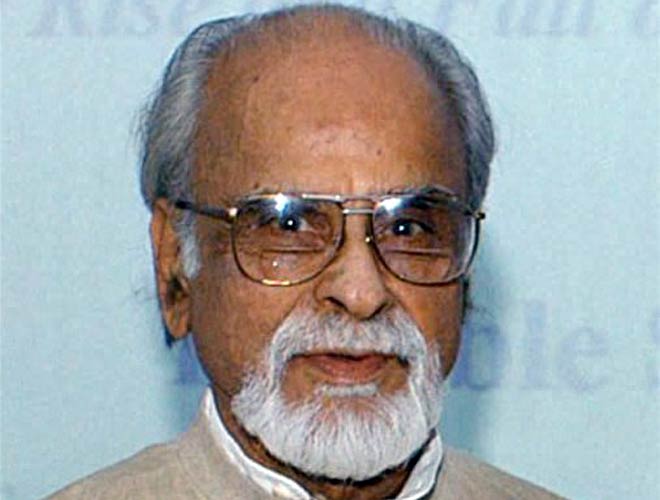
About I.K. Gujral
One of the most admired political leaders of contemporary India was I.K. Gujral. He was the former Prime Minister of India, known to act calmly and to believe in peaceful diplomacy in 1997. His contributions to the international relations of India were not only short-lived but long-term.
This biography of IK Gujral elaborates on his childhood life, political career, success, and the impact he had on diplomacy on a lasting basis. It is also how he is still relevant whenever it comes to talking about the Indian Prime Ministers’ List and the list of prominent Indian foreign policy leaders.
Childhood and the Family
Indra Kumar Gujral was born on 4th December, 1919 in the city of Jhelum, which is now in Pakistan. His identification with the fight to liberate India was high, as his family was devoted to this cause. His parents, Avtar Narain Gujral, and her spouse were all nationalists.
He was brought up in such an atmosphere where he was influenced to think politically in the same way when growing up. He was brought up with values of nationalism, public service, and social responsibility. These initial influences subsequently informed the thoughts, which were talked about in all biographies of IK Gujral.
Education and Student Activism
Gujral attended his studies in Lahore. As a student, he got actively engaged in student politics during his college life. He was also highly influenced by socialist ideologies and became a member of the Communist Party in the first place.
But as the years progressed, he changed his political mindset. He became a member of the Indian National Congress after the independence of India. This was the beginning of his political career at the national level.
Role in the Freedom Movement
- Been a part of the Quit India Movement 1942.
- British authorities had him arrested.
- Strongly financed nationalistic demonstrations.
- Formed good democratic ideologies.
His participation in the freedom movement indicates that his love for the country started way before he became the former Prime Minister of India.
Entry into Mainstream Politics
I.K. Gujral slowly became one of the most popular politicians after gaining independence. His speeches were also marked by his level-headed opinions. He did not like fighting politicians, contrary to his aggressiveness.
Indira Gandhi noticed her talent in administration and delegated to her key duties. This is a life period that helped him gain experience in ruling.
He also served in a number of high-level posts in the central government over the years.
Significant Ministerial Functions
I.K. Gujral was an experienced veteran in various ministries.
Key Positions Held
- Minister of Telecommunication and Transport.
- Minister of Interior and Foreign Affairs
- Minister of Finance
- This is the Indian ambassador to the Russian Union.
His experience as an Ambassador to the Soviet Union made him quite strong in his skills in international relations. This experience would come later to shape the Gujral Doctrine.
He has been credited with a good standing as an Indian foreign policy leader due to his work in external affairs.
Minister of Information and Broadcasting in times of emergencies
Gujral became the Minister of Information and Broadcasting in 1975 under the Emergency. Nevertheless, he was said to disagree with some of the policies at that period.
He was democratic and was not a totalitarian supporter of media control. This was an independent style that demonstrated his appreciation of ideals instead of political influence.
These efforts demonstrate why there are numerous professionals who regard him as an individual who is honest in their leadership role.
The Gujral Doctrine: A Groundbreaking Policy
The explanation of the Gujral Doctrine is one of the most significant parts in every IK Gujral biography.
The Gujral Doctrine was a foreign policy model that aimed at enhancing India’s relationship with its neighboring countries. It emphasized trust, respect, and non-interference.
Essentials of the Gujral Doctrine
- No fear of quid pro quo on the part of smaller neighbors.
- Amicable resolution of conflicts.
- New respect for sovereignty and the territory.
- The presence of non-interference in internal affairs.
- Encouragement of cooperation in the region.
He attempted to establish better relations with other countries like Nepal, Bangladesh, Sri Lanka, Bhutan, and the Maldives using the Gujral Doctrine.
This policy focused on the containment of tensions in the South Asian area. It is still in the Gujral Doctrine, even nowadays, because it is in the discourse of foreign relations and regional diplomacy.
This is a primary reason to remember him as one of the foreign policy leaders of India.
Becoming the Former Prime Minister of India
On April 21, 1997, I.K. Gujral assumed the status of the late Prime Minister of India. He became the 12 th Prime Minister and should be mentioned among the few leaders to become a Prime Minister as one of the members of the Rajya Sabha.
His government was constituted as part of a coalition. Matters of coalitions usually entail negotiation and compromise. This is an aspect Gujral managed to accomplish with patience and calm.
Highlights of His Tenure
- Concerned with stability in politics.
- Diplomatic overtures to look after the neighbourhood.
- Dismissed a low-profile leadership style.
- Nourishing democratic establishments.
His service has earned him a place in the Indian Prime Minister’s list, though this was by virtue of his contribution, which ended in March 1998.
The Leadership Style and Personal Qualities
I.K. Gujral was reputed to say something polite and to be able to make balanced decisions. He assumed that the leadership ought to be cultivated towards ethical values and communication.
He believed in silent negotiations, unlike most leaders who were interested in client show. He demonstrated that calm leadership was possible, particularly as a former Prime Minister of India.
He was of the opinion that peace is more important than political gain in the short term.
Donation to Indian Foreign Policy
Foreign policy is his most influential sphere among a great number of other positions.
He used the concepts of the Gujral Doctrine as an External Affairs Minister and subsequently as the Prime Minister. His style was founded upon mutual trust and not dominance.
Why is he considered among the central Indian foreign policy leaders?
- He was interested in harmony on a regional level.
- He appreciated the equality of treatment of the smaller nations.
- He favored the use of dialogue.
- He promoted teamwork in South Asia.
His considerations on diplomacy influenced the deliberations of India in terms of its neighborhood policy over the years.
Literary Interests and Cultural Side
I.K. Gujral was a strong enthusiast in literary matters as well. He was fond of Urdu poetry and frequently attended cultural activities.
He even composed his Urdu poems. His works actually revealed the wish for peace and unity. This creative attribute distinguished him among most other political personalities in the Indian Prime Ministers list.
His nature was political and cultural, and he was very much respected.
Political Hurdle and Collapse of Government
His government, as was the case with many coalition governments, experienced internal politics. Later political friction in the alliance saw his government fall.
Nevertheless, he managed to deal with the situation in a graceful way. He retained his respect even after quitting as the former Prime Minister of India.
His departure was calm and demonstrated the sense of maturity and adherence to the principles of democracy.
Later Years and Death
Gujral was also active in the life of the country after giving up office. He kept on speaking on foreign policy and cooperation in the region.
On November 30, 2012, he died of a prolonged illness. He was honored by the leaders of political parties.
A significant percentage of his legacy is his contribution, in particular, the Gujral Doctrine.
Why His Legacy Still Matters
Reading the IK Gujral biography, readers tend to see the topicality of his ideas nowadays.
His ideology of non-violence and local respect is still a factor in the debate on foreign policy. He is one of the most renowned Indian foreign policy leaders who sought to establish trust-based relations.
His tenure in the Indian Prime Ministers list may not have been long in terms of years, but it was effective in terms of impact.
He demonstrated that politics can be done with dignity, patience, and also be respectful to other people.
Frequently Asked Questions (FAQs)
Who was I.K. Gujral?
I.K. Gujral was the 12 th Prime Minister of India, and this person is remembered as a former Prime Minister of India whose major concern was the peaceful foreign relations.
What is the Gujral Doctrine?
The Gujral Doctrine is a foreign policy of ensuring a cordial relationship with its neighbors without having similar nations contribute to the cause.
But why is he one of the key Indian leaders of foreign policy?
He is said to have been significant because of the emphasis he placed on diplomacy based on trust and regional collaboration with the Gujral Doctrine.
Where does he plan in the Indians Prime Ministers’ list?
He was the 12 th prime minister of India from April 1997 to March 1998.