

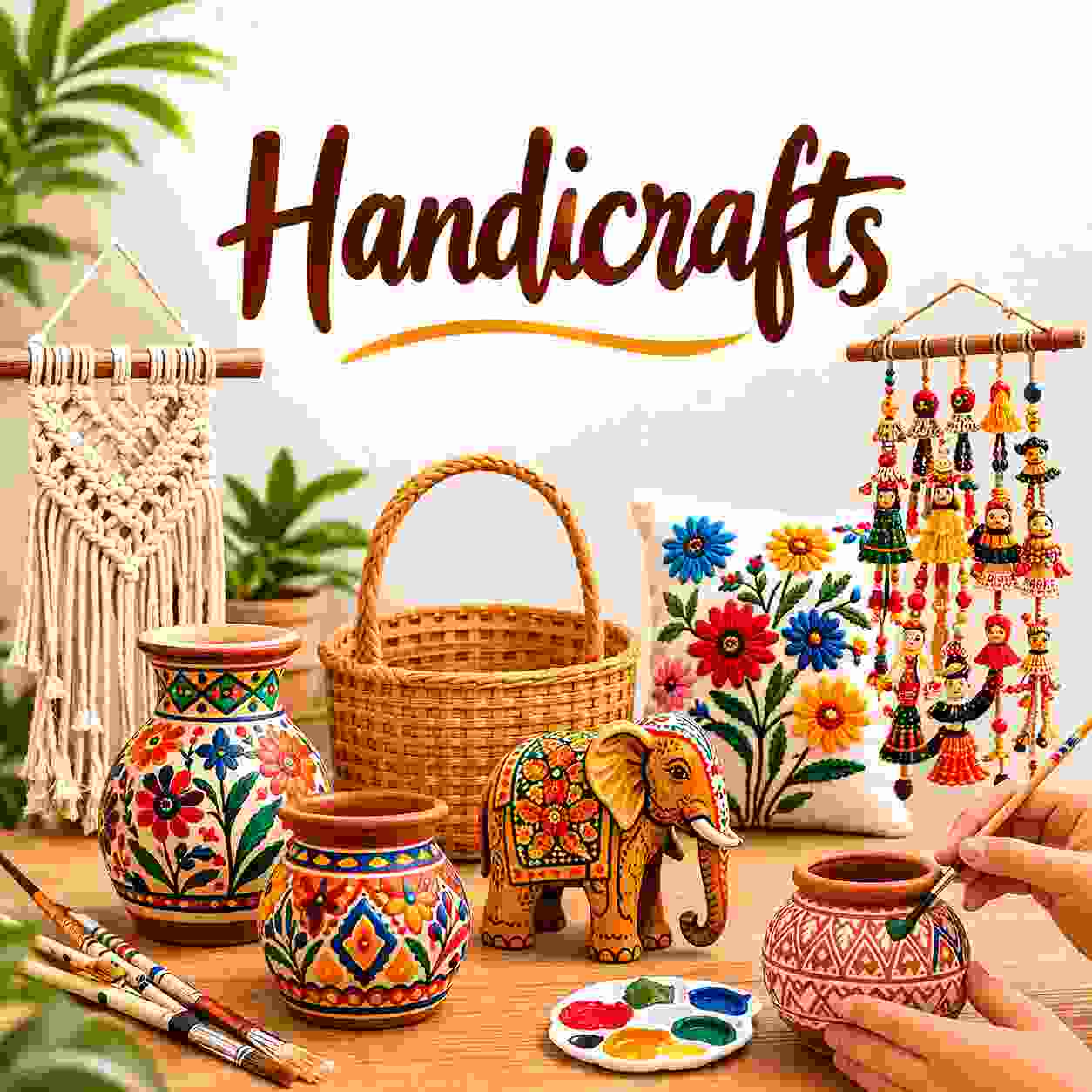
How Indian Handicrafts Reflect the Country’s Cultural Heritage
Indian handicrafts are more than just decorative pieces—they reflect stories, traditions, beliefs, and ways of life passed down through generations. Whether it is handwoven textiles or finely crafted wooden work, each region of India offers something unique. Exploring the Indian handicrafts history demonstrates how deeply these art forms are connected to the country’s cultural identity and heritage.
The knowledge of the traditional art in India would have provided a deeper perspective into the life and work of the people and how people once used to express themselves to any culture lover. Such artifacts do not merely reflect single products; they are people, places, and practices with a long history.
Table of Contents
The Indian handicrafts take their origins
The Indian handicrafts are thousands of years old. One of the earliest civilizations that used clay, metal, and stone was the Indus Valley civilization, which was active in the production of tools and ornaments. The influence of styles and methods on designs and materials changed over time across the various dynasties and rulers.
Traditions to be developed with:
- The resources that can be found in each area.
- Religious ideologies and practices.
- Climate and lifestyle needs
- Trade and cultural exchange
Still, below are just some examples, as life in the desert may be traced in complex embroidery in Rajasthan, and bamboo crafts in the Northeast show how easily available materials may be used. These instances suggest that cultural heritage craft in India came naturally in the communities.
Regional Diversity in Traditional Crafts India
Among the key factors that explain the rich culture of craft in India is its diversity. Every state is unique in terms of style, technique, and story.
North India
North India is known for:
- Kashmiri shawls and carpets
- Punjabi phulkari Phulkari embroidery.
- Blue pottery from Jaipur
These crafts usually feature flora and elaborate exquisiteness, influenced by Mughal art.
South India
The South offers:
- Tanjore paintings
- Kanchipuram silk sarees
- Wooden temple carvings
They are closely connected to temples and spiritual life and are a significant element of India’s cultural heritage.
East India
Eastern crafts include:
- Odishi Pattachitra paintings.
- West Bengal tracery Terra cotta sculpture.
- Bamboo crafts from Assam
These are images of nature, myths, and everyday life in the village.
West India
In the West, we are famous because of:
- Bandhani tie-dye textiles
- Mirror work embroidery
- Leather crafts
Such illuminated and vibrant shapes symbolize partying and unity. This is a great assortment, evidently demonstrating that in traditional crafts in India, the identity of region and artisanship diversity is reflected.
Arts and Crafts in India in terms of cultural preservation
The artisans of India are at the centre of every craft. These professional men tend to acquire their skills through family traditions. Knowledge is maintained by transferring skills to the next generation.
Why is it so significant that artisans exist?
- They maintain ancient practices.
- They uphold originality in designs.
- They preserve the local traditions.
- They promote country economies.
Despite their significance, several Indian artisans struggle with low incomes, limited access to markets, and competition from machine-made products. By assisting them, cultural heritage crafts in India will secure the future of generations to come.
Handmade Art India as a Culture
All works of handmade art in India narrate a story. It can be a celebration, a religion, or a routine habit. Handmade crafts are personalized, unlike factory-made products.
Examples of craft forms of a culture:
- Warli paintings reflect the life and rituals of the tribals.
- The Madhubani art represents nature and mythology.
- Special occasions are usually celebrated with hand-woven sarees.
These are not mere artworks; they represent a graphic documentation of India’s social and cultural life. That is why the history of Indian handicrafts remains significant today and inspires people across age groups and locations.
The traditional crafts in India used materials and techniques
Natural materials were used, a characteristic feature of traditional Indian crafts. The craft is usually environmentally friendly and sustainable.
Common materials include:
- Clay and mittttii
- Wood and bamboo
- Cotton and silk
- Metal and stone
Several methods that have been transferred over the years:
- Hand weaving
- Block printing
- Embroidery
- Carving and molding
These methods demonstrate how people were able to adapt to the situation and develop something that was not only useful but also beautiful. This unity between nature and craft is a major component of Indian cultural heritage crafts.
Indian Handicrafts: a part of Culture
Indian culture is deeply concerned with handicrafts. They are applied in festivals, rituals, weddings, and in day-to-day life.
Where handicrafts are used:
- Ornamentation during festival occasions such as Diwali.
- Wedding traditional clothes.
- Idols and religious objects.
- Home decor and furniture
These applications indicate the role of handmade art in India in everyday life, and not only display. It reveals that crafts are strongly tied to feelings, traditions, and family values that have been practiced over the years.
Artisanal Economic Significance of India
The handicraft industry is another source of livelihood. Thousands of Indian artisans rely on this labor to earn their wages.
However, the advantages of investing in handicrafts are as follows:
- Promotes rural employment
- Motivates women.
- Supports small businesses
- Maintains time-honored skills.
The purchase of handmade items is a direct contribution to Indian artisans, supports Indian handicrafts history, supports local economies, and promotes local communities’ reliance on themselves in crafting products.
Challenges Faced by Cultural Heritage Crafts India
Although this is the case, handicrafts have some problems, and they include:
- Cheap machine-made products that could be cheaper than those imported by the company.
- Insensitivity of buyers.
- Access to the international markets is limited.
- Decreased interest among the younger generations.
These are issues that impact traditional crafts in India and the existence of cultural heritage crafts in India. Otherwise, certain crafts are likely to become extinct over time, taking cultural knowledge with them.
The ways modern buyers can contribute to Handmade Art India
The consumers contribute to preserving these crafts. The efforts are small, and the result can be huge.
Ways to support:
- Purchase original artisan items.
- Select local instead of mass-produced products.
- Research the craft and then buy it.
- Post artisan work on the internet.
By purchasing handmade art from India, people help safeguard the history of Indian handicrafts and support Indian artisans in rightful causes that directly affect their lives.
Organizational and Governmental Support
There is an attempt to preserve and develop handicrafts. Programs and non-governmental organizations are trying to:
- Training and transfer of skills.
- Offer financial support
- Create online marketplaces
- Foster art by way of exhibitions.
These measures can strengthen traditional crafts in India and ensure that India’s cultural heritage continues to evolve. There is also the implementation of awareness campaigns and craft fairs that introduce the buyer to the artisan and his work.
Why Indian Handicrafts Still Matter Today
In the modern, busy world, products manufactured by hand offer a touch of intimacy and genuineness. They remind individuals of the traditions, values, and creativity.
The reasons why they are still important:
- They contain identity and culture.
- They endorse sustainable livelihoods.
- They relate to the past and the present.
- They offer differentiated, distinctive products.
Knowledge of the history of Indian handicrafts makes one value the effort put into them and appreciate the work of Indian artisans. Such crafts also promote conscious purchasing and more appreciation of craftwork.
Conclusion
Indian handicrafts are a living example of the country’s rich cultural heritage. Since ancient times, these arts have been symbols of the spirit of communities across the country.
People purchase beautiful things by supporting the traditional crafts of India, thereby contributing to the preservation of the cultural heritage of India. The art of Indian artisans should be appreciated, valued, and further encouraged.
Whenever one makes a decision to pick handmade art in India, he or she is making a decision that is rooted in tradition, talent, and a tale that has been fashioned through the ages. This association renders every work to be unique and significant in modern life and to preserve cultural traditions by the forthcoming generations as well.
FAQs on Indian Handicrafts
Why do we need the history of Indian handicrafts?
The history of Indian handicrafts helps people comprehend how people lived in the past, how culture and tradition transformed through making their creations with their hands.
What do artisan India and artisan Africa tell us about cultural diversity?
The traditional crafts of India differ according to region, materials, and techniques, which have demonstrated the distinct identity and way of life of other communities.
What is the point of people siding with the Indian artisans?
The stature of artisans of India can keep the traditional skills alive, it can earn the rural population income, and the cultural tradition will continue to be alive.
Why is handmade art in India unique compared to the machine-made products?
Indian art is a handmade craft and therefore is unique, significant, and related to its culture.