

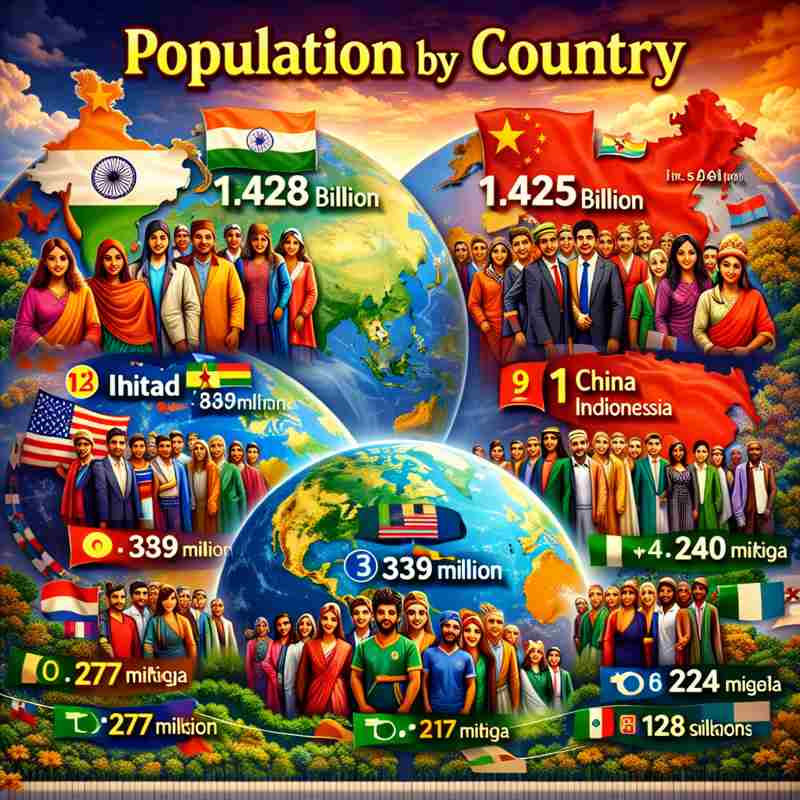
World Populations by Country
A clear image of the distribution of people on Earth is having country-by-country knowledge of the world population. It assists governments, businesses, and individuals in making sense of economic growth, job markets, pressure on urban areas, and even cultural changes. Looking at a country-by-country population list, you begin to notice patterns: some countries are increasing in population rapidly, while others are ageing or even shrinking.
This article disaggregates world population statistics, provides a breakdown of the countries ranked by population, and helps you understand what these figures really mean to you and society at large.
Table of Contents
What Does World Population by Country Mean?
By country, the number of people in a country is just referred to as its world population. These numbers are typically gathered through national censuses and estimates by international organisations.
For example, a country’s population growth rate is usually higher when its population is younger. Conversely, countries that experience slow growth or recession may have a larger proportion of older individuals. This impacts the employment opportunities in the healthcare demand.
Global Population Overview
The world’s population has surpassed 8 billion, according to current estimates. This figure continues to increase, yet the rate of increase is declining compared to previous decades. Not all countries make the same contribution to this growth. The percentage change shows a high contribution from several countries, and developed countries are reporting fairly steady or falling numbers.
Looking at the population ranking countries, population size does not necessarily correlate with land area. The population of some small countries may be very dense, while that of large countries may be more evenly spread across their expanses.
The biggest countries by population.
Whenever we talk about the largest population countries, several names come to mind. These countries represent a significant share of the world’s population and significantly influence economic and social trends.
India
At the moment, India is the most populous country on the list. It has a youthful, fast-growing population of more than 1.4 billion. This has both opportunities and challenges. Employing a large labour force can boost economic growth, but it strains jobs, housing, and infrastructure.
China
The next is China, with a slightly lower population than India. It was the most populous country for decades. Nevertheless, it has experienced slow population growth, and it is now facing problems associated with an ageing population.
United States
The United States is the third-largest country in the world by population. Immigration and natural growth help it grow in population. The country’s population is heterogeneous, and its economy is developed, attracting people from around the world.
Indonesia
Indonesia is the most populous country in Southeast Asia and one of the largest countries in the world. It is also distributed across thousands of islands, which pose a special challenge for distribution.
Pakistan
The population growth in Pakistan is rapid. It is among the rapidly expanding nations in terms of population.
Nigeria
Nigeria is an African state with the largest population and is among the world’s fastest-growing nations. Its youthful population will likely contribute significantly to global population figures in the future.
Population Ranking Countries: Best Trends.
The mere view of the country ranking in terms of its population tells more than the numbers. It demonstrates the way various regions are changing. Asia is at the top of the list, and countries such as India, China, Indonesia, and Pakistan are among the top. This indicates past population growth and the presence of large tracts of land that can accommodate large populations.
Africa is rapidly becoming an important region. The high population growth is being experienced in countries such as Nigeria, Ethiopia, and the Democratic Republic of Congo. This trend is expected to alter the world population in future. Instead, Europe has numerous nations with populations that are either stable or declining. The general trend in the region is a low birth rate and an ageing population.
Population List and Density by Country.
An overview of the population by country would be helpful, but that is not all. The other important factor is population density. For example, we can consider countries such as Bangladesh, which have a high population density; that is, many people reside in a limited area. This poses problems regarding shelter, transportation and resources.
On the other hand, other nations such as Canada and Australia have large geographical areas but small populations. This results in the reduced density and alternative economic and social relationships. The concept of density considers how it influences your everyday life. The congestion may be experienced in high-density areas that are more likely to access services. Fewer facilities may be provided in low-density areas.
Influencing Factors of Population Growth.
Several factors determine the world’s population, depending on the country.
Birth rates play a major role. In countries with high birth rates, population growth is faster. These are usually developing countries with young populations.
Death rates also matter. Health services and living standards have improved, leading to a rise in population as death rates have been reduced in most regions across the world.
The other factor is migration. Countries such as the United States, Canada, and Germany drive population growth through immigration. Population trends also depend on the state of the economy. In richer nations, individuals are willing to have fewer children, which slows growth. Low birth rates are closely related to education, particularly among women. With higher levels of education, family sizes are likely to be reduced.
Why Global Population Statistics Are Important to You.
What is the significance of global population statistics in ordinary lives? The thing is, they influence lots of things that you experience.
Population patterns affect job markets. The population of countries can increase, bringing more opportunities and more competition. The demands of the house are directly connected to the population. A high population growth rate may lead to higher property values and overpopulation.
The population structure determines the form of healthcare systems. There are various services that younger people require that older people do not. The education systems are also based on the population trends. The growing population demands more schools and educators. The population is related to environmental issues. The increase in population implies greater demand for resources such as water, food, and energy.
Problems of High-Population Countries.
A country’s large population often leads to several problems. The problem of overcrowding in cities is significant. Cities are expanding rapidly, and sometimes they expand faster than the infrastructure can keep up. The other thing is employment. A high population implies more individuals entering the workforce; therefore, it demands robust economic growth to sustain them.
Management of resources becomes critical. Water, food, and energy should be well managed to satisfy demand. There is pressure on the healthcare and education systems. Governments should spend heavily to ensure quality services for all people. Meanwhile, a large population may be a benefit when used properly. It offers a good source of labour and a significant consumer population.
The declining countries include Greece and Portugal.
Whereas some countries are rapidly increasing their populations, others are experiencing population decline. Japan is a well-known example. It has an ageing population, and birth rates are low. This presents problems to the economy and the health care facility.
Most European nations are no exception. Different government policies are being implemented to increase birth rates or attract immigrants. The negative impact of declining populations may include labour shortages and slower economic growth. Nevertheless, they can also bring relief to resources and infrastructure.
Conclusion
When analysing the world population by country, one gets a clear picture of how people are distributed and how society is changing. Every nation has its story, starting with the biggest population nations such as India and China and going down to smaller nations, which have their own problems.
Population data are not some numbers on a graph. It represents the real changes around us that impact jobs, cities, healthcare, and the environment. You can easily understand the world around you by knowing the country population rankings and the country-wise population list.
Keeping up with current population shifts will help you understand changes worldwide and how they may influence your future.
S.No |
Country Name |
Populations |
|
1 |
India |
1,476,625,576 |
|
2 |
China |
1,412,914,089 |
|
3 |
United States |
320,852,000 |
|
4 |
Indonesia |
255,461,700 |
|
5 |
Brazil |
204,206,000 |
|
6 |
Pakistan |
189,589,000 |
|
7 |
Nigeria |
183,523,000 |
|
8 |
Bangladesh |
158,211,000 |
|
9 |
Russia[Note 3] |
146,267,288 |
|
10 |
Japan |
126,910,000 |
|
11 |
Mexico |
121,005,815 |
|
12 |
Philippines |
101,335,900 |
|
13 |
Vietnam |
91,583,000 |
|
14 |
Ethiopia |
90,076,012 |
|
15 |
Egypt |
88,393,000 |
|
16 |
Germany |
80,925,000 |
|
17 |
Iran |
78,283,000 |
|
18 |
Turkey |
77,695,904 |
|
19 |
Democratic Republic of the Congo |
71,246,000 |
|
20 |
France[Note 4] |
66,109,000 |
|
21 |
Thailand |
65,104,000 |
|
22 |
United Kingdom |
64,800,000 |
|
23 |
Italy |
60,788,845 |
|
24 |
South Africa |
54,002,000 |
|
25 |
Burma |
51,419,420 |
|
26 |
South Korea |
51,342,881 |
|
27 |
Colombia |
48,095,200 |
|
28 |
Tanzania |
47,421,786 |
|
29 |
Kenya |
46,749,000 |
|
30 |
Spain |
46,464,053 |
|
31 |
Argentina |
43,131,966 |
|
32 |
Ukraine[Note 5] |
42,895,704 |
|
33 |
Algeria |
39,500,000 |
|
34 |
Poland |
38,484,000 |
|
35 |
Sudan |
38,435,252 |
|
36 |
Iraq |
36,004,552 |
|
37 |
Canada |
35,702,707 |
|
38 |
Uganda |
34,856,813 |
|
39 |
Morocco[7] |
33,848,242 |
|
40 |
Saudi Arabia |
31,521,418 |
|
41 |
Peru |
31,151,643 |
|
42 |
Venezuela |
30,620,404 |
|
43 |
Malaysia |
30,560,200 |
|
44 |
Uzbekistan |
30,492,800 |
|
45 |
Nepal |
28,037,904 |
|
46 |
Ghana |
27,043,093 |
|
47 |
Afghanistan |
26,556,800 |
|
48 |
Yemen |
25,956,000 |
|
49 |
Mozambique |
25,727,911 |
|
50 |
North Korea |
25,155,000 |
|
51 |
Angola |
24,383,301 |
|
52 |
Australia |
23,819,700 |
|
53 |
Taiwan[Note 6] |
23,449,287 |
|
54 |
Syria |
23,160,275 |
|
55 |
Ivory Coast |
22,671,331 |
|
56 |
Madagascar |
21,842,167 |
|
57 |
Cameroon |
21,143,237 |
|
58 |
Sri Lanka |
20,675,000 |
|
59 |
Romania |
19,942,642 |
|
60 |
Niger |
19,268,000 |
|
61 |
Burkina Faso |
18,450,494 |
|
62 |
Chile |
18,006,407 |
|
63 |
Kazakhstan |
17,458,500 |
|
64 |
Netherlands |
16,899,300 |
|
65 |
Malawi |
16,310,431 |
|
66 |
Mali |
16,259,000 |
|
67 |
Guatemala |
15,806,675 |
|
68 |
Zambia |
15,473,905 |
|
69 |
Ecuador |
15,466,000 |
|
70 |
Cambodia |
15,405,157 |
|
71 |
Chad |
13,606,000 |
|
72 |
Senegal |
13,508,715 |
|
73 |
Zimbabwe |
13,061,239 |
|
74 |
South Sudan |
11,892,934 |
|
75 |
Bolivia |
11,410,651 |
|
76 |
Belgium |
11,239,755 |
|
77 |
Cuba |
11,210,064 |
|
78 |
Somalia[Note 8] |
11,123,000 |
|
79 |
Rwanda |
10,996,891 |
|
80 |
Greece |
10,992,589 |
|
81 |
Tunisia |
10,982,754 |
|
82 |
Haiti |
10,911,819 |
|
83 |
Guinea |
10,628,972 |
|
84 |
Czech Republic |
10,538,275 |
|
85 |
Portugal |
10,477,800 |
|
86 |
Dominican Republic |
10,378,267 |
|
87 |
Benin |
10,315,244 |
|
88 |
Hungary |
9,849,000 |
|
89 |
Burundi |
9,823,827 |
|
90 |
Sweden |
9,760,142 |
|
91 |
Azerbaijan |
9,611,700 |
|
92 |
United Arab Emirates |
9,577,000 |
|
93 |
Belarus |
9,481,000 |
|
94 |
Honduras |
8,725,111 |
|
95 |
Austria |
8,579,747 |
|
96 |
Tajikistan |
8,354,000 |
|
97 |
Israel |
8,345,000 |
|
98 |
Switzerland |
8,211,700 |
|
99 |
Papua New Guinea |
7,398,500 |
|
100 |
Hong Kong (China) |
7,264,100 |
|
101 |
Bulgaria |
7,202,198 |
|
102 |
Togo |
7,171,000 |
|
103 |
Serbia[Note 9] |
7,146,759 |
|
104 |
Paraguay |
7,003,406 |
|
105 |
Laos |
6,802,000 |
|
106 |
Eritrea |
6,738,000 |
|
107 |
Jordan |
6,720,990 |
|
108 |
El Salvador |
6,401,240 |
|
109 |
Sierra Leone |
6,319,000 |
|
110 |
Libya |
6,317,000 |
|
111 |
Nicaragua |
6,134,270 |
|
112 |
Kyrgyzstan |
5,895,100 |
|
113 |
Denmark |
5,659,715 |
|
114 |
Finland |
5,478,002 |
|
115 |
Singapore |
5,469,700 |
|
116 |
Slovakia |
5,421,349 |
|
117 |
Norway |
5,165,802 |
|
118 |
Central African Republic |
4,803,000 |
|
119 |
Costa Rica |
4,773,130 |
|
120 |
Turkmenistan |
4,751,120 |
|
121 |
Palestine |
4,682,467 |
|
122 |
Republic of the Congo |
4,671,000 |
|
123 |
Ireland |
4,609,600 |
|
124 |
New Zealand |
4,577,080 |
|
125 |
Liberia |
4,503,000 |
|
126 |
Georgia[Note 10] |
4,490,500 |
|
127 |
Croatia |
4,267,558 |
|
128 |
Oman |
4,161,705 |
|
129 |
Lebanon |
4,104,000 |
|
130 |
Bosnia and Herzegovina |
3,791,622 |
|
131 |
Panama |
3,764,166 |
|
132 |
Mauritania |
3,631,775 |
|
133 |
Moldova[Note 11] |
3,555,200 |
|
134 |
Puerto Rico (U.S.) |
3,548,397 |
|
135 |
Uruguay |
3,404,189 |
|
136 |
Kuwait |
3,268,431 |
|
137 |
Mongolia |
3,014,933 |
|
138 |
Armenia |
3,013,900 |
|
139 |
Lithuania |
2,916,443 |
|
140 |
Albania |
2,893,005 |
|
141 |
Jamaica |
2,717,991 |
|
142 |
Qatar |
2,334,029 |
|
143 |
Namibia |
2,280,700 |
|
144 |
Lesotho |
2,120,000 |
|
145 |
Slovenia |
2,066,385 |
|
146 |
Macedonia |
2,065,769 |
|
147 |
Botswana |
2,056,000 |
|
148 |
Latvia |
1,985,600 |
|
149 |
The Gambia |
1,882,450 |
|
150 |
Kosovo[Note 12] |
1,827,231 |
|
151 |
Guinea-Bissau |
1,788,000 |
|
152 |
Gabon |
1,751,000 |
|
153 |
Equatorial Guinea |
1,430,000 |
|
154 |
Trinidad and Tobago |
1,328,019 |
|
155 |
Bahrain |
1,316,500 |
|
156 |
Estonia |
1,312,252 |
|
157 |
Mauritius |
1,261,208 |
|
158 |
East Timor |
1,212,107 |
|
159 |
Swaziland |
1,119,375 |
|
160 |
Djibouti |
900,000 |
|
161 |
Fiji |
859,178 |
|
162 |
Cyprus[Note 13] |
858,000 |
|
163 |
Réunion (France) |
844,994 |
|
164 |
Comoros |
763,952 |
|
165 |
Bhutan |
759,670 |
|
166 |
Guyana |
746,900 |
|
167 |
Macau (China) |
636,200 |
|
168 |
Montenegro |
620,029 |
|
169 |
Solomon Islands |
581,344 |
|
170 |
Luxembourg |
562,958 |
|
171 |
Suriname |
534,189 |
|
172 |
Cape Verde |
518,467 |
|
173 |
Western Sahara[Note 14] |
510,713 |
|
174 |
Transnistria[Note 15] |
505,153 |
|
175 |
Malta |
425,384 |
|
176 |
Guadeloupe (France) |
405,739 |
|
177 |
Brunei |
393,372 |
|
178 |
Martinique (France) |
381,326 |
|
179 |
The Bahamas |
368,390 |
|
180 |
Belize |
358,899 |
|
181 |
Maldives |
341,256 |
|
182 |
Iceland |
329,100 |
|
183 |
Northern Cyprus[Note 16] |
294,906 |
|
184 |
Barbados |
285,000 |
|
185 |
New Caledonia (France) |
268,767 |
|
186 |
French Polynesia (France) |
268,270 |
|
187 |
Vanuatu |
264,652 |
|
188 |
Abkhazia[Note 17] |
240,705 |
|
189 |
French Guiana (France) |
239,648 |
|
190 |
Mayotte (France) |
212,645 |
|
191 |
Samoa |
187,820 |
|
192 |
São Tomé and Príncipe |
187,356 |
|
193 |
Saint Lucia |
185,000 |
|
194 |
Guam (U.S.) |
159,358 |
|
195 |
Curaçao (Netherlands) |
154,843 |
|
196 |
Saint Vincent and the Grenadines |
109,000 |
|
197 |
Aruba (Netherlands) |
107,394 |
|
198 |
Kiribati |
106,461 |
|
199 |
United States Virgin Islands(U.S.) |
106,405 |
|
200 |
Grenada |
103,328 |
|
201 |
Tonga |
103,252 |
|
202 |
Federated States of Micronesia |
101,351 |
|
203 |
Jersey (UK) |
99,000 |
|
204 |
Seychelles |
89,949 |
|
205 |
Antigua and Barbuda |
86,295 |
|
206 |
Isle of Man (UK) |
84,497 |
|
207 |
Andorra |
76,949 |
|
208 |
Dominica |
71,293 |
|
209 |
Bermuda (UK) |
64,237 |
|
210 |
Guernsey (UK) |
65,150 |
|
211 |
Marshall Islands |
56,086 |
|
212 |
Greenland (Denmark) |
55,984 |
|
213 |
Cayman Islands (UK) |
55,691 |
|
214 |
American Samoa (U.S.) |
55,519 |
|
215 |
Saint Kitts and Nevis |
55,000 |
|
216 |
Northern Mariana Islands(U.S.) |
53,883 |
|
217 |
South Ossetia[Note 18] |
51,547 |
|
218 |
Faroe Islands (Denmark) |
48,724 |
|
219 |
Sint Maarten (Netherlands) |
37,429 |
|
220 |
Liechtenstein |
37,370 |
|
221 |
Monaco |
36,950 |
|
222 |
Collectivity of Saint Martin(France) |
35,742 |
|
223 |
San Marino |
32,789 |
|
224 |
Turks and Caicos Islands (UK) |
31,458 |
|
225 |
Gibraltar (UK) |
30,001 |
|
226 |
Åland Islands (Finland) |
28,875 |
|
227 |
British Virgin Islands (UK) |
28,054 |
|
228 |
Caribbean Netherlands(Netherlands) |
23,296 |
|
229 |
Palau |
20,901 |
|
230 |
Cook Islands (New Zealand) |
14,974 |
|
231 |
Anguilla (UK) |
13,452 |
|
232 |
Wallis and Futuna (France) |
13,135 |
|
233 |
Tuvalu |
11,323 |
|
234 |
Nauru |
10,084 |
|
235 |
Saint Barthélemy (France) |
9,131 |
|
236 |
Saint Pierre and Miquelon(France) |
6,069 |
|
237 |
Montserrat (UK) |
4,922 |
|
238 |
Saint Helena, Ascension and Tristan da Cunha (UK) |
4,000 |
|
239 |
Falkland Islands (UK) |
3,000 |
|
240 |
Svalbard and Jan Mayen(Norway) |
2,562 |
|
241 |
Norfolk Island (Australia) |
2,302 |
|
242 |
Christmas Island (Australia) |
2,072 |
|
243 |
Niue (New Zealand) |
1,613 |
|
244 |
Tokelau (NZ) |
1,411 |
|
245 |
Vatican City |
839 |
|
246 |
Cocos (Keeling) Islands(Australia) |
550 |
|
247 |
Pitcairn Islands (UK) |
56 |
FAQs
What is the world’s population by country?
It is the population of the countries. It aids in comparing populations and understanding global distributions.
What is the most populous country?
India now has the largest population, second only to China’s.
Why are other nations more populated than others?
Population size depends on such factors as birth rates, migration, healthcare, and economic conditions.
Why are there some countries that are shrinking?
Low birth rates, ageing, and low immigration are causing population decline.
What is the impact of population on everyday life?
The size of the population affects the number of jobs, housing, health care, education, and the availability of resources.