

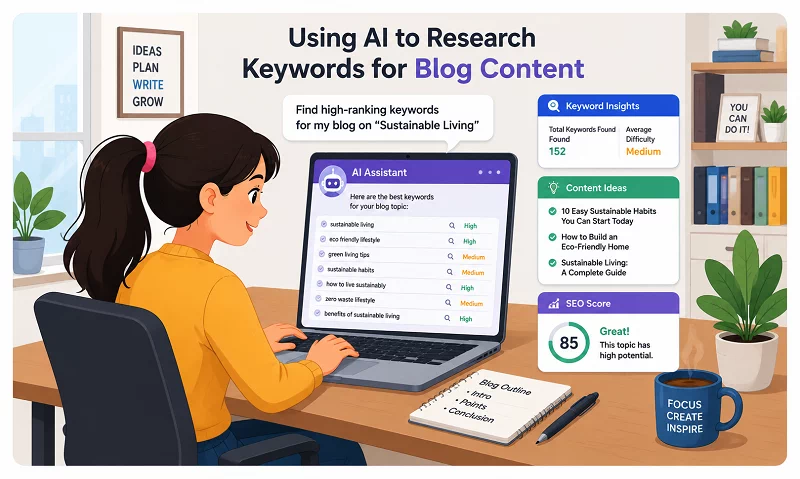

When you think about it, keyword research was once just a matter of opening up a tool, typing a very general topic, and then scrolling through a list of numbers, in the hope that something useful would come up. Sure, that method still works to some extent, but it misses an essential element — it tells you what people search, but not why they search for it. AI has completely transformed the game in that regard, and this is the reason why more and more website owners are now using AI tools for SEO keyword research instead of just volume-based tools.
The difference is not just speed, though that matters too. The real shift is in understanding intent. A traditional tool might tell you that “best WordPress plugins” gets ten thousand searches a month. It won’t tell you that majority of those searchers are after a free recommendation, a smaller portion of them want a comparison, while the tiniest portion is actually ready to pay for something premium. AI seo keyword research bridges that gap by analyzing context, not just numbers. This is the reason content created around AI-assisted research generally performs better in terms of conversion even if the raw search volume looks the same as what a traditional tool would have suggested.
Table of Contents
Why Traditional Keyword Tools Are Not Enough Anymore?
How AI Seo Keyword Research Actually Works in Practice?
The process starts the same way good research always has — with a real question, not a random topic. Instead of typing a broad seed keyword into a tool and hoping for inspiration, the more effective approach is starting with an actual question your audience has asked. Then using AI to map every variation of that question along with the intent behind each one.
From there, feeding existing performance data into an AI tool adds another layer of accuracy. If you already have a website with some search history, exporting your Search Console data and asking an AI tool to identify patterns — which keywords are close to ranking, which pages are getting visibility but no clicks, where the obvious content gaps are — turns raw analytics into a prioritized action plan rather than a static report nobody reads twice.
Semantic clustering is what comes next here, and honestly, the point where AI seo keyword research has left behind traditional techniques. Instead of viewing each keyword as a single focus, AI is able to visually represent the whole topic landscape of a subject, the main topic, all associated sub-topics, frequently asked questions, and the language used by different audience segments. Creating content based on that entire cluster, as opposed to a single phrase, will automatically include multiple keyword variations without the need to individually pursue each one.
The Best Free Options to Start With
You do not need a large budget to start doing this well. There are useful free AI tools available for those running small businesses and starting to enter content writing or SEO. As a content writer, I would like to recommend Claude AI, which has a strong capability to analyze Google Search Console data and helping you map out your next content clusters. It will not pull live search volume on its own, but its ability to understand context and group related ideas makes it an excellent thinking partner for shaping a keyword strategy before you ever touch a paid tool.
Google Gemini handles larger data sets more comfortably, which is useful when working with bigger exports from analytics platforms. Asking it to compare your existing content against a keyword list and flag gaps is a fast way to find what to write next. Perplexity AI deserves more attention than it usually gets in this conversation. Searching a topic there shows you exactly how an AI system answers that question and which sources it pulls from — useful not just for keyword ideas but for understanding what structure and phrasing tends to get cited by AI-driven search results.
And for anyone looking specifically for an ai keyword research tool free of cost that still ties directly to real performance data, Google Search Console is easy to overlook simply because it was not originally built as a keyword tool. But it shows exactly which terms your own website already appears for, including ones close to ranking that just need a small push. Combined with an AI tool to interpret the patterns, it becomes one of the most accurate and completely free research resources available.
Bringing It All Together
In fact, each tool does not work alone because there are many things behind the screen. Using AI looks simple on the surface—kind of like writing an essay with a pen. But a robust technique is a combination of a couple of the tools in a sequence of steps that can be repeated: gather actual performance figures, apply AI to detect patterns and intent, create a semantic map of a topic, and finally check everything with live search data before deciding on a content plan. When done regularly, this changes keyword research from an occasional guessing game to a continuous system that improves with each round.
There are lots of ai seo keyword research tools available on the internet and developers continue improving their performance and thinking level. Understanding what someone actually wants when they search a phrase will always matter more than the phrase itself. AI simply makes that understanding faster and more accessible than it has ever been before — which is exactly why it is worth building into any keyword research process going forward.