

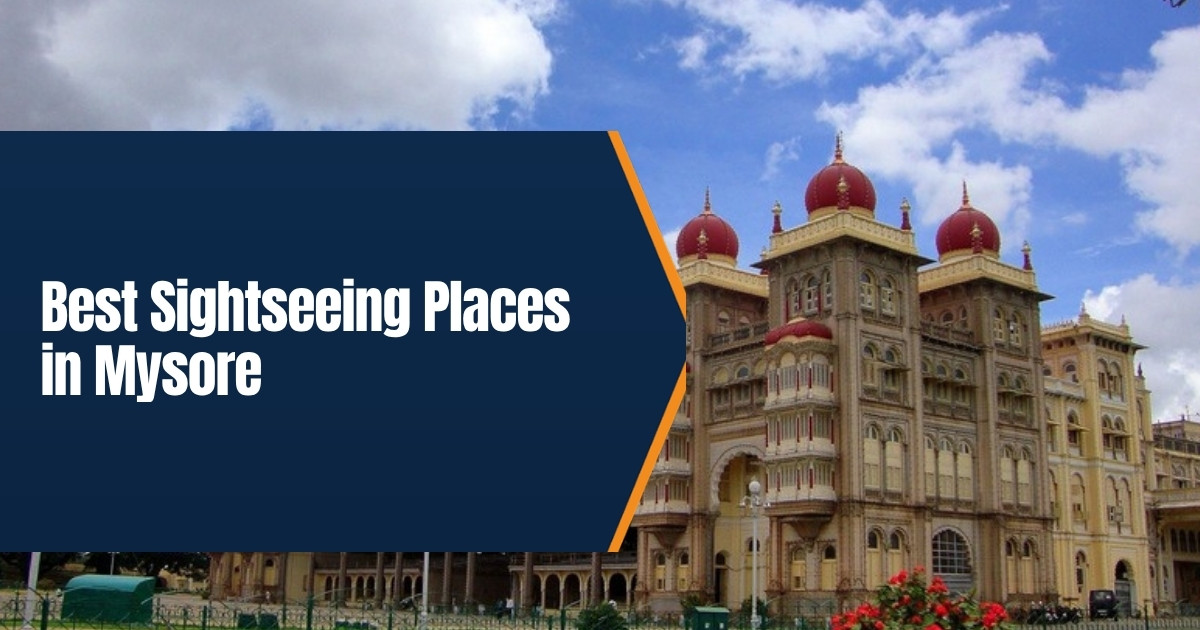
Best Sightseeing Places in Mysore
Mysore has this way of making you slow down. Between the palaces, the temples tucked into hillsides, and the general unhurried pace of the city, it’s one of those places in South India that people keep coming back to, year after year. If you’re putting together a trip and trying to figure out where to actually spend your time, this guide walks through the best places to visit in Mysore, based on what genuinely makes each spot worth the detour.
Whether you’ve got a couple of days or a full week, this should give you a solid sense of what belongs on your list and why.
Table of Contents
Sightseeing Places in Mysore
Mysore Palace
You can’t really talk about mysore tourist places without starting here. Sitting right in the heart of the city, Mysore Palace is the kind of landmark that shows up on postcards for a reason. It was the official residence of the Wadiyar dynasty, the royal family that ruled over Mysore for generations, and walking through it genuinely feels like stepping into a different era.
The architecture blends Hindu, Islamic, Gothic, and Rajput styles in a way that somehow works beautifully together, and if you can time your visit for a Sunday evening or a public holiday, the entire palace lights up with close to a hundred thousand bulbs after dark. It’s a sight that’s hard to describe properly until you’ve actually seen it in person.
Chamundeshwari Temple
Perched on top of Chamundi Hills, about 13 kilometers outside the main city, Chamundeshwari Temple holds serious spiritual weight for a lot of visitors. It’s considered one of the Shakti Peethas, a set of sites believed to be deeply sacred within Hindu tradition, and sitting at roughly a thousand feet above sea level, it also happens to offer some genuinely good views over the city below.
Even if temples aren’t usually your thing, the drive up the hill and the atmosphere at the top make this one worth including in your mysore sightseeing plans. Plenty of pilgrims make the climb on foot using the stone steps that wind up the hillside, though there’s a road for those who’d rather drive.
Ranganathaswamy Temple
Located in Srirangapatna, a short distance from the city, Ranganathaswamy Temple is built almost entirely from granite and stands out for its detailed stonework. It sits on an island formed by the Kaveri river, which gives the whole place a slightly different atmosphere compared to temples built on flat, open ground.
What’s interesting here is how the temple pulls in visitors across different faiths, not just Hindu devotees. With 21 tower gateways marking its structure, it’s genuinely one of the more visually striking religious sites in the region, and it pairs well with a half-day trip that also includes some of Srirangapatna’s other historical spots.
Lalitha Mahal
Built originally by one of Mysore’s former Maharajas, Lalitha Mahal has since been converted into a heritage hotel, which makes it a bit different from the other stops on this list. It sits close to Chamundi Hills and holds the title of being the second-largest palace structure in Mysore.
Even if you’re not booking a stay there, it’s worth walking through or grabbing a meal at the property just to take in the architecture and the grounds. There’s something about seeing a former royal residence still functioning as a working space, rather than sitting frozen as a museum piece, that makes the visit feel a little more alive.
Jaganmohan Palace
Jaganmohan Palace has had an interesting shift in purpose over the years. Originally built for the royal family and completed back in 1861, it now operates as an art gallery along with a function space, hosting exhibitions and cultural events rather than serving a royal household.
Among the various mysore attractions tied to the city’s palace history, this one tends to get overlooked in favor of the main Mysore Palace, but it’s genuinely worth carving out an hour for if you’re interested in art, architecture, or just seeing a different side of the city’s royal past.
St. Philomena’s Church
If you’re looking for something outside the usual temple-and-palace circuit, St. Philomena’s Church is worth the stop. It’s one of the oldest Catholic churches in the region and is often cited as one of the largest churches in Asia, which alone makes it stand out on a first visit.
The Gothic-style architecture, with its tall spires and detailed stained glass, gives the whole place a very different feel compared to the rest of the city’s landmarks. It’s a peaceful spot too, worth visiting even if you’re not particularly religious, just for the sheer scale and craftsmanship of the structure.
Talakadu
About 45 kilometers southeast of Mysore, Talakadu has a slightly different character compared to the more polished sites closer to the city. Sitting along the banks of the Kaveri river, this town is believed to have once housed around thirty temples, many of which are now buried beneath sand dunes that have shifted over centuries.
It’s a place tied to a fair bit of local legend and history, and the mix of pilgrimage significance with a slightly desert-like landscape makes it feel unlike anywhere else nearby. If you enjoy places with a bit of mystery attached to them, this one’s worth the drive.
Melukote
Also known as Thirunarayanapuram, Melukote sits about 51 kilometers from Mysore in the Mandya district and is centered around the Yoga-Narasimha Swamy Temple, built into rocky hills. It holds particular importance for followers of the Srivaishnava tradition and draws a steady stream of devotees throughout the year.
Beyond the religious significance, the temple’s architecture and the carvings found throughout the complex make it worth a visit even for people who are simply interested in historic craftsmanship rather than pilgrimage.
Bylakuppe
Bylakuppe stands out from everything else on this list simply because of how different it feels. It’s home to the second-largest Tibetan settlement outside Tibet itself, and the Namdroling Monastery here, often called the Golden Temple, is a genuinely striking sight with its vivid colors and Buddhist architecture.
The Mysore government allotted a substantial stretch of land here decades ago for Tibetan refugee families to settle, and today the town carries a distinctly different cultural atmosphere from the rest of the region. It’s a reminder that mysore tourism isn’t limited to royal history and Hindu temples alone.
Nanjangud
Sitting along the banks of the River Kapila, Nanjangud is sometimes referred to as Dakshina Kashi, drawing a comparison to the significance of Varanasi in the north. It’s known as a center tied to Shiva worship going back centuries, and it also happens to be famous locally for its bananas, of all things, which makes for a bit of an unexpected but pleasant local specialty to try while you’re there.
Planning Your Visit: How to Make the Most of Mysore
With this many spots spread across the city and its surroundings, it makes sense to group them by location rather than trying to see everything in one exhausting day. Mysore Palace, Jaganmohan Palace, and St. Philomena’s Church all sit within the city itself and can comfortably be covered together. Chamundeshwari Temple and Lalitha Mahal pair well since they’re both near Chamundi Hills. The farther-out spots like Talakadu, Melukote, Bylakuppe, and Nanjangud each deserve a half-day or more, so it’s worth picking one or two based on what interests you most rather than rushing through all of them.
Frequently Asked Questions
What is the best time of year to visit Mysore for sightseeing?
The months between October and March tend to offer the most comfortable weather, avoiding both the peak summer heat and the heaviest of the monsoon rains.
How many days should I plan for covering the major places to visit in Mysore?
Two to three days comfortably covers the city’s core landmarks, while a full week allows time to include the outlying spots like Talakadu, Melukote, and Bylakuppe as well.
Is Mysore Palace worth visiting during the evening light show?
Yes, especially on Sundays and public holidays when the palace is illuminated with thousands of lights after sunset, which is a very different experience from visiting during the day.
Are these tourist places in Mysore accessible by public transport?
Most of the sites within the city are easily reachable by auto-rickshaw or taxi, while the farther locations like Bylakuppe and Talakadu are more comfortably visited by hiring a car for the day.
Is Bylakuppe worth the trip if I’m short on time?
If your schedule allows even half a day extra, it’s a genuinely different cultural experience compared to the rest of Mysore’s attractions and is generally considered worth the detour.