

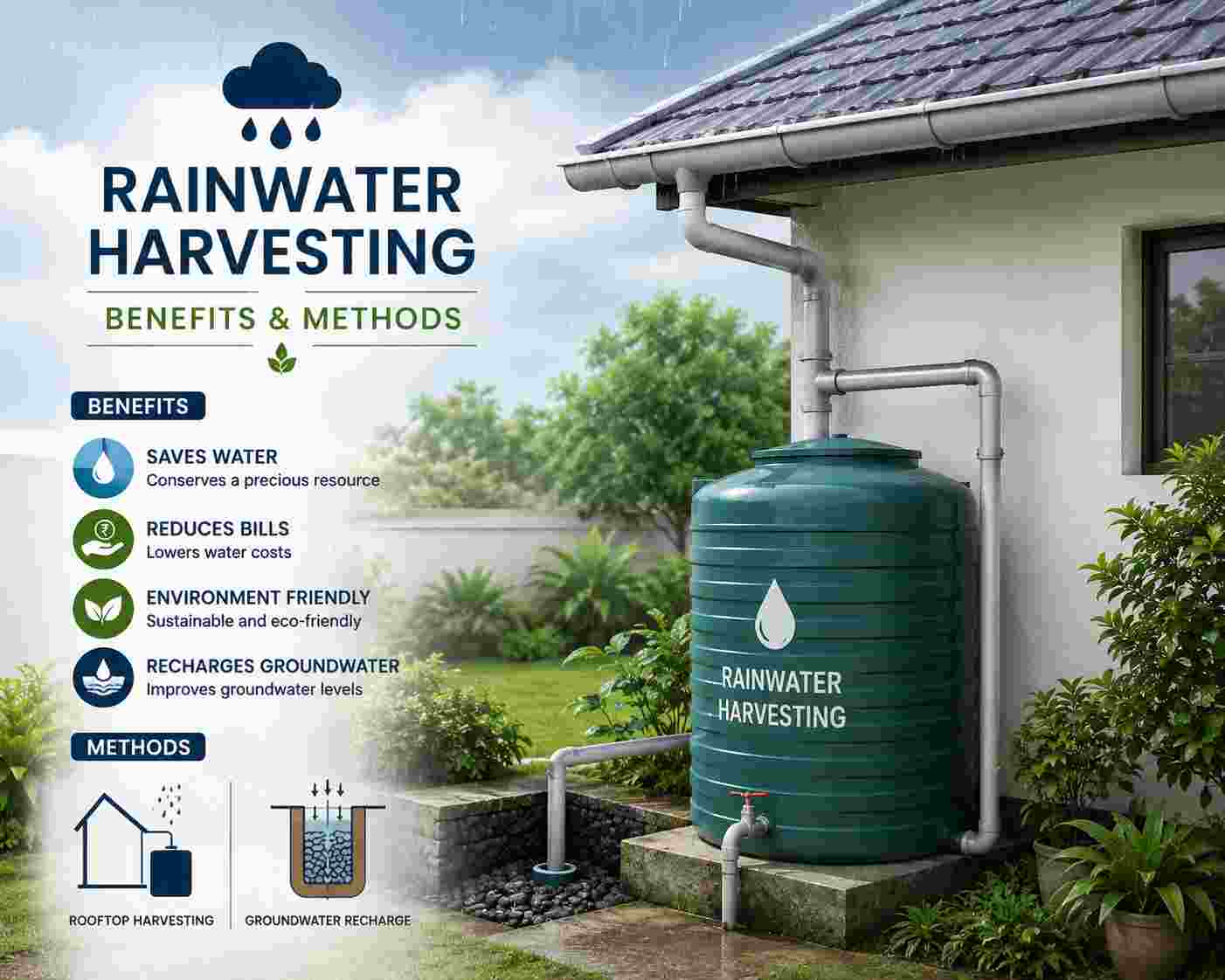
Rainwater Harvesting: Benefits and Methods
Every monsoon, India gets drenched. Rooftops, roads, fields, and parks absorb hours of heavy rain. Then the sun comes out, the water drains away, and three months later the same cities that were flooded start running dry.
That gap — between all the rain that fell and the water that’s actually available — is exactly what rainwater harvesting is designed to fix. And the frustrating part is that fixing it isn’t complicated. It’s just not being done at the scale it should be.
Communities across India figured this out centuries ago. The stepwells of Gujarat, the tanks of Tamil Nadu, the johads of Rajasthan were all rainwater harvesting systems before anyone coined the term. They worked brilliantly. Then they fell out of use. Now, with groundwater levels dropping and city taps running dry every April, it’s time to take this seriously again.
Table of Contents
So What Is Rainwater Harvesting?
At its simplest, rainwater harvesting means catching the rain before it runs away and storing it somewhere useful.
That could be a rooftop pipe directing water into a backyard tank. Or a pit in the ground letting rain seep back into the earth. Or a small dam across a stream holding water long enough for the ground to absorb it.
The principle is the same across all of these — work with the water already falling on you, rather than ignoring it and desperately digging deeper for groundwater later. That’s the core idea behind water conservation, and rainwater harvesting is the most direct way to practise it.
Why This Conversation Matters So Much Right Now
Chennai almost ran out of water in 2019. Bengaluru has been watching its lakes disappear for years. These aren’t isolated problems — they point to a national pattern.
The Central Ground Water Board has flagged falling water tables in Punjab, Haryana, Uttar Pradesh, and Karnataka. More people need more water. More concrete stops rain from soaking into the ground. And the old water management systems that communities relied on for centuries have been neglected or built over.
Rainwater harvesting doesn’t fix all of this alone. But a building that collects rainwater draws less from the municipal supply. A recharge pit sends water back underground. A check dam refills the wells of five nearby villages. Each of these things matters, and they add up fast.
Rainwater Harvesting Methods That Actually Work in India
There’s no one-size-fits-all system here. The right method depends on where you live, how much rain your area gets, and what you want to use the water for. Here are the main rainwater harvesting methods in use across India:
Rooftop Rainwater Harvesting
This is the one most urban households can actually do. Rain hits the roof, flows into gutters, travels down a pipe, and fills a storage tank underground or above ground. From there it goes to the garden, the toilet, the washing area, or after filtration — to the kitchen tap.
It doesn’t cost a fortune. A first-flush diverter sends the first dirty wash of roof water away from your tank, making everything that follows significantly cleaner. Most Indian states now legally require this for new buildings above a certain size. That alone tells you how important governments know it is.
This is one of the most immediate ways any homeowner can save water and cut dependence on the municipal supply.
Surface Runoff Harvesting
When it rains hard, huge amounts of water flow across roads, open ground, and paved areas. Surface runoff harvesting channels that flow into ponds, tanks, or reservoirs instead of letting it disappear into drains.
This works better at a community or municipal level than for individual homes. Many rural water management projects across India use this approach to fill agricultural ponds and community tanks that carry villages through the dry season.
Groundwater Recharge Pits
Not all harvested rainwater needs a tank. Sometimes the most useful thing is to send it back underground.
Recharge pits and trenches allow water to seep slowly into the soil and refill the water table that borewells and wells in the area draw from. Many housing societies now pair rooftop collection with recharge pits — using some water directly and letting the rest go back into the ground below. In cities where decades of concrete have blocked natural absorption, this matters enormously.
Check Dams and Percolation Tanks
A check dam is exactly what it sounds like — a small barrier built across a stream or seasonal drain to slow the water down. Instead of rushing through and being gone in hours, the water sits behind the dam and gradually seeps into the surrounding soil.
Check dams are one of the most cost-effective water management tools available in rural India. In villages across Rajasthan, Maharashtra, and Gujarat, a few well-placed check dams have turned chronically dry areas into places where wells hold water year-round. They don’t need electricity, complex machinery, or maintenance teams. They just work.
Underground Cisterns and Ferro-Cement Tanks
For households with long dry spells between rain, bigger storage makes sense. Ferro-cement tanks hold anywhere from 5,000 to over a lakh litres. Underground cisterns stay naturally cool, slowing bacterial growth and cutting evaporation. In tight urban plots, underground storage fits under a driveway or garden without eating into usable space.
What Rainwater Harvesting Actually Does for a Household
Let’s bring this down to the practical level, because that’s what most people actually want to know.
Here’s what a working rainwater harvesting methods delivers:
- Lower water bills — rain that you collect and use for toilets, washing, and gardening is rain you didn’t pay the municipality for
- Water when the taps stop — summer water cuts hit differently when you have a full storage tank as backup
- Healthier groundwater nearby — recharge pits don’t just help you; they refill the same water table that your neighbours, local parks, and nearby farms all depend on
- Less flooding during heavy rain — every litre you capture at source is one less litre rushing into already-overwhelmed storm drains
- Almost no upkeep — a basic rooftop system needs a filter clean and a tank check maybe twice a year; that’s genuinely it
Why More Homes Aren’t Doing This Yet
If rainwater harvesting is this practical, why isn’t every house in India already set up for it?
A lot of it comes down to people not knowing where to start. The assumption is that it’s complicated or expensive. It’s usually neither. A basic rooftop system for a medium-sized home can cost less than what many families spend on water tanker deliveries over three dry months.
For apartment residents, the decision sits with housing societies and builders — which is exactly why they need to be held to account more often. Good water management should be treated as a basic standard, not a premium add-on.
The rain already shows up every monsoon without fail. The only missing piece is the infrastructure to catch it.
Frequently Asked Questions
-
What is rainwater harvesting in simple words?
It means collecting rain when it falls, storing it in a tank or pit, and using it instead of letting it drain away. It’s one of the most practical ways to save water at home or in a community.
-
Is rainwater harvesting mandatory in India?
Yes, in many states it is. Tamil Nadu, Karnataka, Rajasthan, Delhi, and Maharashtra all have rules requiring it for new buildings above certain sizes. Check with your local municipal authority for what applies in your area.
-
Which rainwater harvesting method works best for a home?
Rooftop collection into a storage tank is the most practical for homes. Add a first-flush diverter and a basic filter and you have a system that works well with very little effort.
-
Can collected rainwater be used for drinking?
Yes, but only after proper filtration and treatment — a filter plus UV purification or boiling. Without treatment, stick to non-drinking uses like gardening, flushing, and washing.
-
How does rainwater harvesting actually help with water conservation?
It reduces how much water you pull from the municipal supply and from groundwater. When collected water is directed into recharge pits, it also refills the water table. Every litre you catch is one less litre taken from a source that’s already under pressure.