

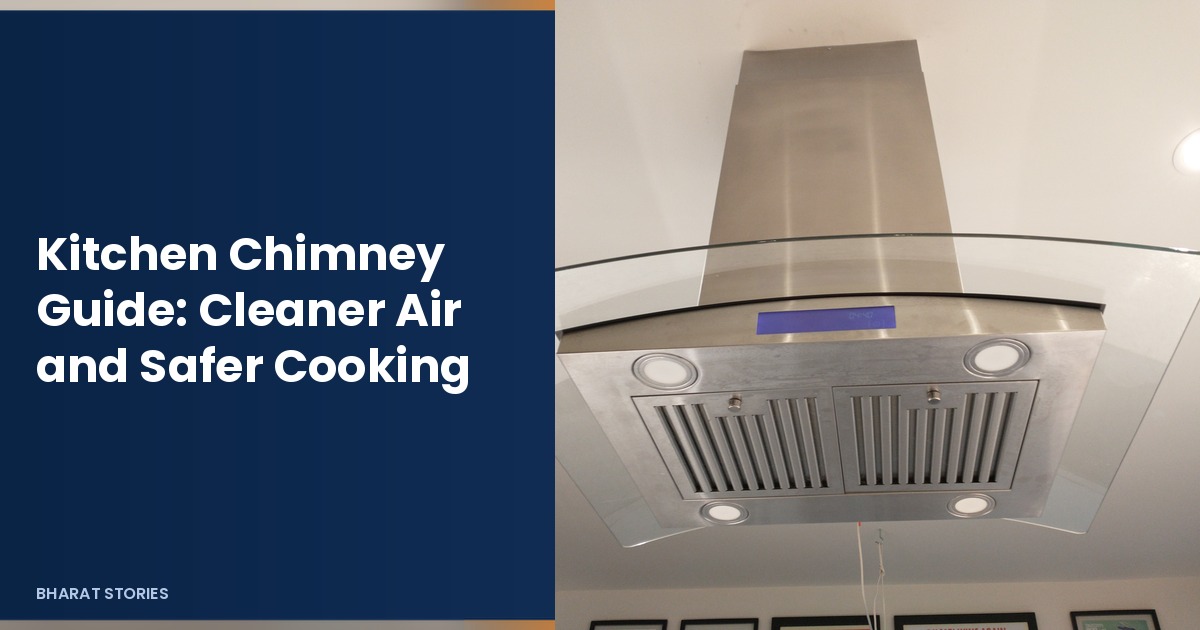

A kitchen chimney, also called an exhaust hood or cooker hood, sits above the hob and pulls smoke, steam and grease away while you cook. In many Indian homes that fry spices in hot oil every day, that job matters more than people first think. Grease that settles on walls and cupboards is only the visible part. Fine particles and cooking gases can hang in the air of a closed kitchen and spread into the rest of the flat.
This updated guide explains what a kitchen chimney does, how ducted and ductless models differ, how to choose a size that fits your hob, and how to clean and maintain the unit. It is a practical home guide, not a sales pitch for any brand. For wider tips on a healthier house, see our piece on how to make a house a green home.
Table of Contents
Kitchen Chimney at a Glance
| Item | Detail |
|---|---|
| Main job | Capture smoke, steam and grease at the hob |
| Ducted type | Vents air outdoors through a pipe; usually stronger |
| Ductless type | Filters and recirculates air; easier to fit in flats |
| Key parts | Hood canopy, blower or motor, grease filters, lights |
| Care need | Wash or replace filters; keep ducts clear |
| Safety note | Grease build up is a fire risk if ignored |
Why Kitchen Air Quality Matters
Frying, roasting and high flame cooking release tiny particles and gases into the room. Without good ventilation, those particles stay indoors, especially in tightly sealed modern flats. People with asthma or other breathing problems may notice irritation more quickly. Even healthy cooks often feel eyes sting and clothes smell of oil after a long session at the hob.
Opening a window helps, but it does not capture grease at the source. A chimney that sits over the burners pulls the plume upward before it spreads. That keeps walls, tiles and curtains cleaner and reduces the film of sticky oil that can also attract insects. Our guide to unexpected places pests hide at home shows how grease and food residue invite trouble far from the stove.
Ducted Versus Ductless Chimneys
Ducted (vented) hoods
A ducted chimney pushes air through a pipe to the outside. Pollutants leave the building instead of cycling back in. This is usually the better choice when an outside wall or roof duct is available. The trade off is that ducting must be planned during kitchen design or renovation, and long or bent ducts cut suction.
Ductless (recirculating) hoods
A ductless unit draws air through grease filters and often a charcoal filter, then returns the air to the room. It is popular in rented flats and towers where drilling an outdoor vent is hard. It reduces grease and some smells but does not remove heat, moisture or gases as well as a ducted system. Charcoal filters need regular replacement or the unit loses much of its value.
How to Choose a Kitchen Chimney
Match the hood to the hob
The canopy should be at least as wide as the cooktop, and slightly wider is better. A hood that is too small lets smoke escape around the edges. Depth matters too: the front of the hood should reach toward the front burners where pans often sit.
Suction and noise
Makers rate suction in cubic metres per hour. Higher numbers move more air, but a poorly ducted strong motor can still underperform, and loud blowers make cooking less pleasant. Look for a speed setting you can live with for everyday tadka, not only the peak figure on the box.
Filter type
Baffle filters of stainless steel handle heavy Indian frying well and can be washed. Mesh filters are lighter and cheaper but clog faster. Cassette or charcoal packs are for odour in ductless setups. Pick a design you can remove and clean without special tools.
Auto clean and other features
Some chimneys heat and drain collected oil into a tray (often marketed as auto clean). That reduces manual scrubbing of the blower area but does not remove the need to wash grease filters. Touch panels, motion sensors and LED lights are comfort features; judge them after suction, size and cleanability.
Installation Height and Placement
Follow the height range in the product manual. Many gas hob guides place the lower edge of the hood roughly 65 to 75 cm above the burners so the unit catches the plume without sitting in open flame. Electric hobs sometimes allow a slightly lower mount. Leave clear space for cabinet doors and keep the duct path as short and straight as you can.
Electrical work should be done by a qualified person. Chimneys draw meaningful current when the motor runs at full speed, and a weak socket or loose earth is a safety issue. If you rent, confirm with the society or landlord before cutting an outdoor vent.
Cleaning and Fire Safety
Grease that coats filters and ducts can ignite if a flame or very hot spark reaches it. Wash metal grease filters in hot soapy water on a schedule that matches how often you deep fry. Wipe the canopy and controls so oil does not build into a sticky layer. For ducted systems, ask a service technician to check the duct if suction falls sharply or if you smell smoke when the motor is off.
Commercial kitchens face the same grease problem at larger scale; our note on why commercial pest control matters sits beside the wider hygiene picture of busy cooking spaces.
When a Chimney Helps Most
Homes that fry daily, use high flame for wok style cooking, or have an open kitchen next to the living room gain the most. A studio flat with a tiny induction pad and mostly boiling may manage with a strong window fan, though a compact hood still helps with smells. If someone at home has a breathing condition, better capture at the hob is worth planning early in a renovation.
A chimney is not a magic fix for poor kitchen layout. Combine it with a working window or fresh air path so the blower has air to pull, and keep lids on pans when a full rolling boil is not needed. Small habits cut the load on any hood.
Choosing Between Brands and Local Service
Brand names matter less than spare filters, service centres near you and a clear warranty. Ask the dealer how long baffle filters stay in stock and what a motor replacement costs after the warranty ends. A slightly simpler hood with easy cleaning often beats a feature heavy unit that needs special tools.
Measure your kitchen ceiling height and cabinet layout before you order. Island chimneys need ceiling duct routes that many flats do not have. Wall mounted units are the usual fit for Indian modular kitchens. If your hob sits under a loft tank or beam, confirm that the hood will still meet the maker’s height range.
Noise matters in open kitchens that face a living room. Listen to a demo at medium speed, which is the setting you will use most for daily cooking, not only the quiet claim on the brochure. Vibration from a poorly mounted body can add rattle even when the motor itself is fine.
Budget for installation extras: duct pipes, elbows, outdoor cowls, electrical points and carpenter time to cut cabinets. The sticker price of the hood alone understates the full project cost. Keep the invoice and serial number for warranty claims.
Frequently Asked Questions
Is a kitchen chimney necessary in every Indian home?
Not in every case, but it is a strong help wherever frying and high heat cooking are common, especially in closed flats. Ducted units give the clearest benefit when outdoor venting is possible.
Is a ductless chimney useless?
No. It can cut grease and some odours when you cannot vent outside, but you must replace charcoal filters on time and keep expectations realistic about smoke and humidity.
How often should I clean the filters?
For heavy frying, check metal filters every few weeks and wash when they look coated. Light cooking may allow longer gaps. If suction drops, clean sooner.
Can a dirty chimney cause a fire?
Grease build up in filters and ducts raises fire risk. Regular cleaning and professional duct checks lower that risk.
What size chimney do I need?
At least as wide as your hob, with enough rated airflow for your cooking style and a duct path that is not long or full of sharp bends.
Keep the chimney lights working so you can see the colour of food and any oil splatters on the hob.
If you share a kitchen duct with neighbours in an apartment stack, follow society rules on venting and noise.
Steel baffle filters often go in the dishwasher; confirm that your model allows it before you try.