

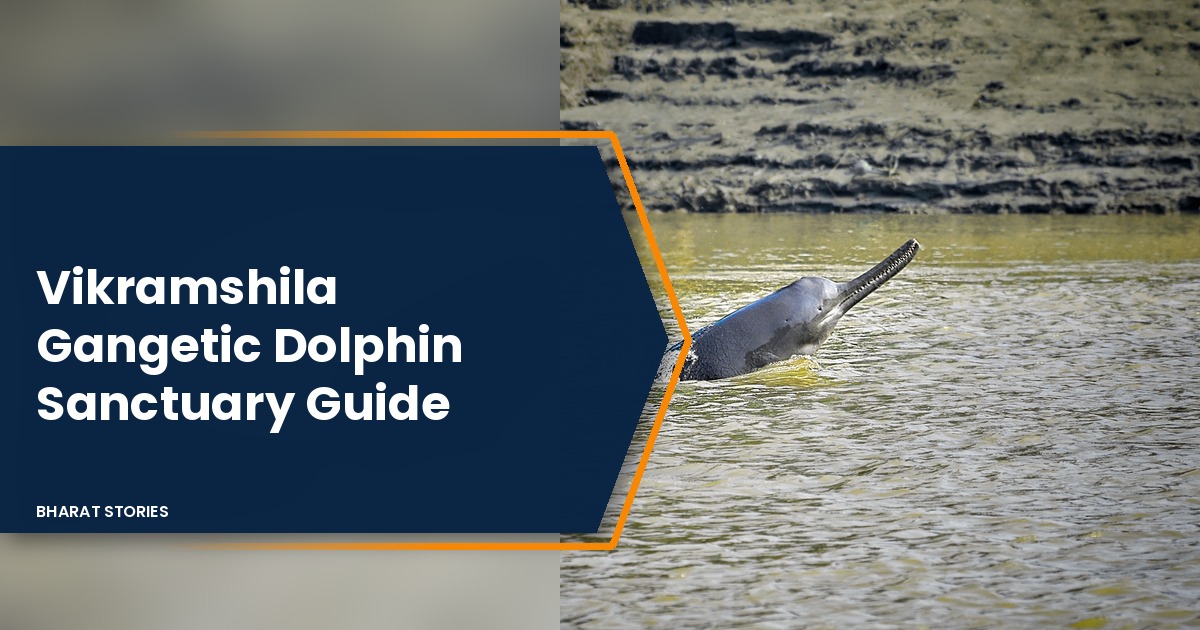
Vikramshila Gangetic Dolphin Sanctuary Guide
The Vikramshila Gangetic Dolphin Sanctuary protects a stretch of the Ganga in Bihar where the endangered Gangetic river dolphin still lives. The animal is India’s national aquatic animal, known locally as the susu, and it hunts with sound in muddy water rather than with sharp eyesight. Seeing one break the surface is a rare gift, not a guaranteed safari moment like a film scene.
This rewritten guide covers where the sanctuary sits, why the dolphin matters, and how visitors can watch wildlife without adding stress to an already pressured river. Compare it with other protected waters and forests on our site, such as Bhitarkanika National Park and Bandipur National Park.
Table of Contents
Vikramshila Sanctuary at a Glance
| Item | Detail |
|---|---|
| Location | Bhagalpur region, Bihar, along the Ganga |
| Flagship species | Gangetic river dolphin (Platanista gangetica) |
| Habitat | Deep river channels, meanders and related wetlands |
| Visitor style | Boat based watching with local guides; no chasing |
| Main threats | Pollution, dams and barrages, nets, traffic, sand mining |
Where the Sanctuary Is
The sanctuary covers about 60 kilometres of the Ganga in Bhagalpur district, from Sultanganj downstream to Kahalgaon, where three rocky hillocks stand in the river. Bihar notified it under the Wildlife (Protection) Act in 1991, and it remains the only protected area in India created specifically for the Gangetic dolphin. Some older sources give the length as 50 kilometres, a reminder that a meandering river is hard to measure. There is no single gate or ticket booth. Depth, current and seasonal water levels decide where dolphins feed from week to week, and monsoon floods rearrange sandbars so thoroughly that safe access can vanish for days.
Towns along the bank serve as staging points for guides and boats. Confirm current permissions with forest or local tourism offices before you travel, because rules change with water level and conservation needs. Do not assume a private motorboat hired from any ghat is allowed inside sensitive stretches.
The wider Ganga basin links farms, cities, industries and pilgrimage routes. What drains into the river upstream still reaches dolphin habitat downstream. Sanctuary lines on a map cannot block plastic, chemical waste or excess silt by themselves. Visitors who understand that wider picture tend to treat the trip as more than a photo errand.
Local fishers know the deep pools and bends where animals surface more often. Their knowledge, when paired with science surveys, gives a fuller picture than either source alone. Respectful questions help; demands for guaranteed sightings do not.
The Gangetic River Dolphin
Gangetic dolphins are functionally blind for hunting purposes and rely on echolocation clicks to find prey in cloudy water. They prefer deeper channels and are often seen alone or in small groups. A brief surfacing for breath is easy to miss if you expect the long leaps of ocean dolphins shown in films and advertisements.
They are sensitive to engine noise and to fishing nets that can entangle them. Certain gear in dolphin zones creates deadly traps. Conservation programmes work with fishing communities on gear changes and awareness because bans that ignore livelihoods tend to fail within a season.
Counts of the species across the Ganga and Brahmaputra systems have been worrying for years. Exact numbers shift with survey methods and river conditions, but the direction of concern is clear: habitat quality and river connectivity must improve if the susu is to hold on in Bihar and beyond.
Myth and folklore along the river sometimes treat the dolphin as a sign of a living, healthy stream. That cultural respect can support protection when local leaders and schools are involved, not only when outsiders arrive with long lenses for a weekend.
Calves stay close to adults and need quiet water to learn hunting skills. Repeated boat pressure in the same pool can push animals into poorer habitat. Guides who rotate routes and keep distance are doing conservation work even when they never use that word.
Other Wildlife on This Stretch
Dolphins are not the only reason to carry binoculars. The Wildlife Institute of India records the smooth coated otter, the gharial and several freshwater turtles here, and the Bombay Natural History Society lists the sanctuary as an Important Bird Area. Sandbars between Sultanganj and Bhagalpur hold breeding colonies of the Indian skimmer, a striking black and white bird that slices the water with its lower bill. Birders also watch for Pallas’s fish eagle and for greater and lesser adjutant storks. A guide who knows the birds turns a slow dolphin morning into a full day on the river.
Visiting Responsibly
Hire authorised local boatmen who know where to idle without cutting across animals. Keep engines at low disturbance speeds when dolphins are near. Never lean out to splash, call loudly, or force a closer look for a photo. Binoculars beat a chase every time.
Carry drinking water and sun protection; river days are bright and long. Wear a life jacket when provided. Soft shoes help on wet decks. Leave plastic sachets and bottles in shore bins, not in the current where they travel for kilometres.
If you travel with children, explain silence and stillness before the boat leaves the ghat. Excitement is natural; shouting and sudden runs across the deck scare wildlife and risk falls. A short briefing from the guide should be part of the ticket price, not an optional extra you have to demand.
Photography works best with patience. Shoot from a stable seated position. Avoid drones unless you have explicit written permission; many protected areas restrict them because noise and crash risk harm animals and other visitors.
Pay the posted fees and ask for a receipt. Bargaining that pressures a guide to break distance rules is not a win. Tip for careful, quiet conduct rather than for reckless closeness.
Threats and Conservation Work
Barrages and dams change flow and can split populations so animals cannot move freely between feeding areas. Heavy traffic and sand mining disturb channels. Agricultural runoff and urban sewage lower water quality. Entanglement in fishing gear remains a direct killer in many stretches.
Forest departments, researchers and local groups run surveys, rescue responses and school outreach. Support operators who follow rules rather than those who promise guaranteed sightings. Guaranteed wildlife is usually a sign of pressure on the animal or a sales line that cannot be kept.
As a visitor, your highest impact actions are simple: obey distance norms, refuse to buy illegal wildlife products, and share accurate information instead of dramatic rumours on social media. Donations, when you give them, should go through known local institutions, not anonymous cash collectors at the ghat.
The Gangetic dolphin was declared India’s national aquatic animal in October 2009. It is listed as Endangered by the IUCN and protected under Schedule I of the Wildlife (Protection) Act, the highest level of legal cover. The Centre announced Project Dolphin in 2020 to fund river and marine dolphin conservation, and 5 October is now observed as National Dolphin Day. Field results still depend on staffing, money and the trust of fishing families who share the river.
Planning the Trip in Practice
Bhagalpur Junction has direct trains from Patna, Kolkata and Delhi, and both Sultanganj and Kahalgaon sit on the same rail line, which makes either end of the sanctuary reachable. Patna has the nearest large airport, several hours away by road. Bihar Tourism suggests October to June as the visiting season; many guides prefer the drier months after the monsoon, when the channel narrows and surfacing animals are easier to spot. Keep a buffer day for winter fog or high water, and start early because mornings on the river are cooler and calmer.
Carry cash for small local fees where digital payments fail. Keep a copy of ID as required for protected area entry. Ask about life jackets and first aid before you step aboard. Keep voices low near the water; sound travels far across an open channel.
If a dolphin surfaces nearby, stay seated and let the guide decide whether to idle or move. Note the boat registration number in your phone in case you need to report unsafe conduct later. Share photos that show distance and respect, not cropped images that imply you touched the animal.
If you see a stranded or injured dolphin, call the contact your guide names rather than crowding the bank. Pack a dry bag for phones; one splash has ended more trips than rough water ever did.
Frequently Asked Questions
Will I definitely see a dolphin?
No. Sightings depend on season, water level and luck. Enjoy the river landscape even if the susu stays hidden that day.
Is swimming allowed in the sanctuary?
Follow local orders. Currents are strong, and swimming can disturb animals and put people at risk. Boat based watching is the usual model.
Can I feed the dolphins?
No. Feeding wild river dolphins is harmful and must not be done.
What should I wear?
Light long sleeves, a hat, non slip shoes and a life jacket on the boat. Carry water and sun cream.
Are children allowed on the boats?
Often yes, with life jackets and close adult supervision. Ask the operator about age and weather limits before you book.