

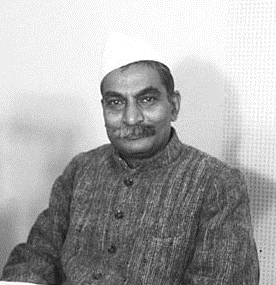
Rajendra Prasad Biography
Table of Contents
About Rajendra Prasad
The Dr. Rajendra Prasad biography narrates the life of a scholar, freedom fighter, and statesman who became the first President of the Indian state. He was one of the most esteemed leaders in Indian independence, who was honest, calm, and deeply devoted to national service.
His life is a potent historical background to the readers who wish to know what the Presidents of India went through. The leadership he showed while serving the Constituent Assembly of India also influenced the democratic setup that the nation adheres to in the present.
This information is articulately and educatively presented in this article in easy language to enhance a better understanding of his life, works, and legacy.
Childhood and Family History
Rajendra Prasad was born on 3rd December 1884 in a village called Zeradei, Bihar. He was born in a traditional and reputable family. His father, Mahadev Sahai, was a Persian and Sanskrit scholar and his mother, Kamleshwari Devi, was a very religious person.
During his young age, He learned:
- Persian and Hindi.
- Local teacher-administered arithmetic.
- Family acquired moral values.
He began his education when he was at home where he joined formal school. However, at the beginning of school, it hit teachers as he had a good memory and was disciplined. This has been proven in the Dr. Rajendra Prasad biography in which his strengths during childhood have been targeted to form his future success.
Academic Excellence and Legal Career
Rajendra Prasad majored further at the University of Calcutta. He was successful on the entrance test and was awarded a scholarship of 30 a month, which was huge then.
He grew up as a successful lawyer who proceeded to learn law. His academic journey showed:
- Deep interest in learning
- Consistent hard work
- Strong analytical thinking
He had had an excellent career as a lawyer in Bihar before politics. However, it was the national movement that was on the rise gradually and lured him into the political scene. Going by the biography of Dr. Rajendra Prasad, education and law had also helped him to develop logical thinking, which would in the future help the Constituent Assembly of India.
Influence of Mahatma Gandhi and Freedom Struggle
The life of Rajendra Prasad was transformed after the interaction with Mahatma Gandhi. Gandhi had been strongly swayed by his message of truth, simplicity, and non-violence. He is an individual who decided to leave his cozy life and help the national movement.
He was also an active player in great movements like:
- Non-Cooperation Movement.
- The Salt Satyagraha
- Civil Disobedience movements.
He served a number of times in prison because of the cause. Rajendra Prasad was a leader who believed in service and had a balanced management approach among many other Indian independence leaders.
He also managed the relief effort during the natural disasters in Bihar. Through his actions, it has been demonstrated that he was not only concerned with the freedom of his politics but also with social welfare.
This was leadership in the Indian National Congress
Rajendra Prasad served as the president of the Indian National Congress during the period of 1939-1943. These were dark days, especially the ones during World War II and the Quit India Movement.
His responsibilities were the following:
- Delegating and keeping the various members of a party together.
- Advocating ideas of Gandhianism.
- Ensuring the freedom movement is organized.
Holding a political position as one of the leaders of Indian independence, he became politically credible among political quarters. His leadership approach is very relaxed and has endowed him with the power to handle complex circumstances.
The biography of the Dr. goes on to explain that the Dr. was able to cope with his role without experiencing the necessity to possess power.
Constituent Assembly of India President
His most historic post was serving as the President of the Constituent Assembly of India. This Assembly was established to write the Constitution of India after 1947, after gaining independence.
Rajendra Prasad saw to it as the President of the Assembly:
- Finding order in argumentation amongst members.
- Equal chances of conflicting views.
- Civil debate of worthy cases.
It took time and lots of thorough comprehension to write the Constitution. The Constituent Assembly of India was comprised of leaders with different backgrounds, and handling such talks needed a momentous leadership.
The Assembly had a successful work thanks to his legal expertise and relaxed character. The Dr. Rajendra Prasad biography reveals that he was at the center of the foundation of Indian democracy.
Becoming the First President of India
On January 26, 1950, India became a Republic. Rajendra Prasad swore the oath of the President of India that day.
The concept of his election was historic. Being the first President of India, he provided an example to observe constitutional conduct and dignity. He was the longest serving President of India, serving from 1950 to 1962.
His priorities during his rule included:
- With respect to the Constitution.
- Staying nonpartisan politically.
- Promoting democratic institutions.
According to him, the role of the President was to defend constitutional values and not to meddle in the day-to-day administration. It was a strategy that influenced the operations of subsequent Presidents of India.
Intangible Well-Being and Personal Style
Nevertheless, Rajendra Prasad was a simple person, though in the highest office. He cut personal amenities to a minimum and held in self-denial.
His character was known for:
- Humility
- Patience
- Dedication to service
He was very accessible and down-to-earth, even as the first President of India. The Dr. Rajendra Prasad biography demonstrates that being a leader does not offer luxury; it offers character.
His personal simplicity is popularly enjoyed among all the Presidents of India.
Bharat Ratna and Final Years
In 1962, he left public office after having served two full terms. He was also awarded the Bharat Ratna, the highest civilian award that India offers, in the same year.
This award has identified his contribution as follows:
- This is one of the most prominent Indian independence leaders.
- The power behind the Constituent Assembly of India.
- The President of India in His glory.
He retired to spend the rest of his life in Patna, leading a life that was not full of politics. He passed away on February 28, 1963.
Why His Biography is Still Important Nowadays
The Dr. Rajendra Prasad biography has not lost its relevance to the students, scholars, and citizens. His experience instructs him in life:
- Good education instills confidence.
- Integrity is needed in the service to the people.
- Being a leader requires a lot of patience.
He still has an impact on governance through his work at the Constituent Assembly of India. His example as the first President of India determines how other Presidents of India work.
When individuals read the history of the Indian independence leaders, the name of Rajendra Prasad comes up as a result of his disciplined and consistent service.
Frequently Asked Questions (FAQs)
What was unique about Dr. Rajendra Prasad as a leader of Indian independence?
He was composed, military, and very dedicated to service. He was modest and plain even when assuming the first Presidency of India, which made him a permanent respectable man.
What was his major contribution to the Constituent Assembly of India?
He was the President of the Constituent Assembly of India, so whenever debates were being held, he made sure they were fair and well-organized during the process of drafting the Constitution.
What was his stint as the first president of India?
He concentrated on the defense of the Constitution and non-involvement in politics. His actions set standards for the future Indian Presidents.
Why not read the biography of Dr. Rajendra Prasad?
The biography of Dr. Rajendra Prasad shows that great responsibility and respect could be caused by honesty, education, and devotion to the country.