

Madhav National Park: Shivpuri Tiger Reserve Travel Guide
Madhav National Park near Shivpuri in northern Madhya Pradesh is one of India’s older national parks, a former royal hunting ground of the Scindias that became the country’s 58th tiger reserve in March 2025. Its dry deciduous forest, two large lakes full of mugger crocodiles and a castle built for a British king give it a character quite unlike the big central Indian tiger parks. It is also an easy trip from Gwalior.
Here is what to know about the park’s history, its new tiger reserve status, the Sakhya Sagar wetland, wildlife, the best time to visit and how to get there.
Table of Contents
Where Is Madhav National Park?
Madhav National Park lies in Shivpuri district of the Gwalior division in north western Madhya Pradesh, on the edge of Shivpuri town. It sits on the upper Vindhyan hills, part of the northern fringe of the Central Highlands.
Two national highways pass through the park, the old Gwalior to Mumbai National Highway 3 and the Jhansi to Shivpuri National Highway 27, according to its Wikipedia page. The landscape mixes forested hills with flat grasslands around the lakes, and average rainfall is about 816 mm.
Is Madhav National Park Shared Between Madhya Pradesh and Rajasthan?
No. The park lies entirely within Madhya Pradesh, although Shivpuri district is close to the Rajasthan border.
What Is the History of Madhav National Park?
The forests of Shivpuri were a royal hunting reserve for Mughal emperors, the Scindias of Gwalior and British officials before becoming a national park in the late 1950s.
- 16th century onwards: the dense forests of Sipri, later Shivpuri, served as hunting grounds for Mughal emperors and, later, Rajput and Gwalior royals and British viceroys.
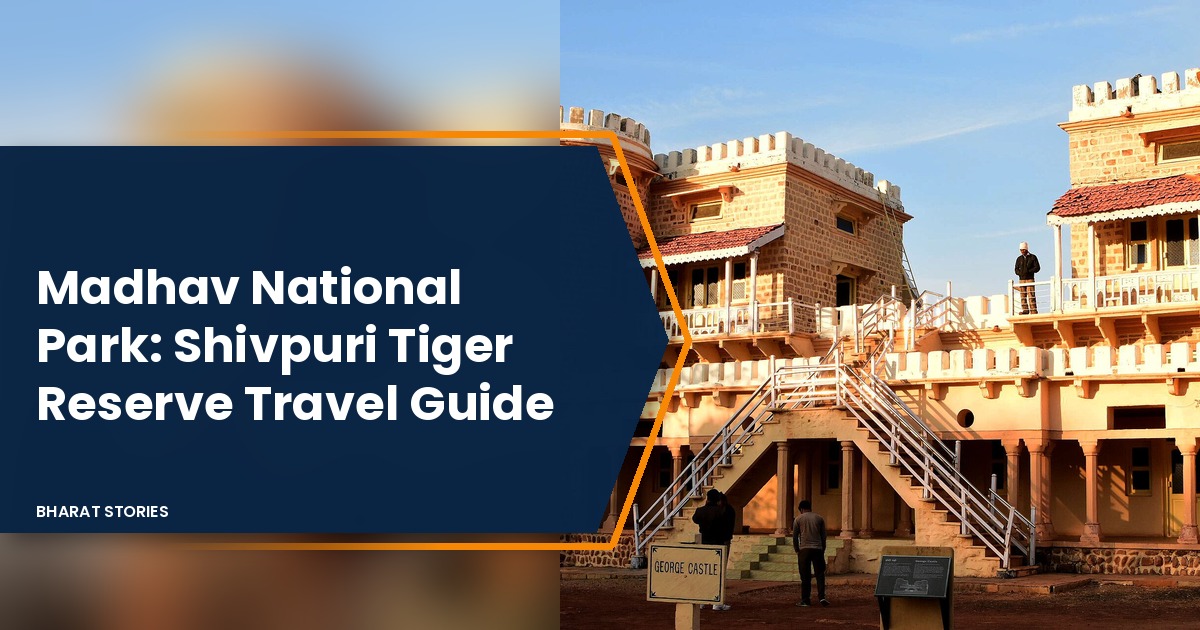
- 1911: George Castle was built at about 484 metres for King George V, who intended to stay there during his visit to India.
- 1956: the area was notified as Shivpuri National Park, covering 167 sq km.
- 1958 to 1959: it was renamed Madhav National Park after Madho Rao Scindia, the Maharaja of Gwalior.
- Late 1970s: the last resident wild tigers were seen.
- 1998: after conservationists went to the Supreme Court, an injunction ended mining inside the park.
- 2022: Sakhya Sagar lake was designated a Ramsar site.
- March 2025: the park became Madhav Tiger Reserve.
Is Madhav National Park a Tiger Reserve?
Yes. Madhav National Park was declared India’s 58th tiger reserve in March 2025, the ninth in Madhya Pradesh. The Union Environment Ministry’s notification, dated 7 March 2025, made the national park the core area of the new Madhav Tiger Reserve, and Union Environment Minister Bhupender Yadav announced it on 9 March, as reported by The Hindu.
Tigers had disappeared from Madhav decades ago. They have been brought back through translocation, and at the time of the announcement the reserve held five tigers, including two cubs born there, with more releases planned. In December 2024, a technical committee of the National Tiger Conservation Authority had recommended a reserve of about 1,751 sq km with a core of about 375 sq km and the rest as buffer.
Madhya Pradesh now has more tiger reserves than any other state, including famous names like Kanha National Park and Bandhavgarh National Park.
What Is Sakhya Sagar Lake Known For?
Sakhya Sagar is the largest water body in the park, a reservoir built for the Scindia rulers, and a Ramsar wetland of international importance since 2022. It is the best place in the park to see mugger crocodiles basking on the banks.
The lake attracts migratory waterfowl in winter, along with resident herons, storks, cormorants and kingfishers. A second reservoir, Madhav Sagar, was created by damming the Manihar River. Together the lakes keep water in the park through the dry months and support turtles, fish and the animals that come down to drink.
Which River Flows Through Madhav National Park?
The Manihar River runs through the park and feeds Madhav Sagar. Sakhya Sagar and several smaller ponds hold most of the park’s water.
What Wildlife Can You See in Madhav National Park?
Expect antelope and deer in good numbers, mugger crocodiles in the lakes, and with luck a leopard, jackal or, now, a tiger. The forest belongs to the Khathiar and Gir dry deciduous forest ecoregion, with open woodland and grassland that make spotting animals easier than in dense jungle.
| Group | Species to look for |
|---|---|
| Antelope and deer | Nilgai, chinkara, chousingha (four horned antelope), chital, sambar, barking deer |
| Predators | Tiger (reintroduced), leopard, jackal, Indian fox, wolf |
| Other mammals | Wild boar, porcupine, langur |
| Reptiles | Mugger crocodile, Indian rock python, monitor lizard |
| Birds | Waterfowl on the lakes in winter, painted storks, peafowl, raptors; vultures have also been photographed here |
For a wider picture of Indian species, read our guide to the best wildlife sanctuaries in India.
What Are the Main Attractions Inside the Park?
George Castle, Sakhya Sagar and its old sailing club, Madhav Sagar and the drives through the grasslands are the highlights.
- George Castle: perched on a high point of the park, it offers sweeping views over the forest and Sakhya Sagar, especially at sunset.
- Sakhya Sagar Sailing Club: a lakeside building from the princely era, with views across the water.
- Madhav Sagar: quieter, with good birding along the edges.
- Shivpuri town: the marble cenotaphs (chhatris) of the Scindia rulers are a short drive away.
What Challenges Does the Park Face?
Highway traffic, past mining damage and pressure from surrounding villages are the main conservation concerns. Two busy national highways cut through the forest, which raises the risk of road kills and splits animal movement. Years of mining before the 1998 court order scarred parts of the landscape, and grazing and wood collection continue on the edges. Tiger reserve status brings more funding, staff and monitoring, and the buffer zone is meant to give the returning tigers room to move while involving local communities.
Tips for a Better Visit
- Book an early morning slot; animals are most active in the first hours after sunrise.
- Carry binoculars for birds on Sakhya Sagar and a zoom lens for crocodiles.
- Wear muted colours, keep noise down and never feed or approach animals.
- Do not stop on the highways inside the park to watch wildlife.
Is Madhav National Park Worth Visiting?
Yes, especially if you want an uncrowded wildlife and heritage trip, enjoy birding and crocodile watching, or are already visiting Gwalior. It is not the place for guaranteed tiger sightings, but the mix of lakes, castle views and easy access makes it a rewarding half day or full day outing.
When Is the Best Time to Visit Madhav National Park?
October to March is the most pleasant period, with cool weather and migratory birds on the lakes. Summers in this part of Madhya Pradesh are very hot, while the monsoon makes some forest tracks muddy. Opening dates, safari slots and fees are set by the Madhya Pradesh Forest Department and change from season to season, so confirm them before you travel.
How Much Does a Ticket Cost?
Entry and vehicle charges differ for Indian and foreign visitors and for private and park vehicles. Because rates are revised, check the official Madhav Tiger Reserve or MP Forest Department booking page instead of relying on older figures online.
How Do You Reach Madhav National Park?
The easiest route is to fly or take a train to Gwalior and drive about 120 km to Shivpuri.
- By air: Gwalior Airport is the nearest with regular flights.
- By train: Shivpuri has its own railway station, while Gwalior and Jhansi are larger junctions with more trains.
- By road: Shivpuri lies on national highways linking Gwalior, Jhansi, Guna and Kota, with buses and taxis available.
Travellers often combine Madhav with Gwalior Fort, or with Kuno National Park, home to India’s reintroduced cheetahs, in neighbouring Sheopur district.
Frequently Asked Questions
Which is the largest national park in Madhya Pradesh?
Kanha is usually described as the largest national park in the state. Madhav is much smaller but has grown in importance with its tiger reserve status.
Why is it called Madhav National Park?
It is named after Madho Rao Scindia, the Maharaja of Gwalior, whose family used the forest as a hunting reserve.
Can you see crocodiles at Madhav National Park?
Yes. Mugger crocodiles are common in Sakhya Sagar, and visitors often spot them basking on the banks on sunny winter days.
Madhav National Park blends royal history, wetland birds and a tiger comeback story within a short drive of Gwalior. For more parks to plan around, see our list of national parks of India.