

Janmashtami: Meaning, Rituals and How It Is Celebrated
Janmashtami is the Hindu festival that marks the birth of Lord Krishna, one of the most loved figures in Indian religion, music and art. It is also called Krishna Janmashtami, Gokulashtami and Krishnashtami. Families fast, sing bhajans and wait until midnight, the hour when Krishna is believed to have been born. This guide explains the meaning of Janmashtami, the story behind it, how the date is fixed and how the festival is celebrated across India.
Table of Contents
Janmashtami at a Glance
| Item | Detail |
|---|---|
| Celebrates | The birth of Lord Krishna |
| Date rule | Ashtami, the eighth day of the dark fortnight of Bhadrapada (Shravana in the amanta calendar) |
| Date in 2026 | Friday, 4 September, with the midnight puja running into 5 September |
| Dahi Handi in 2026 | Saturday, 5 September |
| Main places | Mathura, Vrindavan, Gokul, Dwarka, Puri, Udupi and Mumbai |
| Other names | Gokulashtami, Krishnashtami, Srikrishna Jayanti |
The Meaning of the Name
The word Janmashtami joins two Sanskrit words: janma, meaning birth, and ashtami, meaning the eighth day. Krishna is said to have been born on the eighth day of the waning moon, so the festival is named after that day. Older posts and signboards sometimes spell it Janamashtami or Janmasthami, but Janmashtami is the most common spelling today.
The Story of Krishna’s Birth
The story is told in the Bhagavata Purana and other texts. Kansa, the cruel king of Mathura, heard a prophecy that the eighth child of his sister Devaki would kill him. He locked Devaki and her husband Vasudeva in prison and killed each child she gave birth to.
When the eighth child, Krishna, was born at midnight, the story says that the guards fell asleep, the prison doors opened and Vasudeva carried the baby across the flooded Yamuna river in a basket. The serpent Sheshnag is said to have shaded the child from the rain. Vasudeva reached Gokul and left Krishna with Yashoda and Nanda, and returned with their newborn daughter. Krishna grew up in Gokul and Vrindavan as a cowherd, known for his flute, his love of butter and his mischief, before returning as a young man to defeat Kansa.
Later, Krishna became the king of Dwarka and the guide of Arjuna in the Mahabharata, where his teachings form the Bhagavad Gita. Janmashtami celebrates every side of this life, from the playful child to the wise teacher.
How the Date Is Fixed
Janmashtami follows the Hindu lunar calendar, so its date changes every year in the Gregorian calendar, usually falling in August or early September. The festival falls on the Ashtami of the dark fortnight. In North India, where the month ends on the full moon, this is the month of Bhadrapada. In much of South and West India, where the month ends on the new moon, the same day falls in Shravana. The day is the same; only the month name differs.
Some families also look for the Rohini nakshatra, the star under which Krishna is believed to have been born. Because of this, Smarta and Vaishnava traditions sometimes observe the festival on two different days. In 2026 Janmashtami fell on Friday, 4 September, with the midnight puja continuing into the early hours of 5 September, and Dahi Handi was held on 5 September. Always check a local panchang or temple notice for timings in your city.
How Janmashtami Is Celebrated
Fasting and the midnight puja
Many devotees keep a fast through the day. Some go without food entirely, while others eat fruit, milk and food made without grains. The fast is usually broken after the midnight puja or the next morning. People who are pregnant, elderly, diabetic or on regular medicine should talk to a doctor before fasting and should drink enough water.
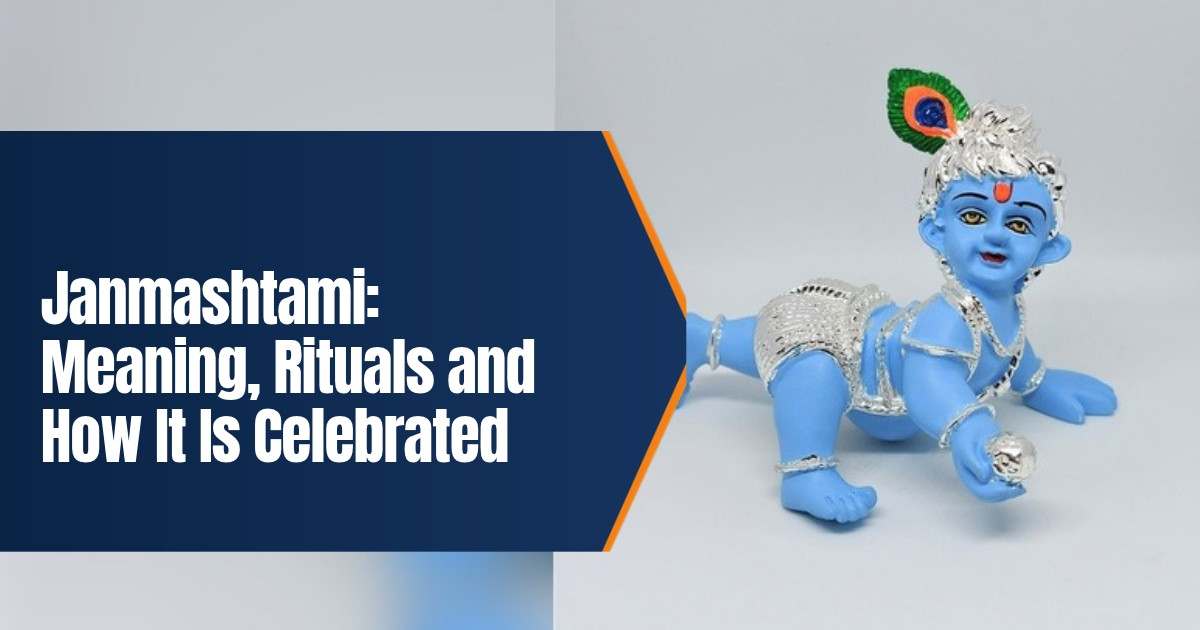
At midnight, a small idol of baby Krishna, called Laddu Gopal or Bal Gopal, is bathed with milk, curd, honey, ghee and water, a ritual called abhishek. The idol is dressed in new clothes and placed in a decorated cradle, which family members rock in turn. Bells ring, conch shells are blown and people sing songs of joy. Sweets made with milk and butter, as well as panjiri and makhana kheer, are offered and then shared as prasad.
Jhankis and decorations
Homes and temples are decorated with flowers, lights and small footprints drawn in rice paste from the door to the prayer room, as if baby Krishna has walked in. Communities set up jhankis, small scenes showing moments from Krishna’s life, such as the crossing of the Yamuna or Krishna lifting the Govardhan hill.
Rasleela and dance
Plays and dance dramas about Krishna’s life, called Rasleela, are staged in Mathura, Vrindavan and many other places. In Kerala, the temple dance drama Krishnanattam tells his story over several nights; read more about Krishnanattam dance.
Dahi Handi
In Maharashtra, the day after Janmashtami is famous for Dahi Handi. Teams of young people, called govindas, form human pyramids to reach and break an earthen pot of curd hung high above the street, recalling how young Krishna and his friends stole butter. Mumbai and Thane have the biggest events, with prize money and large crowds. Safety rules now apply, including limits on the age of participants and the use of helmets and safety gear.
Janmashtami Across India
- Mathura and Vrindavan. The birthplace and childhood home of Krishna hold days of prayers, processions and Rasleela, and the Krishna Janmabhoomi temple area is packed at midnight.
- Dwarka, Gujarat. The Dwarkadhish Temple holds special darshan and celebrations.
- Puri, Odisha. Celebrated as part of the Jagannath temple calendar.
- Udupi and South India. Krishna temples in Udupi and Guruvayur hold special pujas, and homes in Tamil Nadu draw small footprints of Krishna on the floor.
- Manipur. Krishna Janma is celebrated with Vaishnava songs and dance in Imphal.
- ISKCON temples. Centres in India and abroad hold kirtans, readings and feasts.
Holi is the other big festival linked to Krishna in the Braj region. See our guide to Holi, the festival of colours.
The Message Behind the Festival
For many families, Janmashtami is about more than ritual. The story of a child saved from a tyrant speaks of hope at a dark time, and Krishna’s later teaching in the Bhagavad Gita asks people to do their duty without being ruled by fear or greed. His childhood stories, full of play, friendship and love for the cowherd community, remind devotees that faith can be joyful. That is why the festival mixes fasting and prayer with music, dance, sweets and games, and why people of all ages take part.
Visiting Mathura and Vrindavan
If you plan to spend Janmashtami in Braj, book rooms several weeks ahead, since hotels in Mathura and Vrindavan fill quickly. Arrive at temples early, carry little, keep phones and wallets secure and expect long queues and road closures near the main shrines on the night itself. Banke Bihari, ISKCON Vrindavan and the Krishna Janmabhoomi area draw the largest crowds.
Foods Linked to the Festival
Because Krishna is remembered as a child who loved butter, many Janmashtami foods are made with milk products. Popular offerings include makhan mishri (white butter with sugar crystals), panjiri made from roasted flour or coriander seed powder, peda, kheer and fruit. Those who fast often eat sabudana khichdi, potatoes, fruit and dishes made with kuttu or singhara flour.
Tips for Families
- Involve children by asking them to dress as Krishna or Radha and to help decorate the cradle.
- Choose clay or eco friendly idols and natural flowers, and avoid plastic decorations.
- Keep crowds in mind if you plan to visit Mathura or Vrindavan, and follow police and temple instructions.
- If you join a Dahi Handi event, follow the safety rules set by organisers.
For festive greetings and wishes, read our post on Happy Janmashtami.
Many temples stream the midnight abhishek online, which helps those who cannot travel to join in.
Bhajans such as ‘Achyutam Keshavam’ and songs from Surdas and Meera are common at home gatherings.
In some homes, the cradle is kept decorated for several days after the festival.
Leftover flowers and offerings can be composted rather than thrown into rivers.
Schools often hold small Krishna dress up events in the days before the festival.
Temples in large cities issue passes or set queue timings for the midnight darshan, so check in advance.
Frequently Asked Questions
Why is Janmashtami celebrated at midnight?
Krishna is believed to have been born at midnight, so the main puja is held at that hour.
When was Janmashtami in 2026?
Janmashtami was on Friday, 4 September 2026, with Dahi Handi on 5 September.
Why are there sometimes two dates?
Some traditions follow the Ashtami tithi and others the Rohini nakshatra, which can fall on different days.
What is Dahi Handi?
A celebration in which teams form human pyramids to break a pot of curd, recalling Krishna’s love of butter.