


Types of Roulette Explained: Wheels, Rules and House Edge
Roulette is a casino game in which a small ball is spun around a numbered wheel and players bet on where it will stop. It appears in films, novels and casino floors from Monaco to Macau, and it is one of the easiest gambling games to understand. That simplicity hides an important fact: every version of roulette is built so that the house keeps a share of all money staked over time.
The old version of this page told readers that roulette lets them “win substantial money” and linked to a casino site. That has been removed. This updated guide explains, in neutral terms, how the main types of roulette differ, how the house edge works, why betting systems fail, what the law says in India and elsewhere, and where to get help if gambling stops being fun.
Table of Contents
Roulette at a Glance
| Version | Pockets | House edge on standard bets |
|---|---|---|
| European | 37 (single zero) | About 2.70 percent |
| French | 37 (single zero) | About 1.35 percent on even money bets with la partage, otherwise 2.70 percent |
| American | 38 (zero and double zero) | About 5.26 percent |
| Triple zero | 39 | About 7.69 percent |
How a Roulette Wheel Works
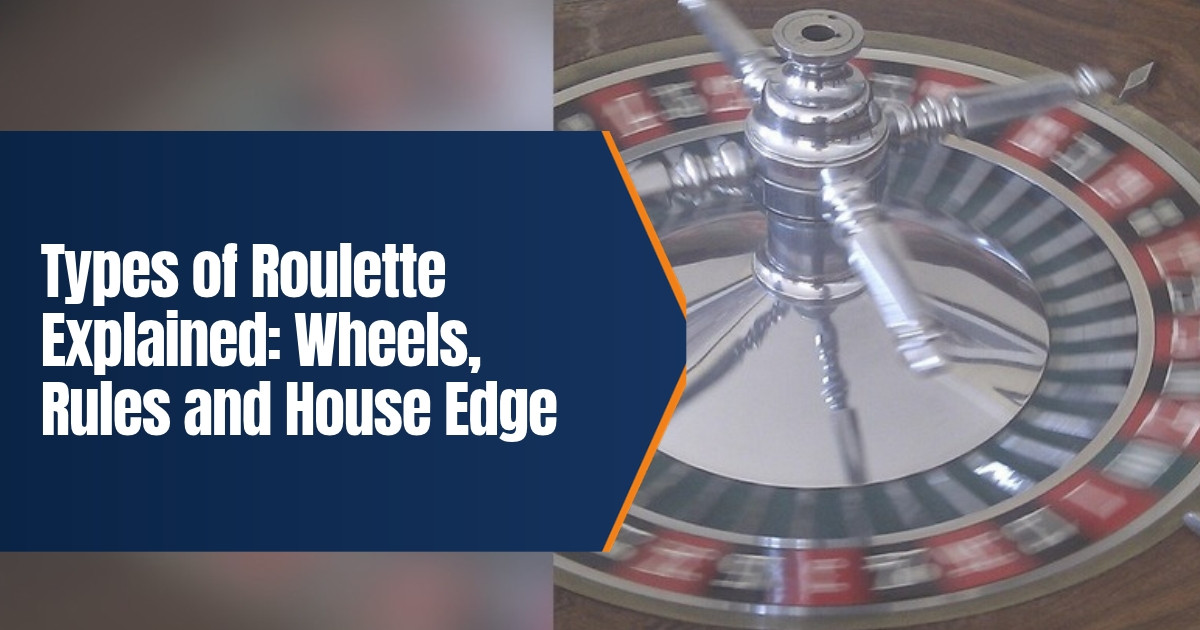
The wheel holds numbered pockets from 1 to 36, alternating red and black, plus one or more green zero pockets. A dealer, or a machine, spins the wheel one way and the ball the other. Players place chips on a table layout before the ball drops. If the ball lands in a pocket covered by a bet, that bet pays at fixed odds.
Bets fall into two groups. Inside bets cover single numbers or small groups of numbers and pay more, such as 35 to 1 for a single number. Outside bets cover large groups, such as red or black, odd or even, or high or low, and pay even money. The green zero is not part of any outside group, and that is where the house gets its advantage.
The Main Types of Roulette
European roulette
The European wheel has 37 pockets: numbers 1 to 36 and a single zero. A single number bet pays 35 to 1, but the true odds against it are 36 to 1. The difference means that, on average, the house keeps 1 unit out of every 37 staked, an edge of about 2.70 percent. The single zero wheel is often credited to François and Louis Blanc, who ran a casino in Bad Homburg in Germany in the 1840s before moving to Monte Carlo.
French roulette
French roulette uses the same single zero wheel, with French names on the table, such as rouge and noir for red and black. Its distinctive feature is la partage: if the ball lands on zero, players on even money bets lose only half their stake. A similar rule, en prison, holds the stake for one more spin instead. On those bets the house edge falls to about 1.35 percent. On all other bets it stays at 2.70 percent.
American roulette
The American wheel adds a second green pocket, the double zero, making 38 pockets. Payouts stay the same, so the house edge almost doubles to about 5.26 percent. One bet on this table, covering 0, 00, 1, 2 and 3, has an even higher edge of about 7.89 percent. Some casinos in the United States have introduced a triple zero wheel with 39 pockets, pushing the edge to about 7.69 percent.
Multi wheel, mini and electronic versions
Multi wheel roulette lets a single bet ride on several wheels at once. Mini roulette uses a small wheel with 13 pockets. Electronic and automated tables use machines to spin the ball and touch screens for betting. None of these changes the basic maths: each still pays less than the true odds, so the house keeps a share over time.
Live dealer streams
Online casinos in some countries stream real tables with human dealers from studios. The rules match the wheel being used. Readers should remember that offering or playing online money games is illegal in many places, including India, which is covered below.
Why the House Edge Never Goes Away
The house edge is not a trick or a hidden fee. It comes from paying winning bets slightly less than the true odds. Over a few spins, anything can happen and a player may be ahead. Over hundreds or thousands of spins, results move towards the expected loss. On a European wheel, a person staking a total of 10,000 rupees over an evening should expect, on average, to lose about 270 rupees, and on an American wheel about 526 rupees. Some evenings will be better and many will be worse.
The Gambler’s Fallacy and Betting Systems
Each spin is independent. The wheel has no memory, so a run of red does not make black more likely next time. The most famous example came at the Monte Carlo Casino in August 1913, when the ball landed on black 26 times in a row. Many players lost heavily betting on red, convinced it was “due”.
Betting systems such as doubling a stake after every loss promise to beat the wheel, but they cannot change the edge. They only change how losses arrive. Doubling systems produce many small wins and, sooner or later, a very large loss when a losing streak meets a table limit or an empty wallet. No staking pattern turns a negative expected game into a positive one.
Roulette and the Law
India
In India, gambling in physical premises is regulated by the states, and only a few, such as Goa and Sikkim, allow licensed casinos. Online, the Promotion and Regulation of Online Gaming Act 2025 bans online money games, including casino style games, as well as their advertising and the processing of payments for them. Its rules were notified on 22 April 2026 and came into force on 1 May 2026. Challenges to the Act are pending before the Supreme Court. Our explainer on the world of online gaming sets out how video games differ from gambling under this law.
Elsewhere
Rules vary widely around the world. Some countries license casinos and online gambling with strict age checks and limits, others ban it entirely. The legal age is usually 18 or 21. Anyone travelling should check the law of the place they are in, and avoid unlicensed websites anywhere, since they offer no protection if something goes wrong.
Staying Safe Around Gambling
- Treat any money spent as the cost of entertainment, never as a way to earn.
- Set a firm limit on time and money before starting, and stop when it is reached.
- Never borrow, or use money meant for bills, to gamble.
- Do not chase losses; walking away is the safest response to a losing run.
- Keep gambling away from alcohol and from moments of stress or low mood.
Warning signs of a problem include hiding gambling from family, feeling restless when not gambling and needing bigger stakes to feel the same excitement. Our piece on how mental health affects addiction explains why gambling can take hold. In India, the national Tele MANAS helpline on 14416 offers free mental health support, and most countries have dedicated gambling help services. More on support options is in our guide to mental health awareness in India.
Frequently Asked Questions
What is the difference between European and American roulette?
The European wheel has one zero and 37 pockets, while the American wheel adds a double zero for 38 pockets. That extra pocket raises the house edge from about 2.70 percent to about 5.26 percent.
Which version of roulette has the lowest house edge?
French roulette with the la partage or en prison rule, at about 1.35 percent on even money bets. The house still keeps an advantage.
Can a betting system beat roulette?
No. Every spin is independent and every bet pays less than the true odds, so no system can remove the house edge.
Is online roulette legal in India?
No. The Promotion and Regulation of Online Gaming Act 2025 bans online money games, including casino style games.
Does this page recommend any casino?
No. This guide is informational only and contains no links to gambling sites.
The numbers 1 to 36 on a roulette wheel add up to 666, a quirk that has given the game a nickname in some books.
Numbers on the wheel are not in order, so that high, low, odd and even numbers are spread around it.
Many casinos display recent results on a screen, but past spins tell nothing about the next one.
Regulated casinos test their wheels regularly to make sure they are balanced and fair.
Free practice versions in apps can create a false sense of skill, since the results do not involve real money.